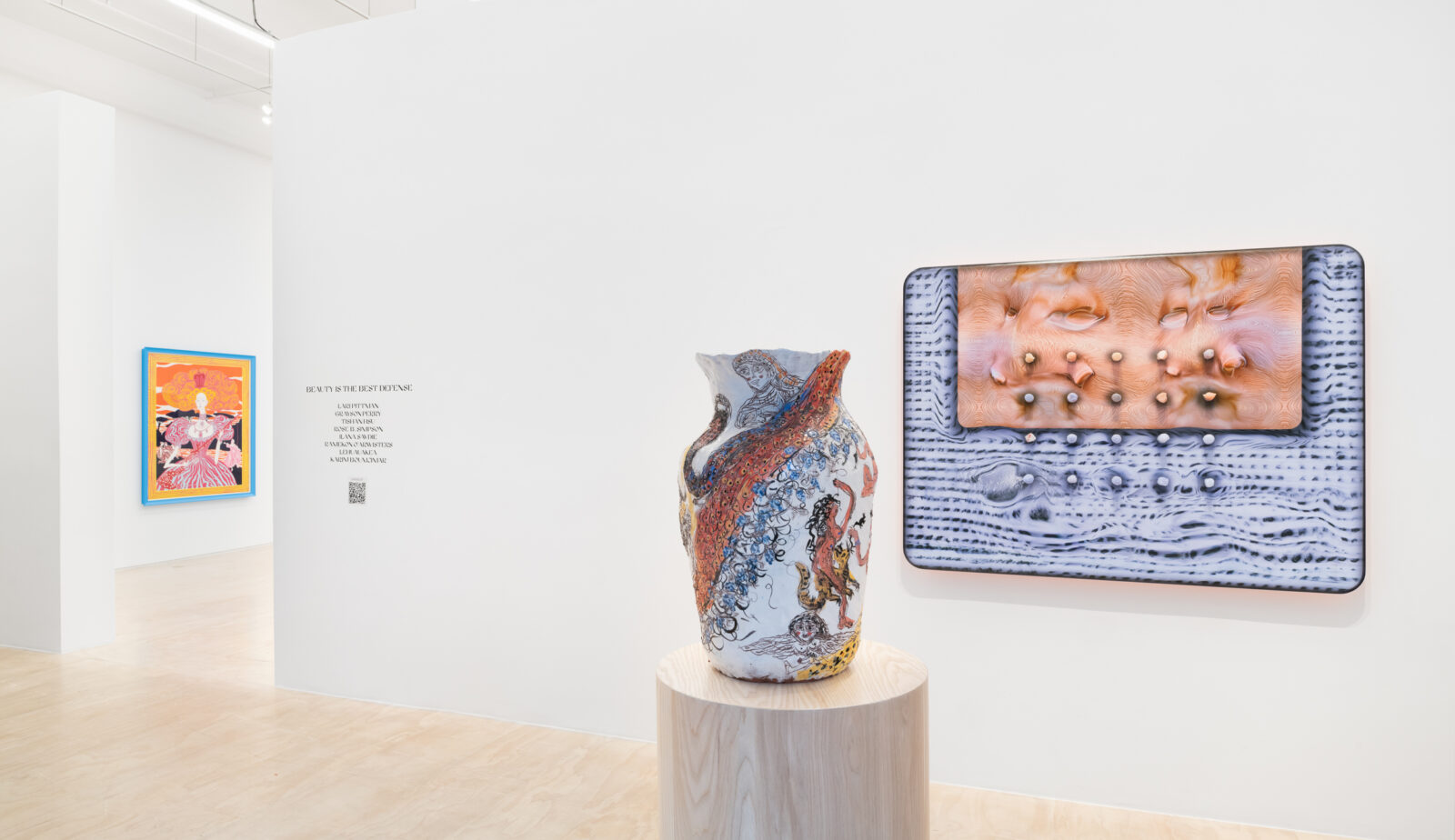
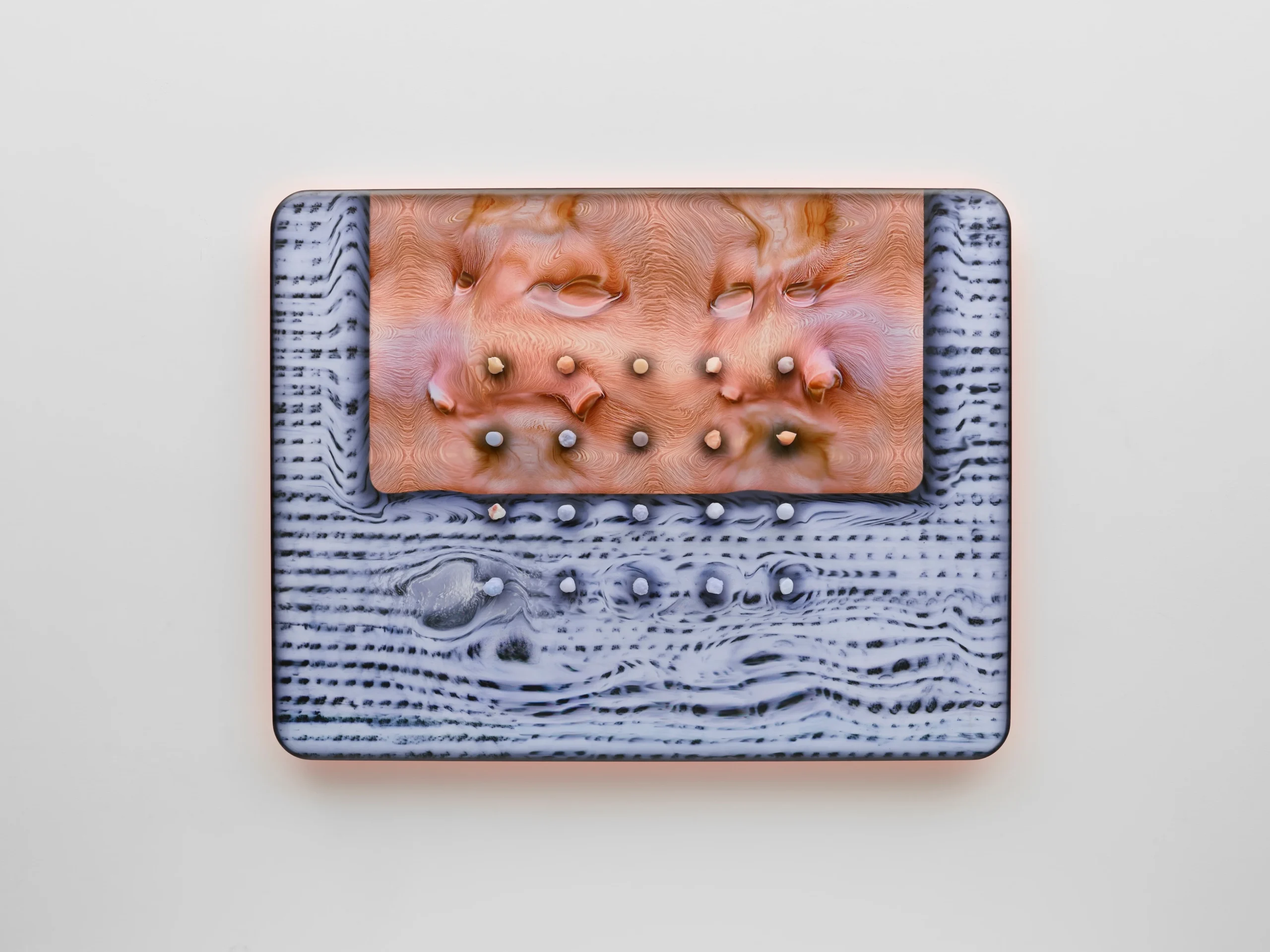
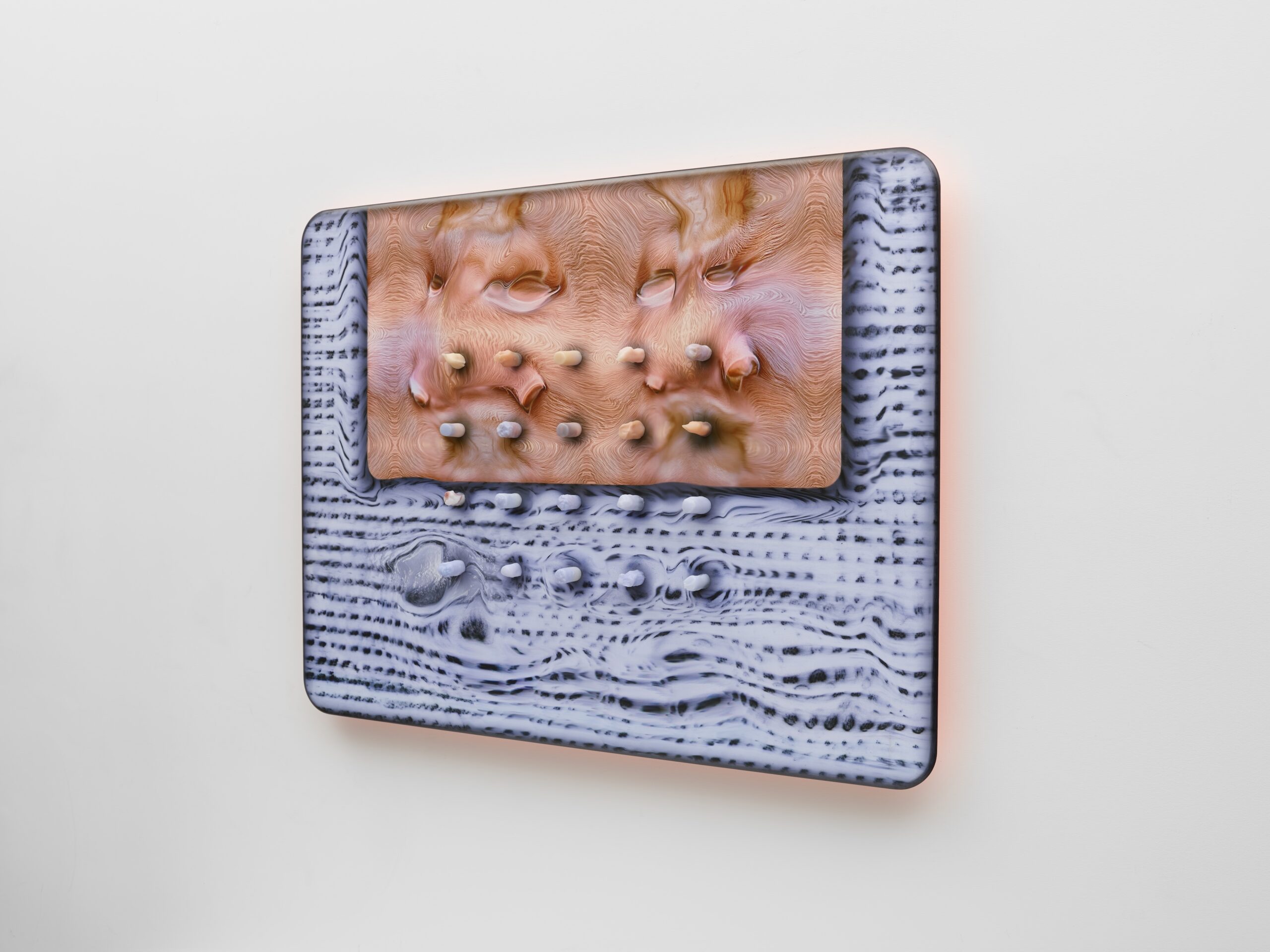
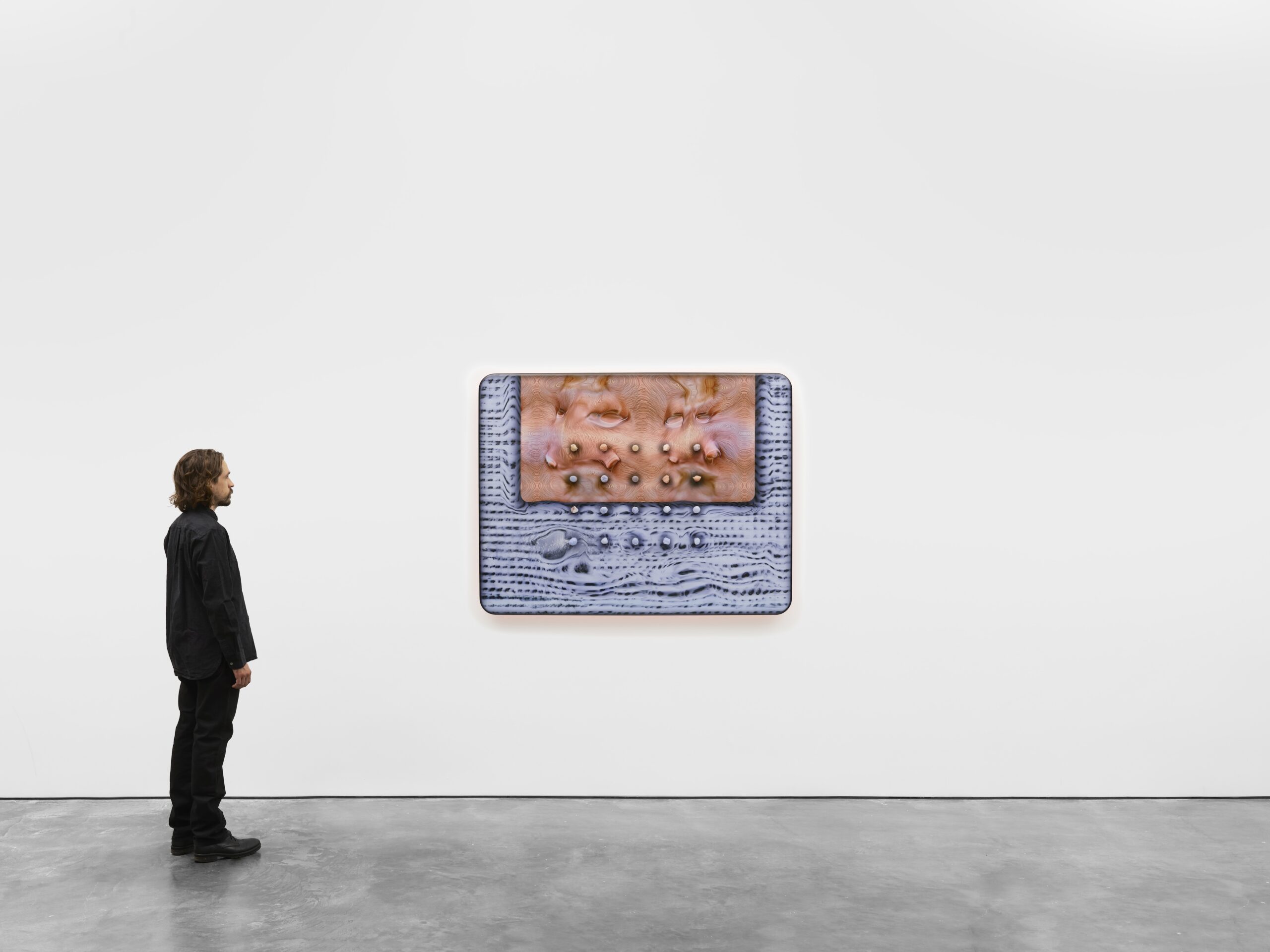
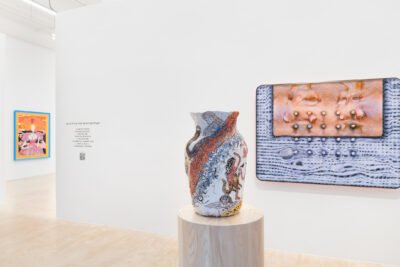
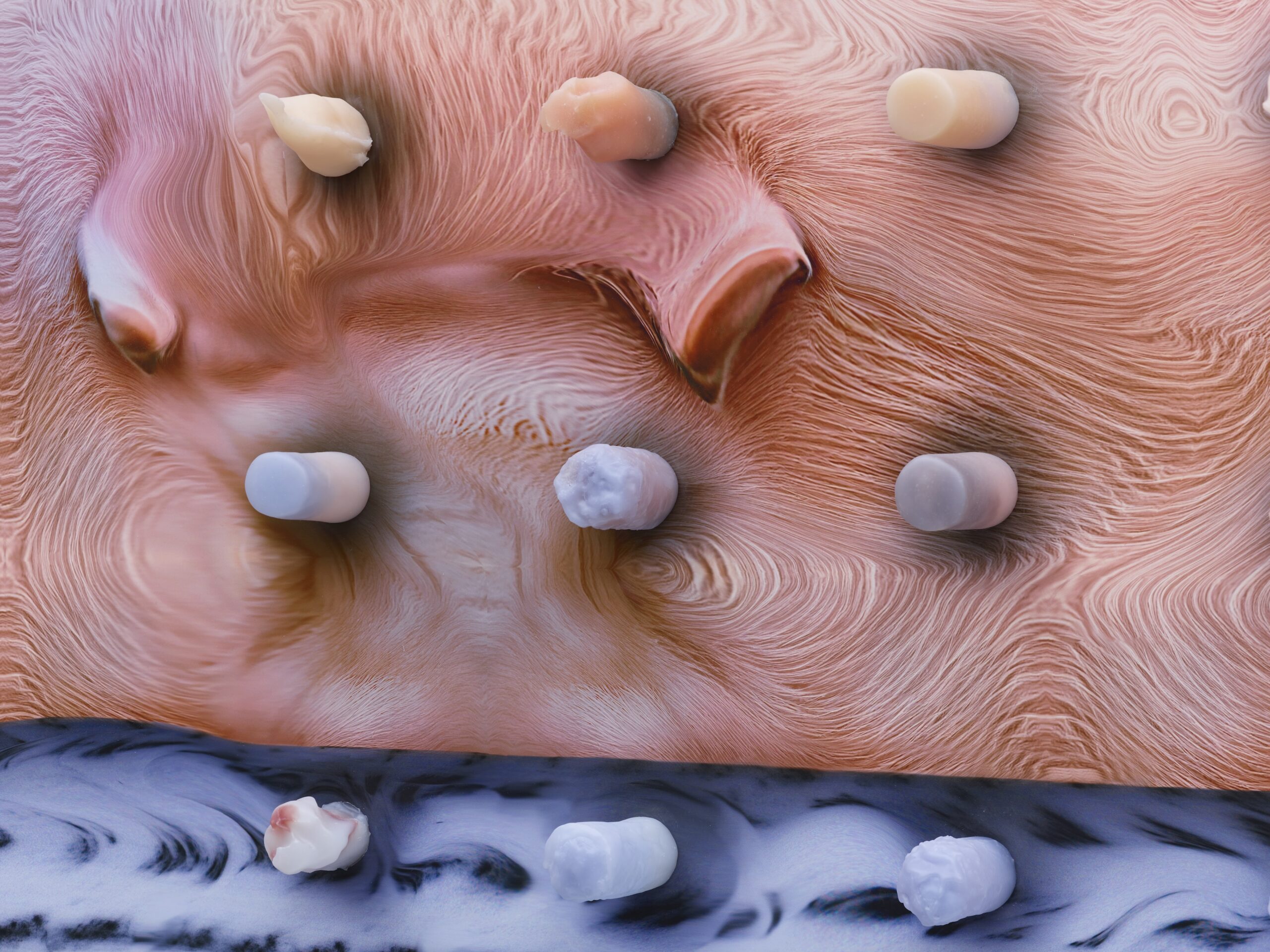
For four decades, New York–based artist Tishan Hsu has created sculptures, wall reliefs, and immersive environments that probe the shrinking distance between the human body and virtual worlds. Using UV-printing, Hsu creates uncanny, skin-like objects that fuse body and technology, and negotiate vulnerability, identity and control. In skin-fur-mesh-blue (2025), AI-generated bodily orifices and silicone protrusions puncture a supple surface, producing an unsettling convergence of screen illusion and fleshy tactility. Collapsing distinctions between organic and industrial, human and non-human, physical and virtual, Hsu evokes the sensations of an increasingly embodied technological condition.

×
← BACK
← PREVIOUS WORK
NEXT WORK →
← PREVIOUS
Beauty is the Best Defense
INQUIRE
NEXT →
×
← BACK
← PREVIOUS WORK
NEXT WORK →

























← PREVIOUS WORK
INQUIRE
NEXT WORK →
Beauty is the Best Defense
Beauty is the Best Defense
March 5-April 18, 2026
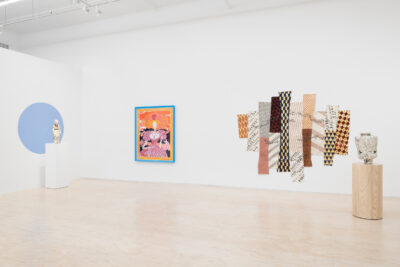
Jessica Silverman is pleased to present “Beauty is the Best Defense,” a group exhibition that reframes decorative excess as a form of wit, resistance, and genderful expression. The exhibition runs from March 5–April 18, 2026. Spanning generations and geographies, the eight artists in this show explore ornament as armor and beauty as a survival tactic, mounting a spirited challenge to the long-held assumption that Minimalism represents the epitome of tasteful restraint and aesthetic discipline. That assumption, the exhibition suggests, has always conformed to an Anglo-Saxon, masculine norm—one that these artists collectively unsettle, complicate, and transcend.
The participating artists are: Lari Pittman, Grayson Perry, Ilana Savdie, Rose B. Simpson, Ramekon O’Arwisters, Tishan Hsu, Lehuauakea, and Karim Boumjimar.
Ilana Savdie will be in conversation with Ali Gass, Founding Director and Chief Curator of the Institute of Contemporary Art San Francisco, on April 17, 3-3:45PM at Jessica Silverman.
Download press release
REQUEST PDF
INSTALLATION VIEW
GALLERY / GRID
SELECTED WORKS
Grayson Perry
The Story of My Life, 2024
Tapestry
97 5/8 x 187 3/8 inches / 248 x 475.9 cm
Edition of 8 plus 4 artist's proofs (#4/8)
The Story of My Life, 2024
Tapestry
97 5/8 x 187 3/8 inches / 248 x 475.9 cm
Edition of 8 plus 4 artist's proofs (#4/8)
INQUIRE
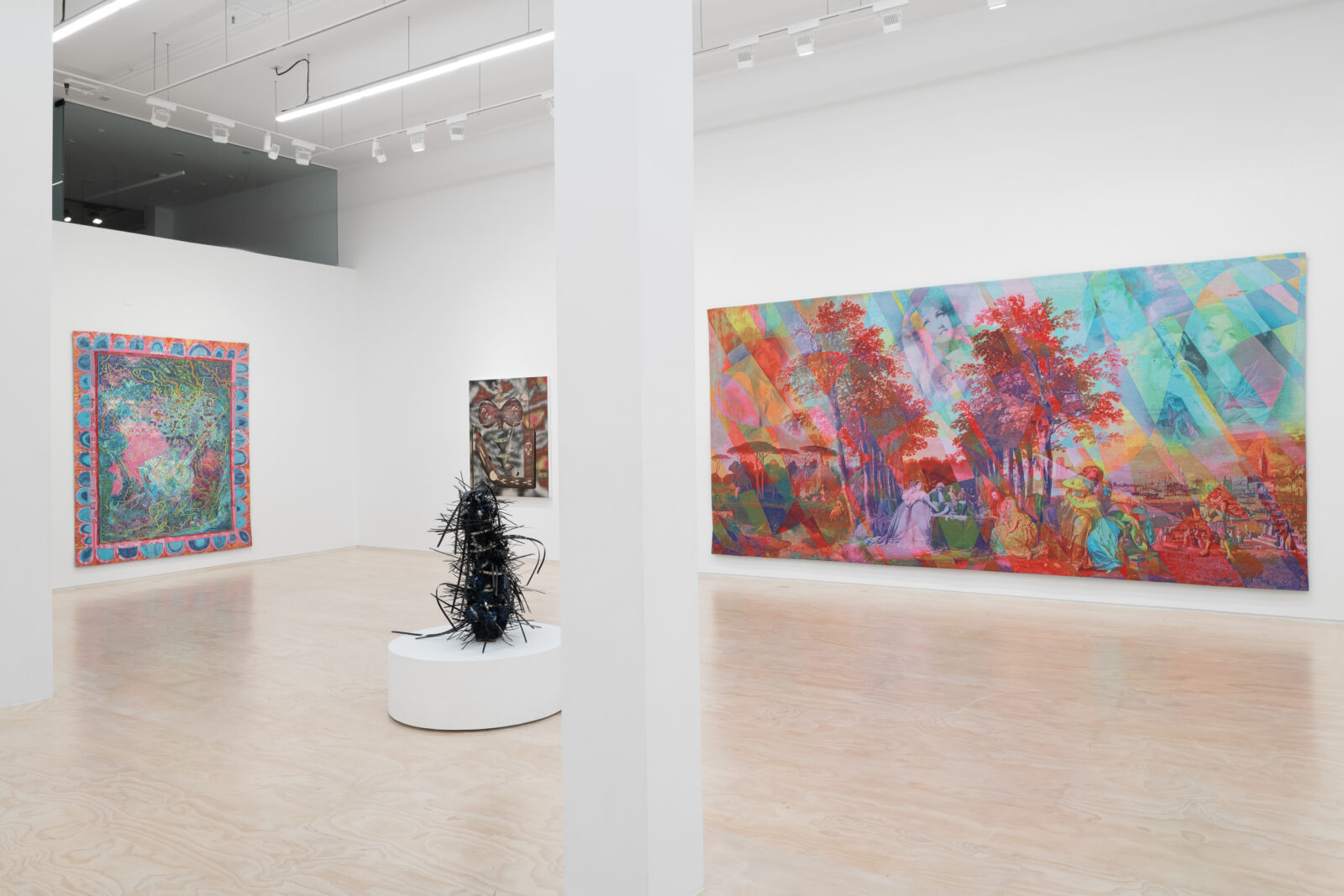
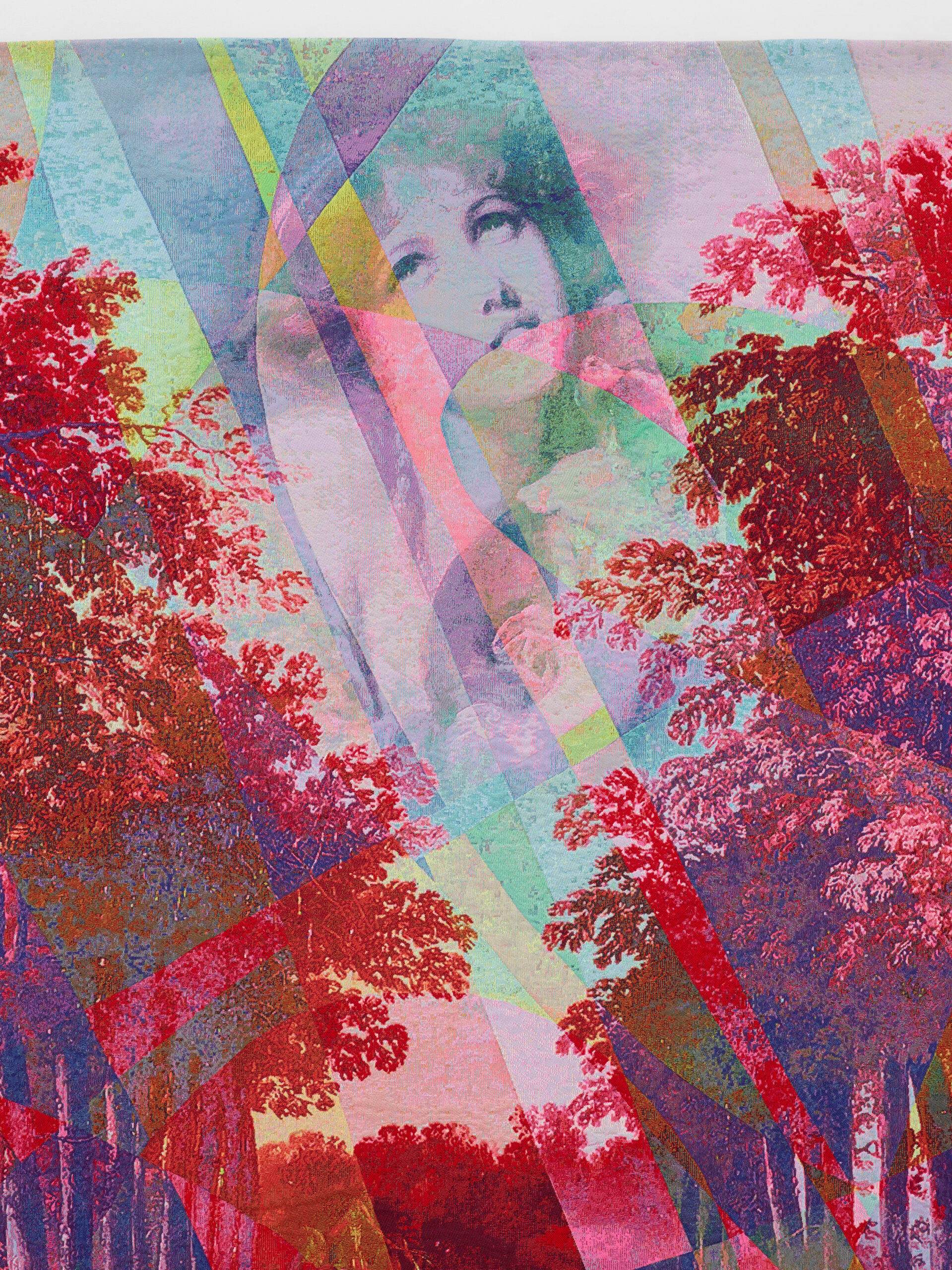
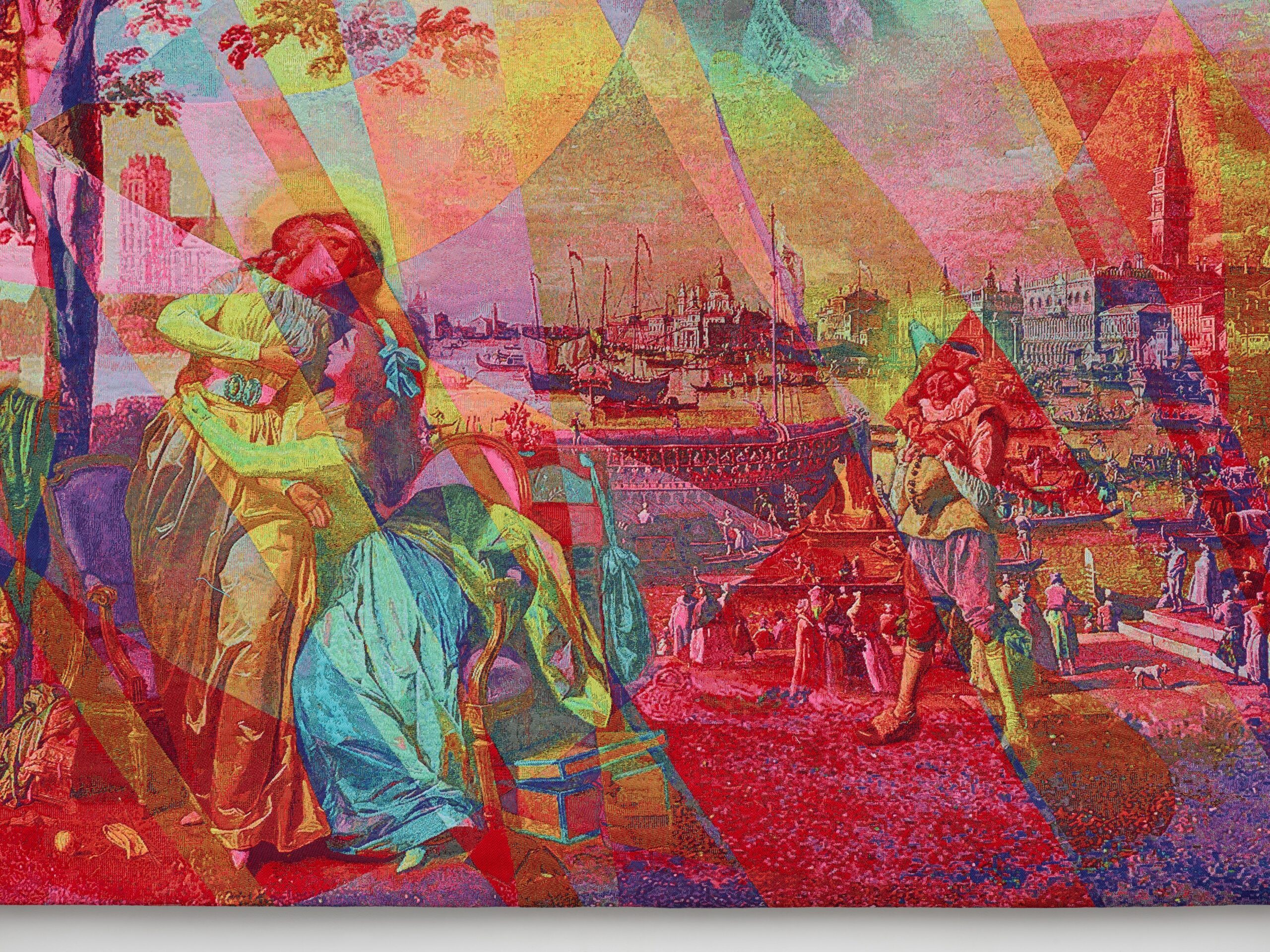
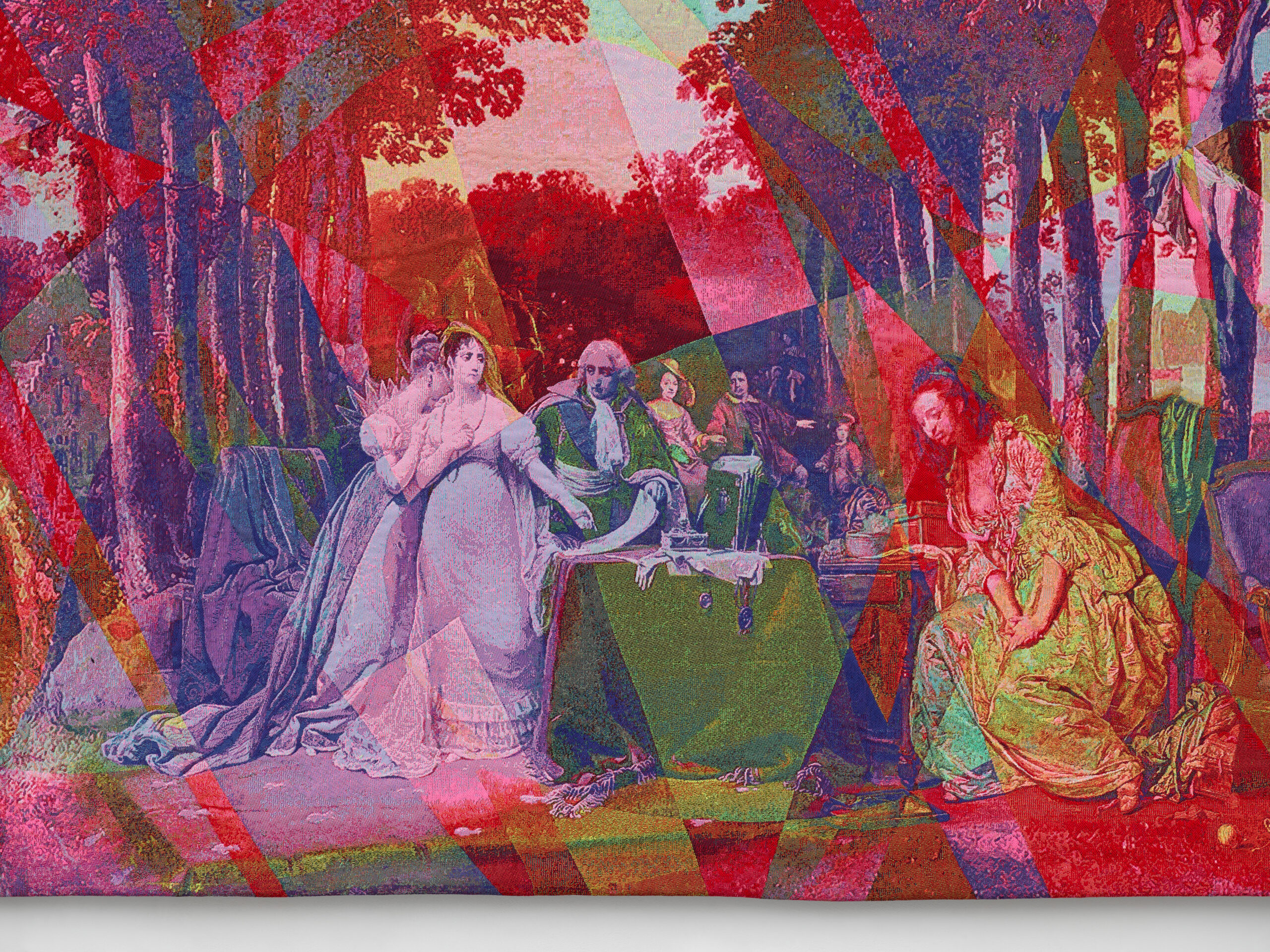
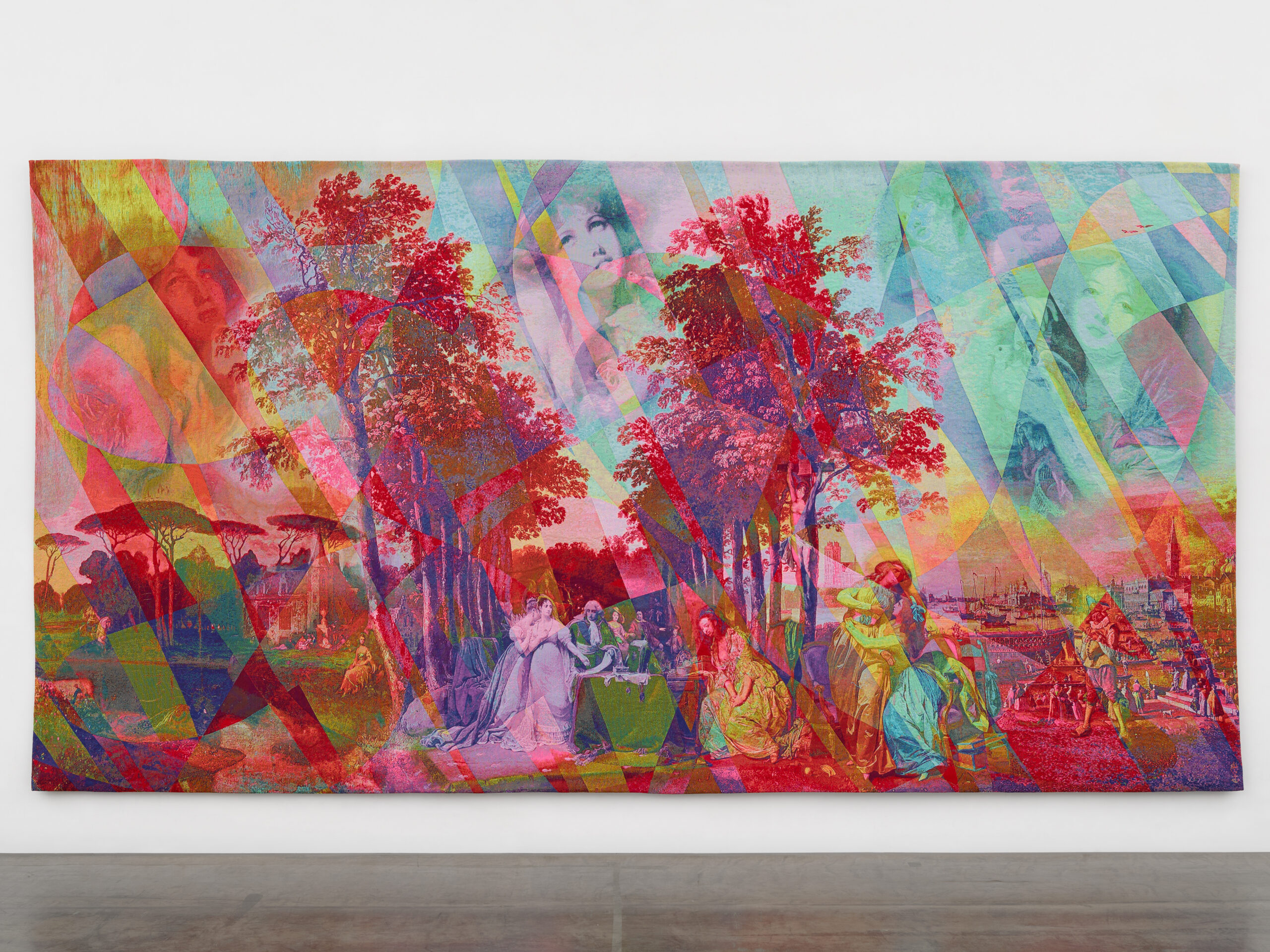
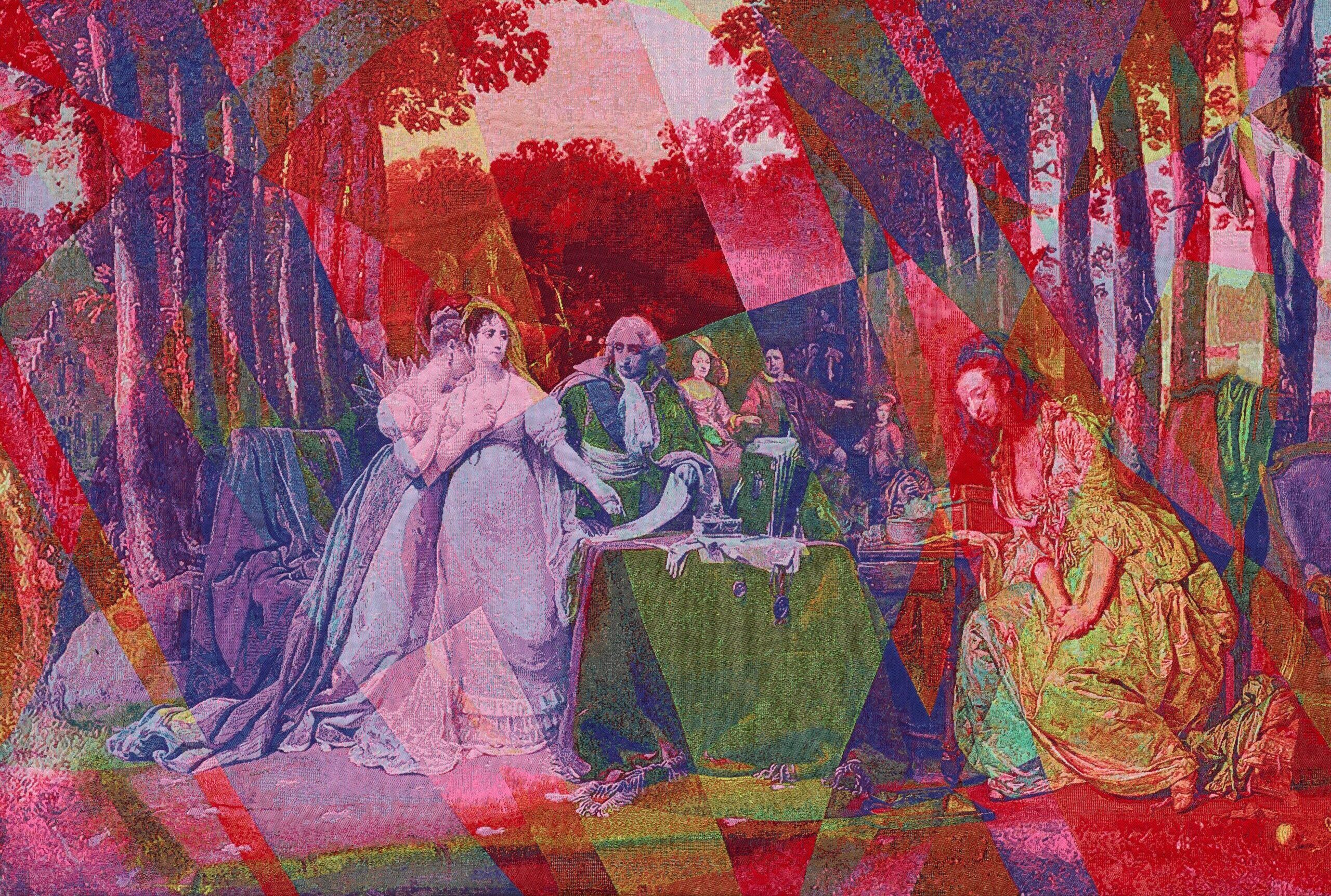
The Story of My Life (2024), a fifteen-foot-wide tapestry, is woven from a collage of Perry’s twenty favorite paintings at the Wallace. Inspired by the idea that visitors go to museums to find themselves—and ultimately project themselves—the appropriated images are refracted through a rainbow lens that evokes the monumentality of color-field painting.
Grayson Perry
Fascist Swing, 2024
Tapestry
94 1/2 x 70 1/8 inches / 240 x 178.1 cm
Edition of 8 plus 4 artist's proofs (#5/8)
Fascist Swing, 2024
Tapestry
94 1/2 x 70 1/8 inches / 240 x 178.1 cm
Edition of 8 plus 4 artist's proofs (#5/8)
INQUIRE
Grayson Perry
The Honourable Millicent Wallace (orange/pink), 2024
Woodblock print
63 1/2 x 51 5/8 x 2 3/4 inches / 161.2 x 131.2 x 7 cm
Edition of 15 plus 4 artist's proof (#6/15)
The Honourable Millicent Wallace (orange/pink), 2024
Woodblock print
63 1/2 x 51 5/8 x 2 3/4 inches / 161.2 x 131.2 x 7 cm
Edition of 15 plus 4 artist's proof (#6/15)
INQUIRE
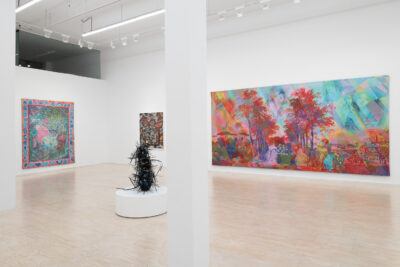
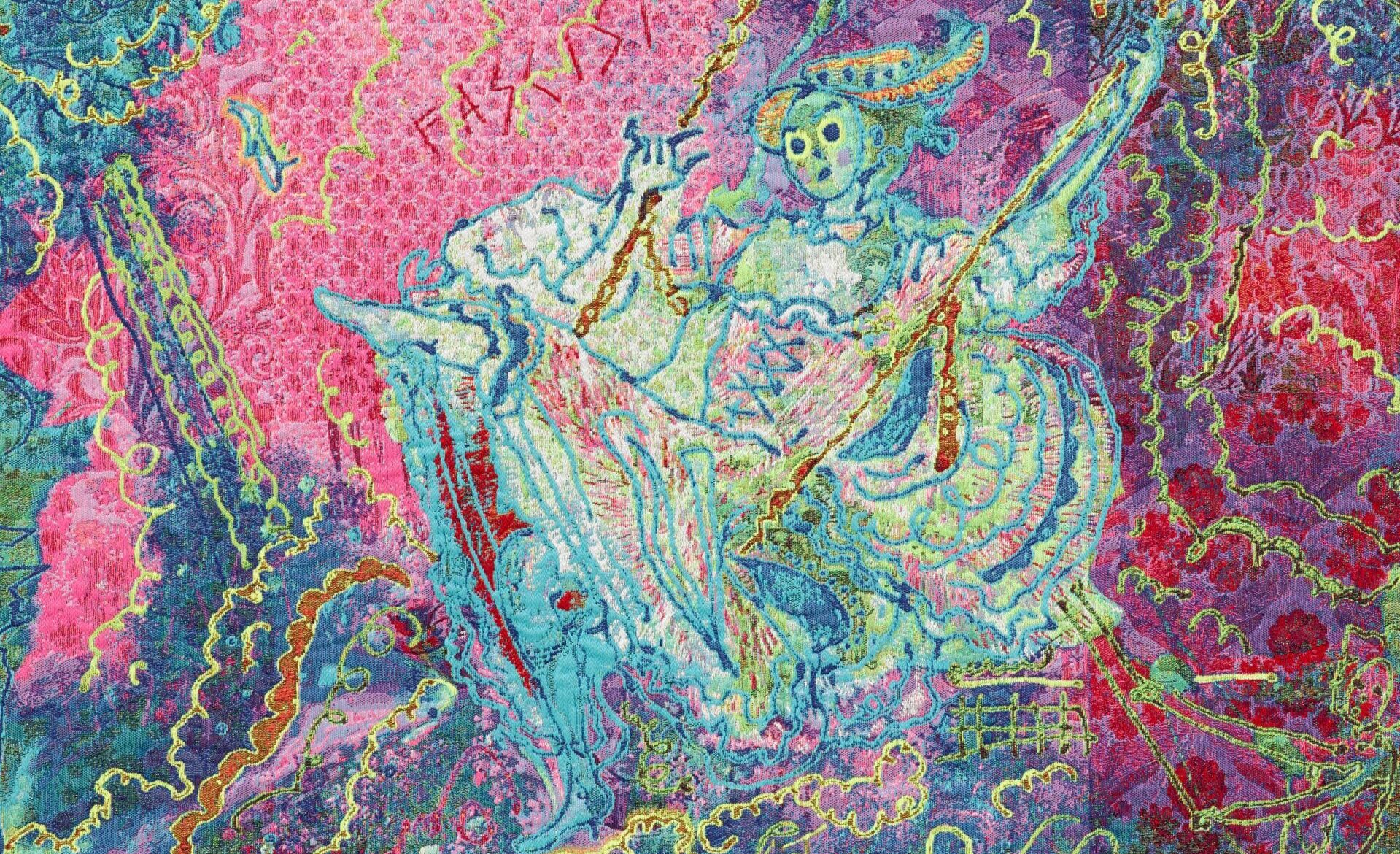
A Turner Prize winner and celebrated provocateur, Grayson Perry has long explored the intersections of craft, class, and social satire. On view are two tapestries and one woodblock print from his “Delusions of Grandeur” series, which riffs on the Rococo magnificence of London’s Wallace Collection.
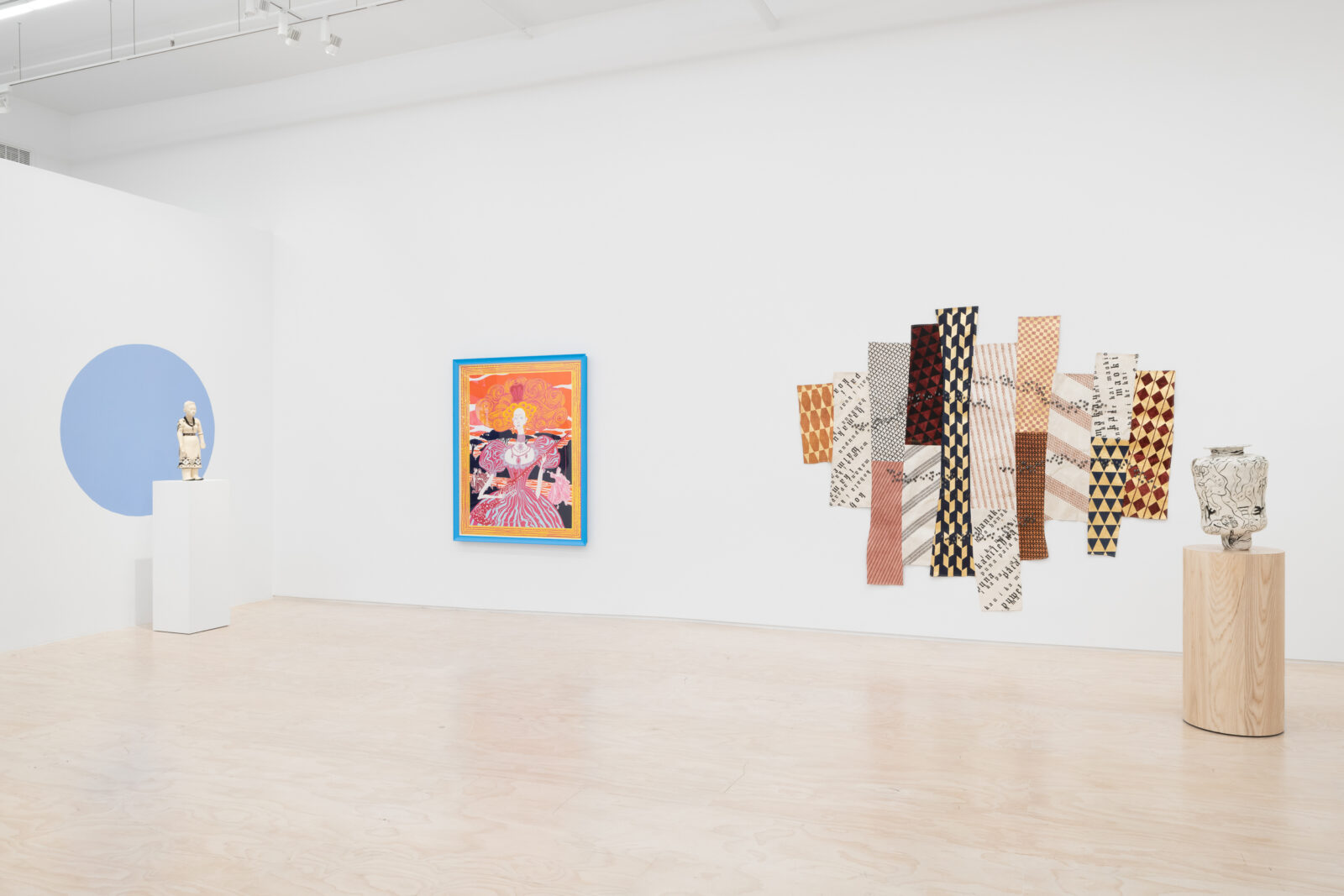
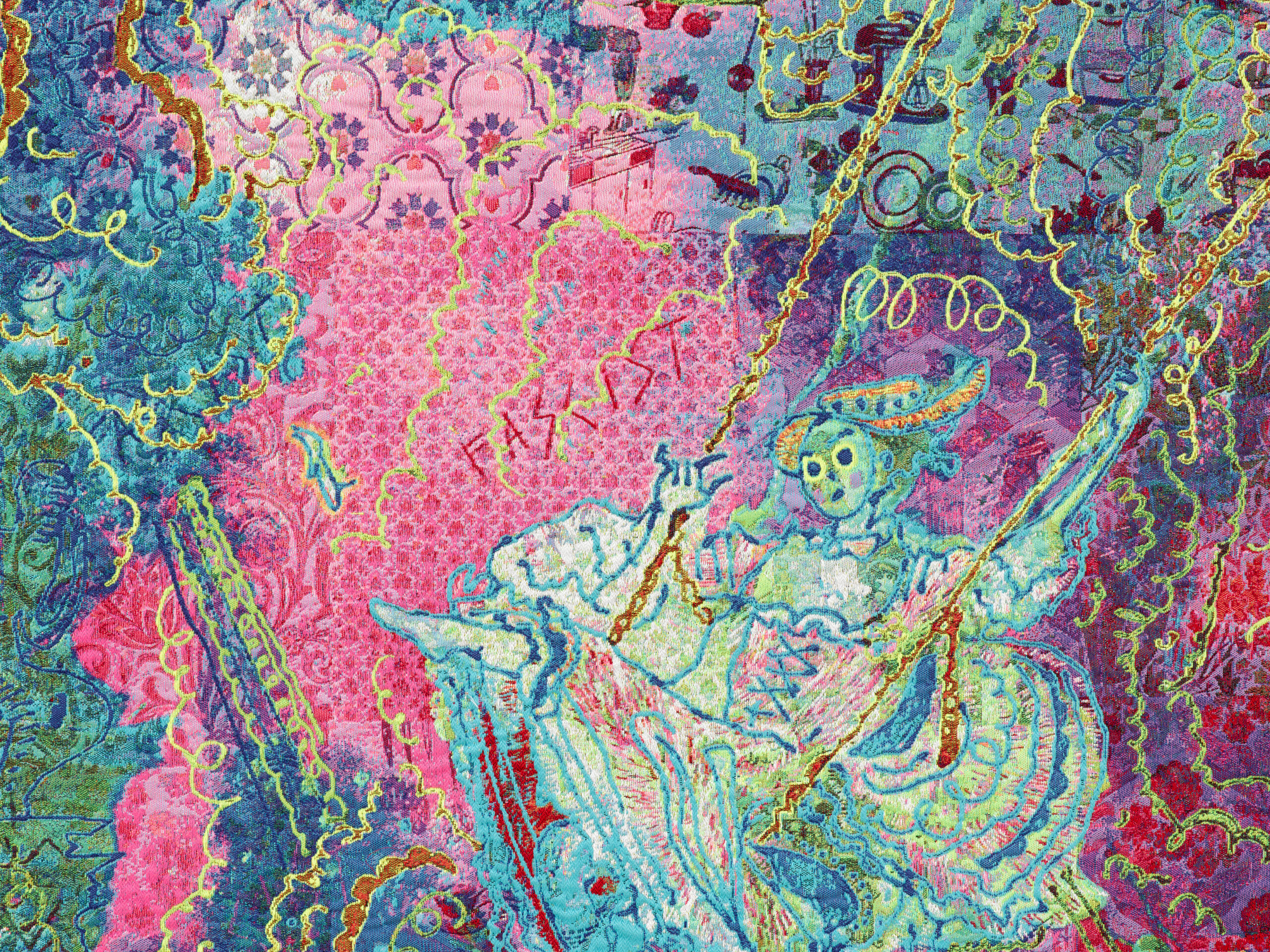
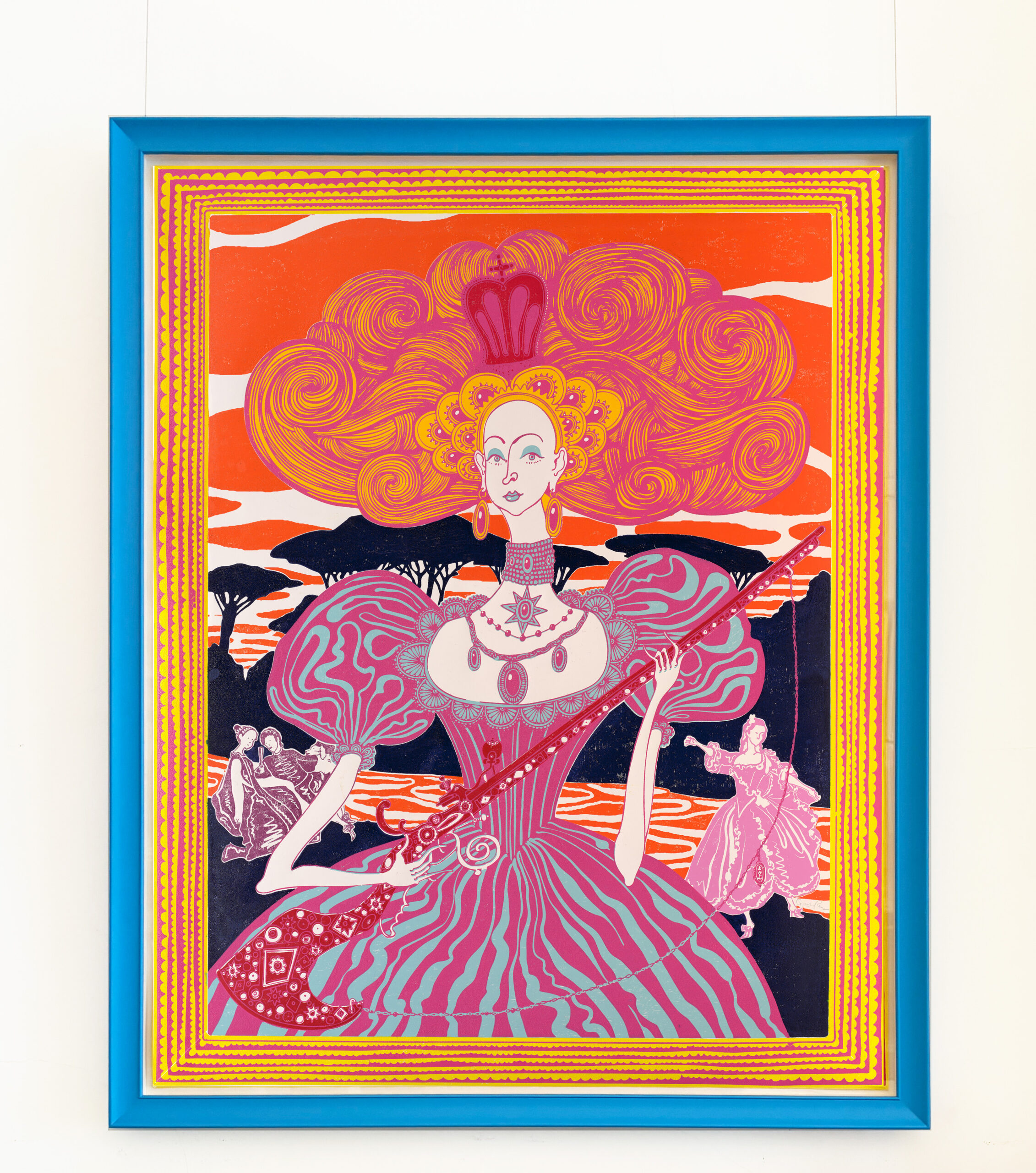
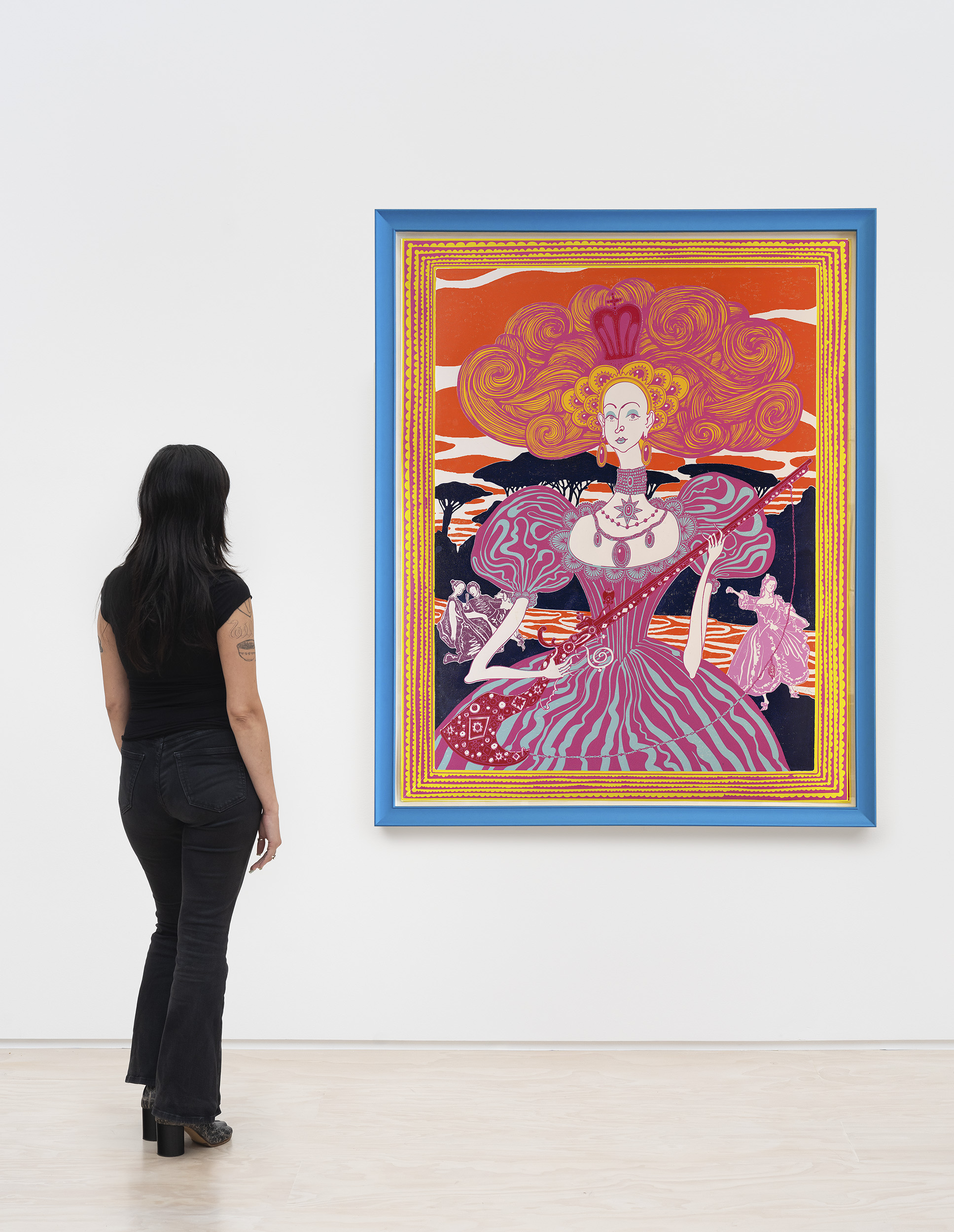
Fascist Swing (2024) is punk and painterly. Based on a freehand sketch of Fragonard’s famous eighteenth-century painting of the same name, the tapestry has the quality of a giant hand-embroidered piece, despite being woven on a Jacquard loom. The empty expletive “fascist” is scrawled in the pink void beside the frilly skirt of the swinger. Finally, The Honourable Millicent Wallace (orange/pink) (2024), a woodcut portrait, offers an over-the-top portrayal of female power: the crowned protagonist wears a taffeta dress and clasps an ornate red rifle.
Fascist Swing (2024) is punk and painterly. Based on a freehand sketch of Fragonard’s famous eighteenth-century painting of the same name, the tapestry has the quality of a giant hand-embroidered piece, despite being woven on a Jacquard loom. The empty expletive “fascist” is scrawled in the pink void beside the frilly skirt of the swinger. Finally, The Honourable Millicent Wallace (orange/pink) (2024), a woodcut portrait, offers an over-the-top portrayal of female power: the crowned protagonist wears a taffeta dress and clasps an ornate red rifle.
Lari Pittman
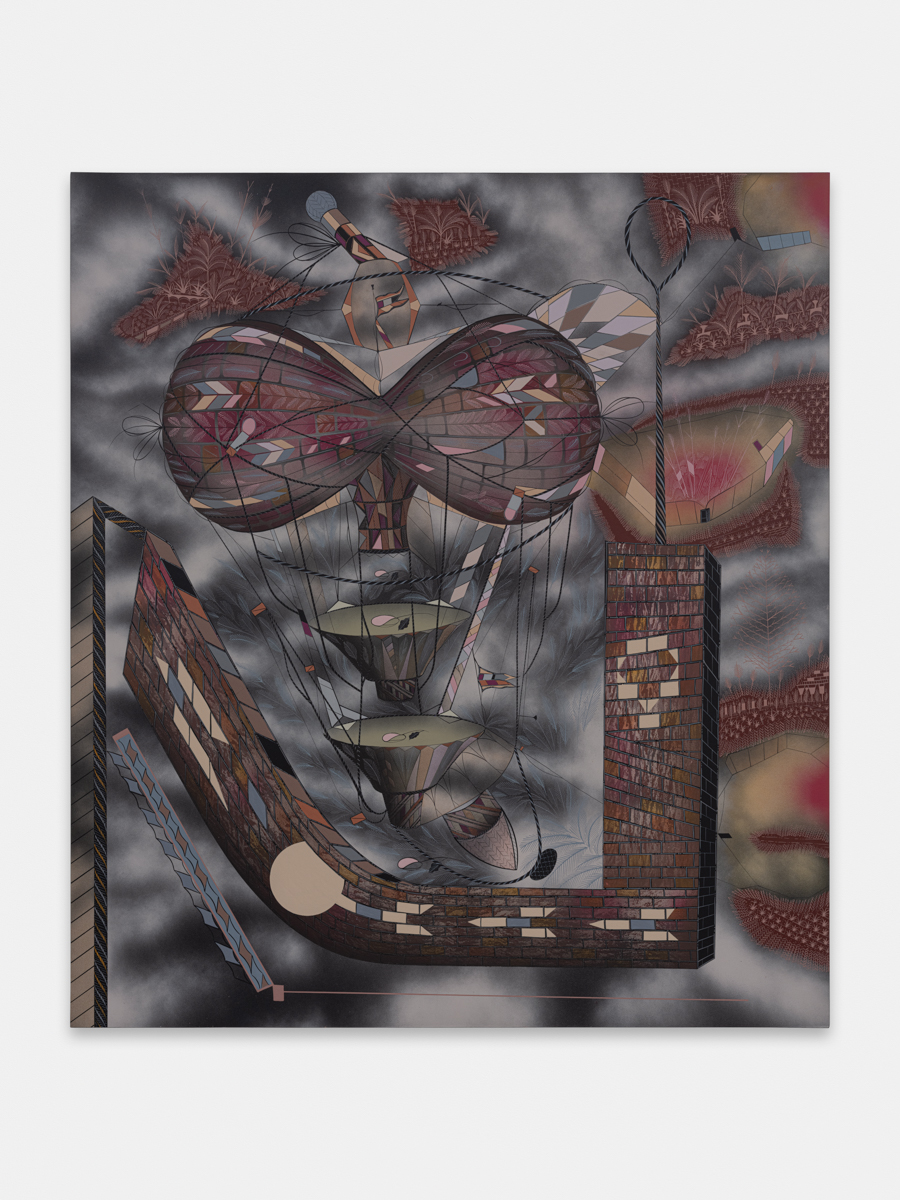
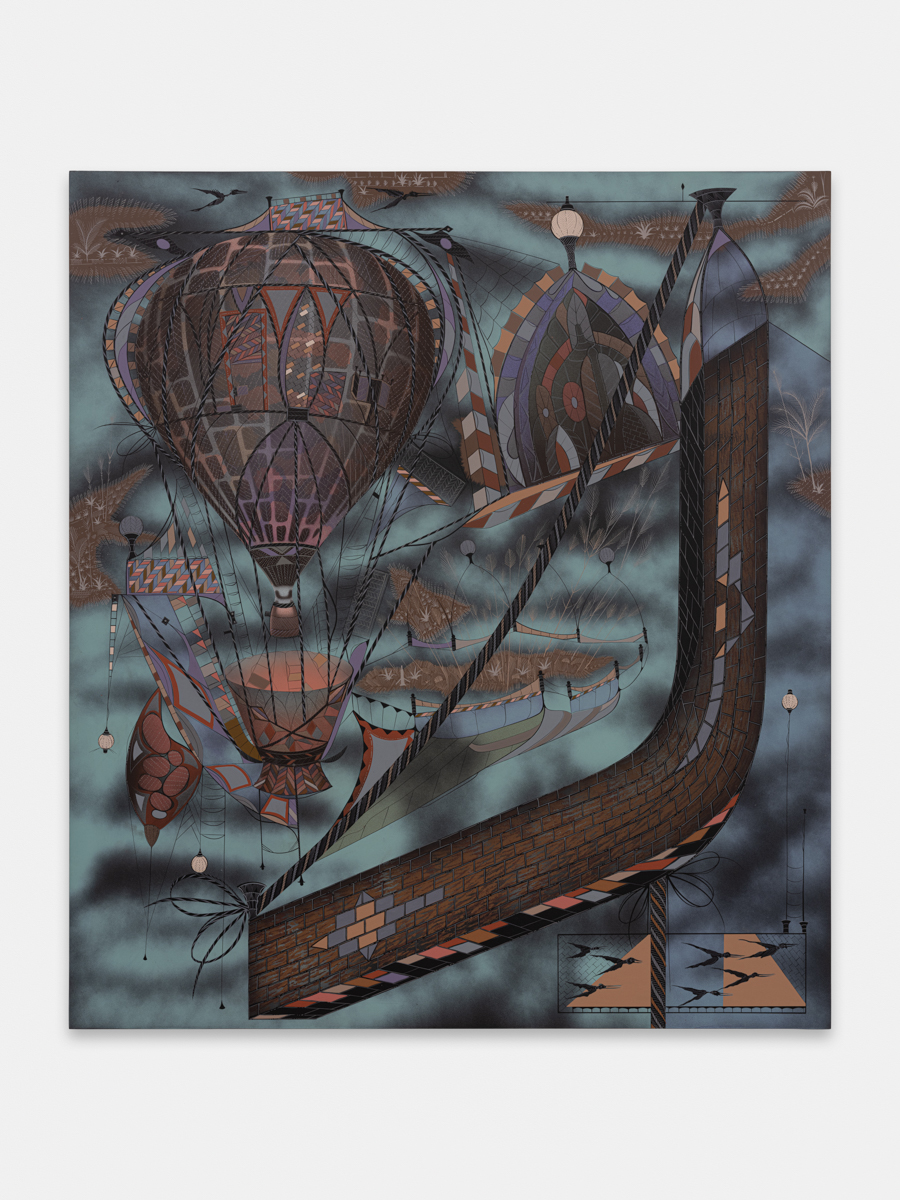
The Remedy of Analog Space & Time #2, 2025
Acrylic and spray paint over gessoed canvas over wood panel
54 x 48 x 2 inches / 137.2 x 121.9 x 5.8 cm
The Remedy of Analog Space & Time #2, 2025
Acrylic and spray paint over gessoed canvas over wood panel
54 x 48 x 2 inches / 137.2 x 121.9 x 5.8 cm
INQUIRE
Lari Pittman
The Remedy of Analog Space & Time #1, 2025
Acrylic and spray paint over gessoed canvas over wood panel
54 x 48 x 2 inches / 137.2 x 121.9 x 5.8 cm
The Remedy of Analog Space & Time #1, 2025
Acrylic and spray paint over gessoed canvas over wood panel
54 x 48 x 2 inches / 137.2 x 121.9 x 5.8 cm
INQUIRE
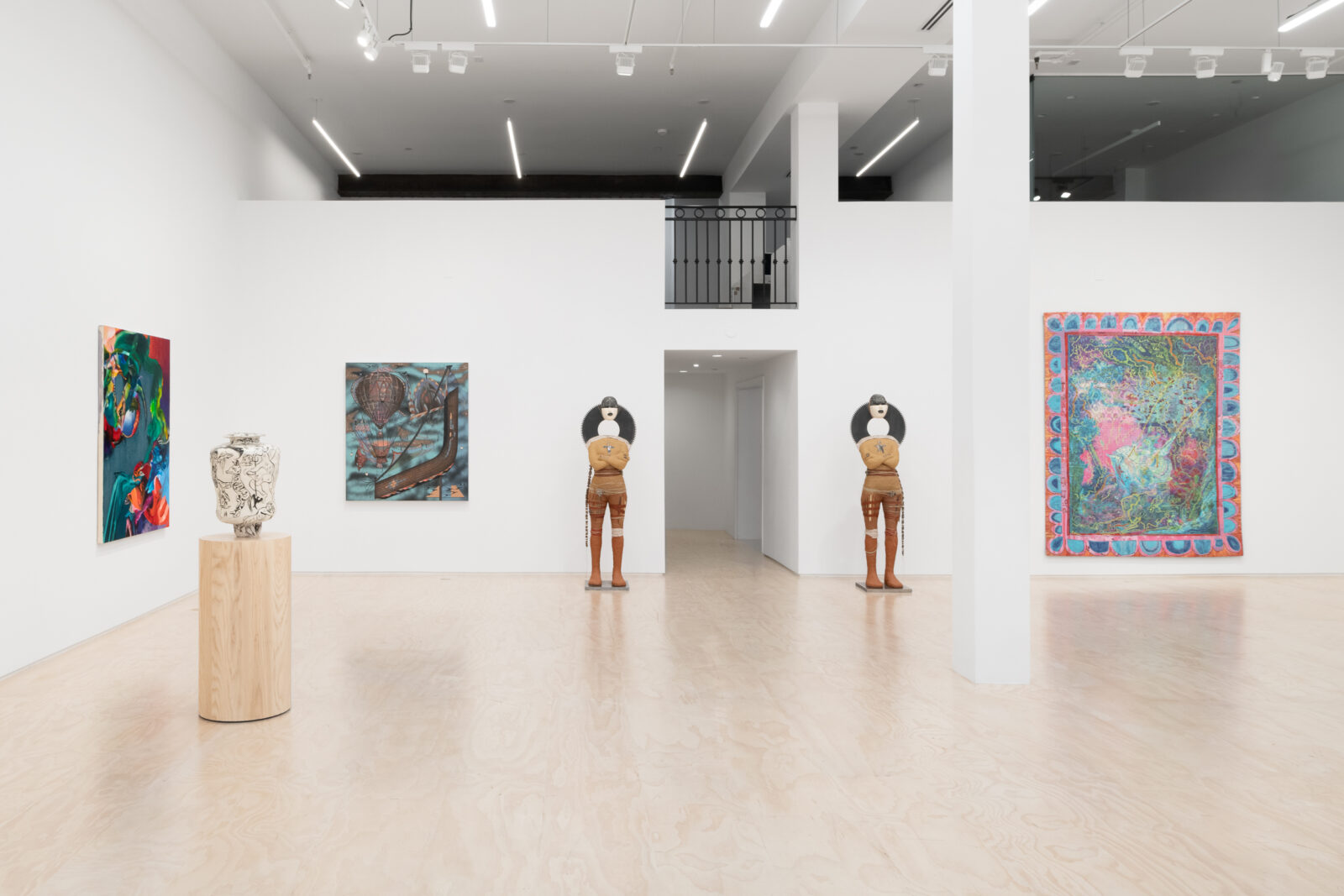
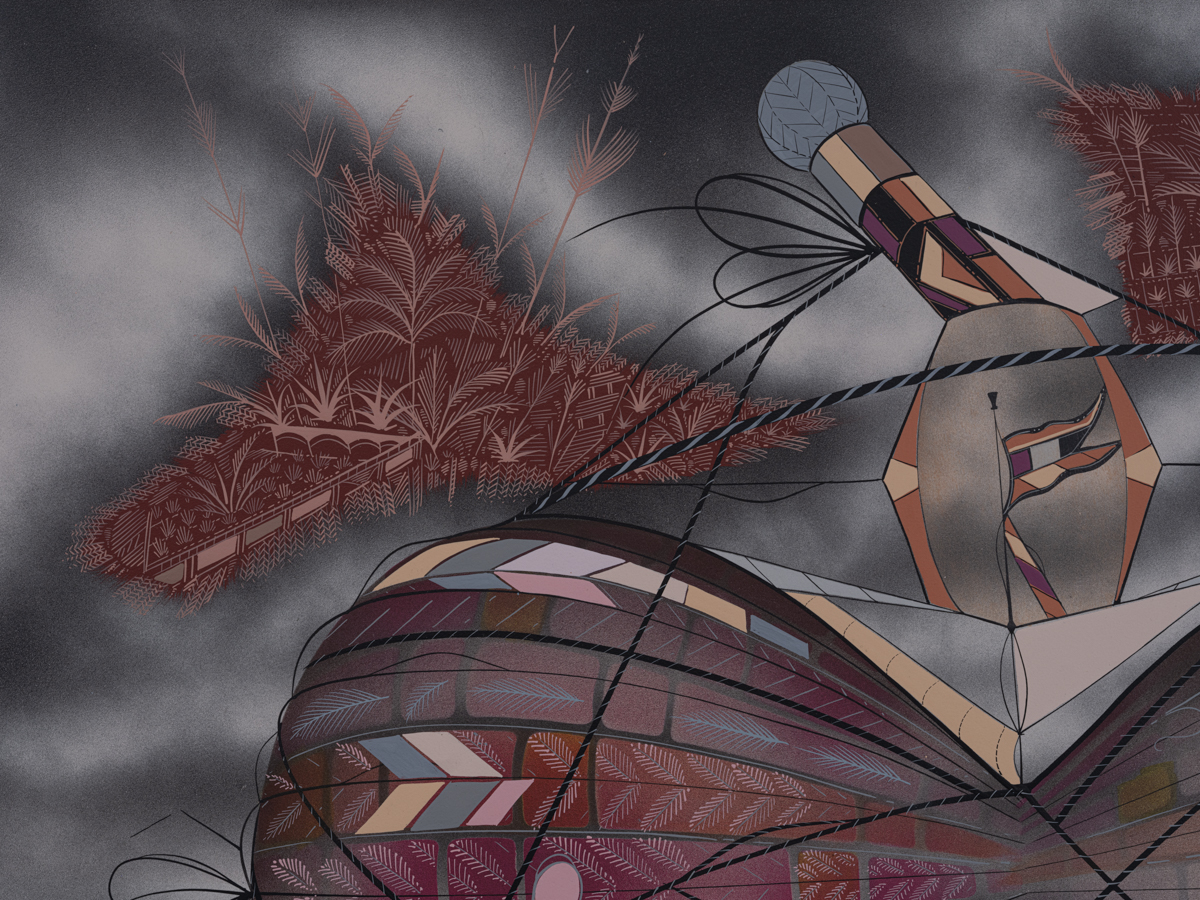
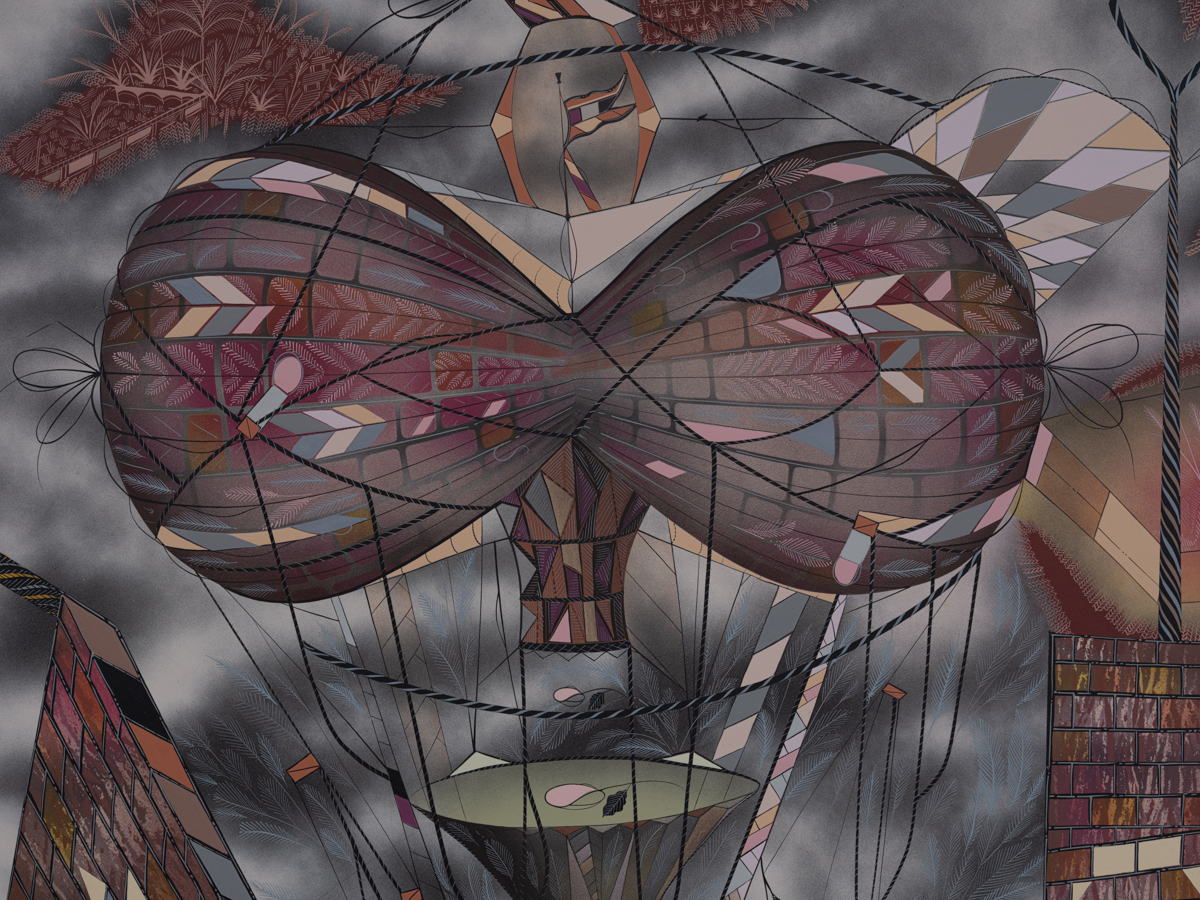
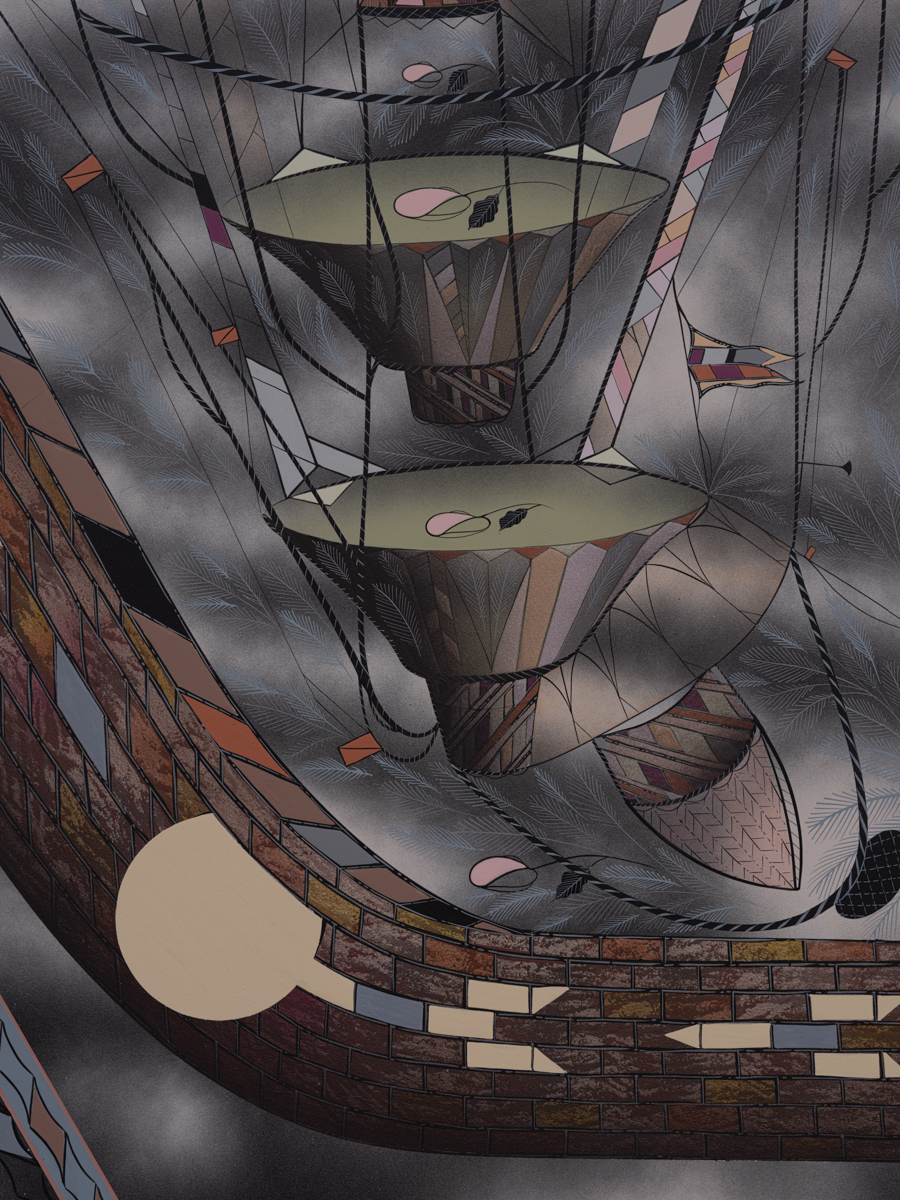
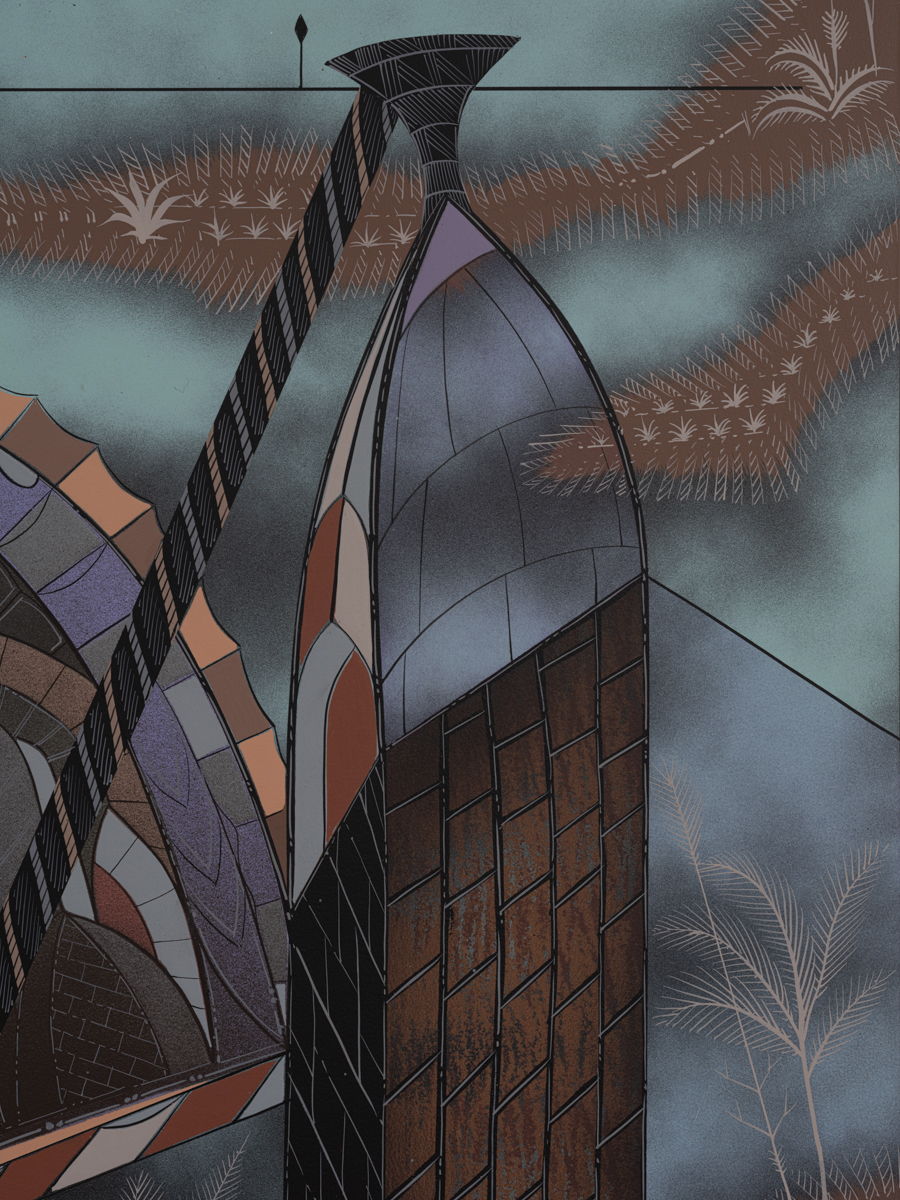
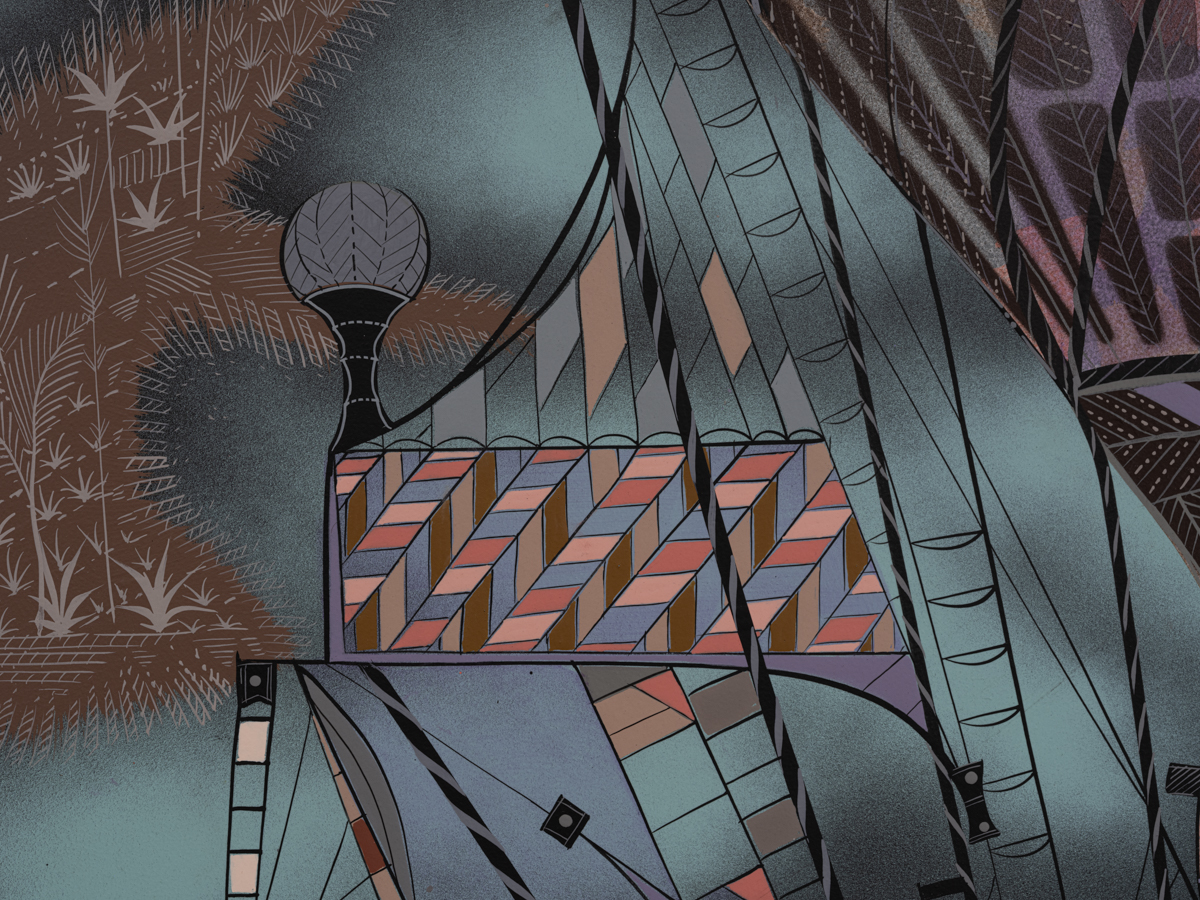
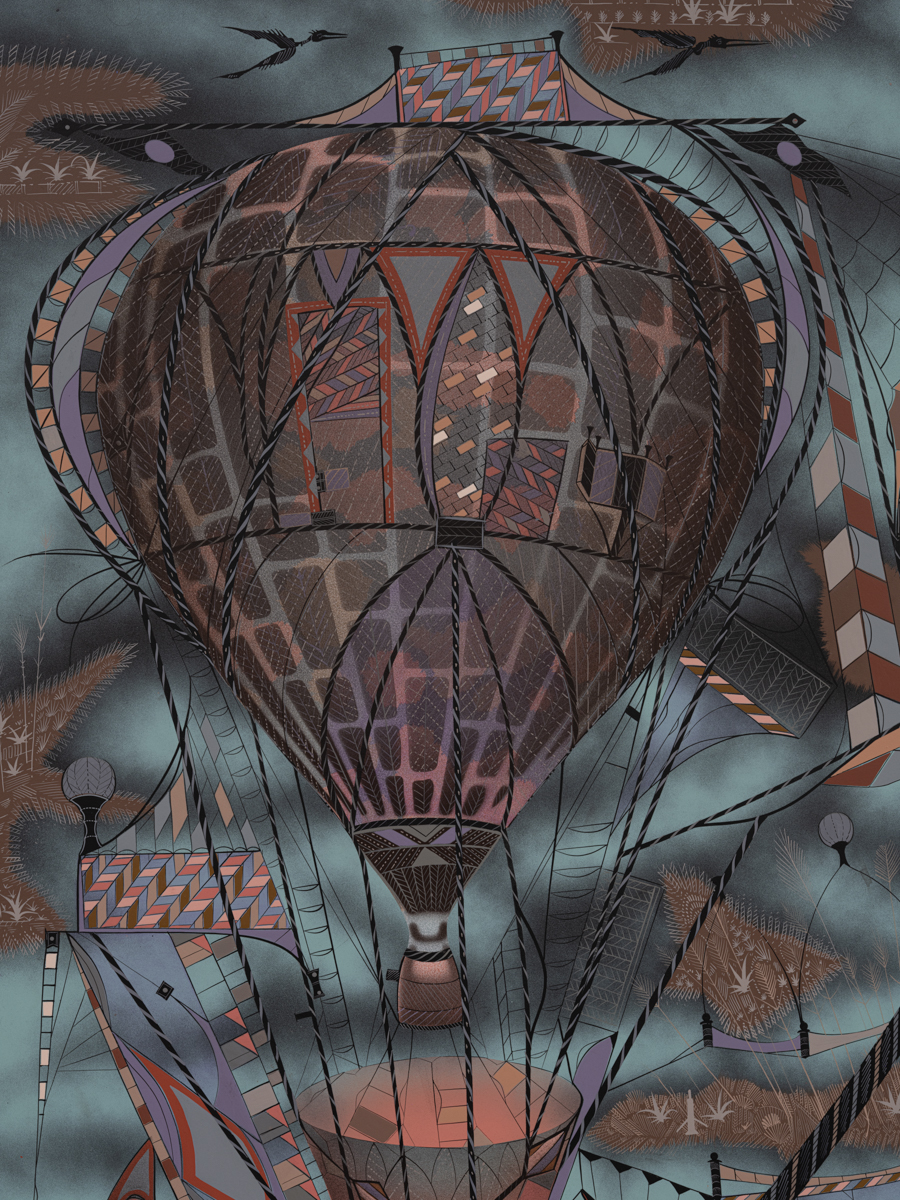
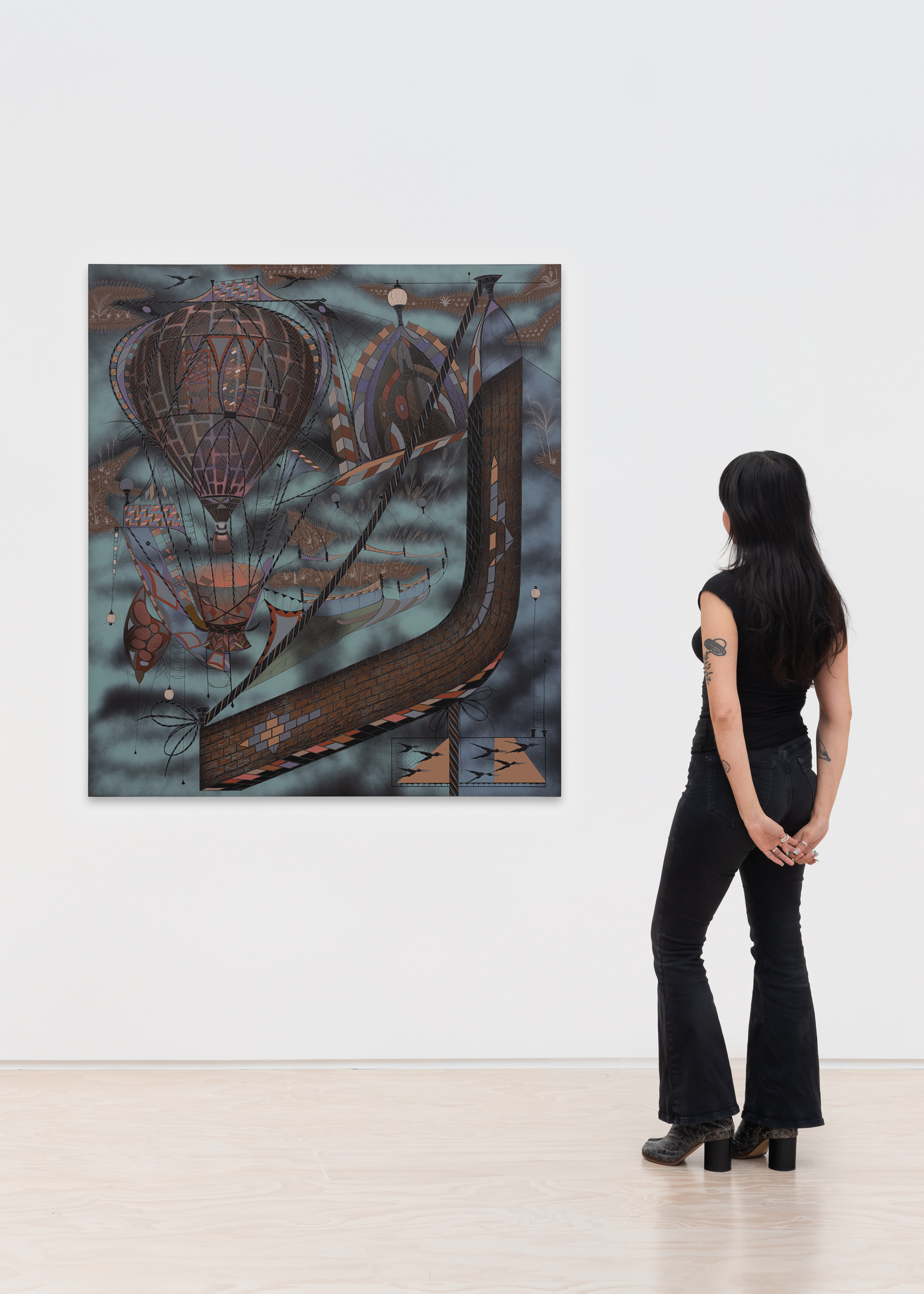
“Beauty is the Best Defense” includes two magic-realist paintings by Lari Pittman. Shaped by the artist’s hybrid Latin American identity and his willingness to confront the existential crises of the digital age, the acrylic-on-canvas works—The Remedy of Analog Space & Time #1 and #2 (both 2025)—depict fantastic worlds in which brick-and-mortar walls float alongside hot-air balloons, grasses grow in fiery clusters on clouds, and black birds continue their migration across stormy skies. Pittman’s canvases are at once exuberant and elegiac, suffused with nostalgia for the analog world without being reactionary. Like the hot-air balloons that first allowed humans to rise above the places they lived and look down with both awe and estrangement, his paintings offer a new vantage point—one animated by the romance of travel, a fascination with the future, and a wistful mourning for what is slipping away. Evoking the caprice and metaphorical richness of Francisco Goya, Frida Kahlo, and Remedios Varo, Pittman’s paintings affirm a commitment to the adventure of life even at the edge of twilight.

Tishan Hsu
skin-fur-mesh-blue, 2025
UV-print, silicone, ink, acrylic, and stainless steel on wood
47 1/2 x 62 x 5 1/2 inches / 120.7 x 157.5 x 14 cm
skin-fur-mesh-blue, 2025
UV-print, silicone, ink, acrylic, and stainless steel on wood
47 1/2 x 62 x 5 1/2 inches / 120.7 x 157.5 x 14 cm
INQUIRE
Rose B. Simpson
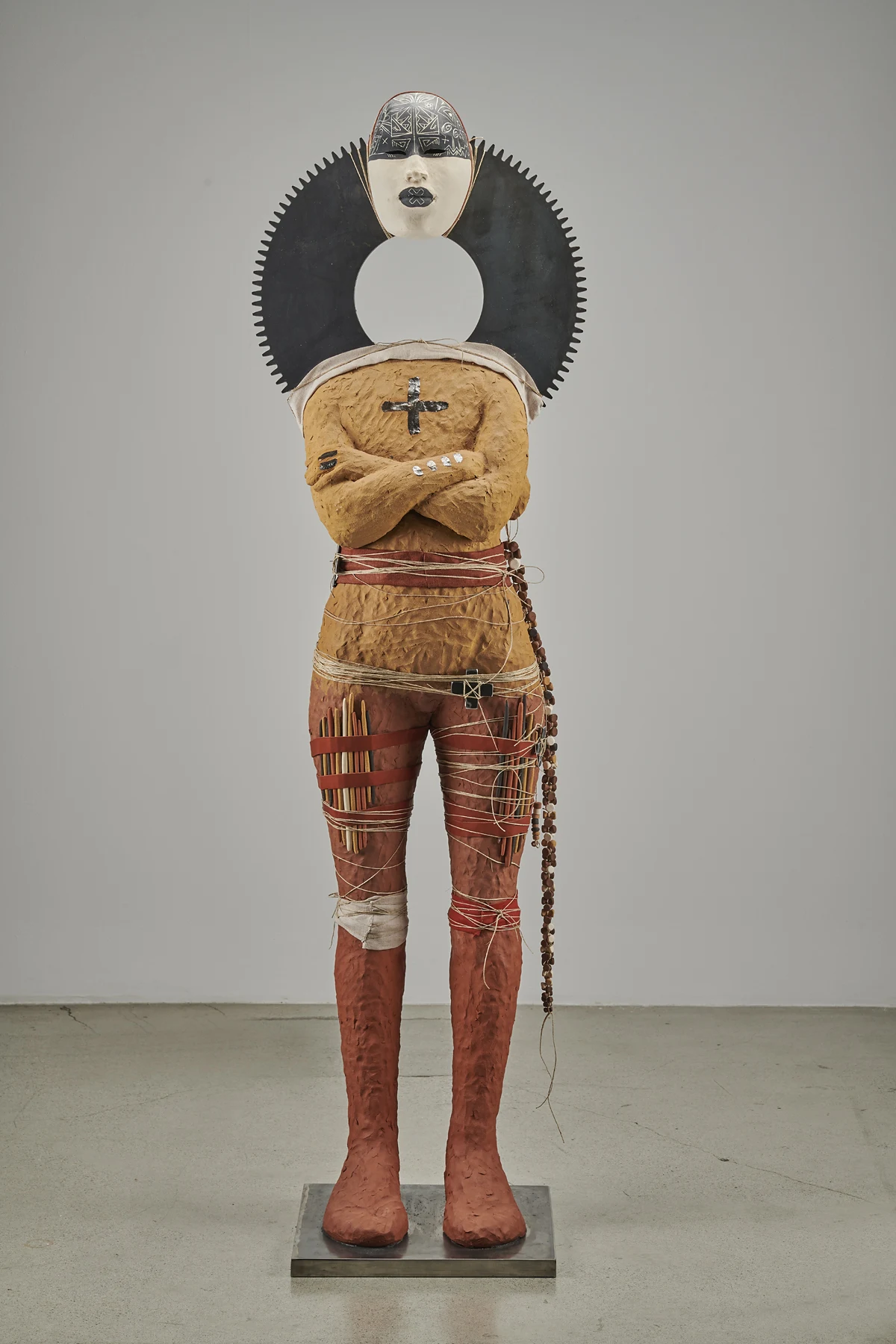
Root A, 2019
Ceramic, glaze, linen, jute string, steel, and leather
71 1/2 x 20 1/2 x 16 inches / 181.6 x 52.1 x 40.6 cm
Root A, 2019
Ceramic, glaze, linen, jute string, steel, and leather
71 1/2 x 20 1/2 x 16 inches / 181.6 x 52.1 x 40.6 cm
INQUIRE
Rose B. Simpson
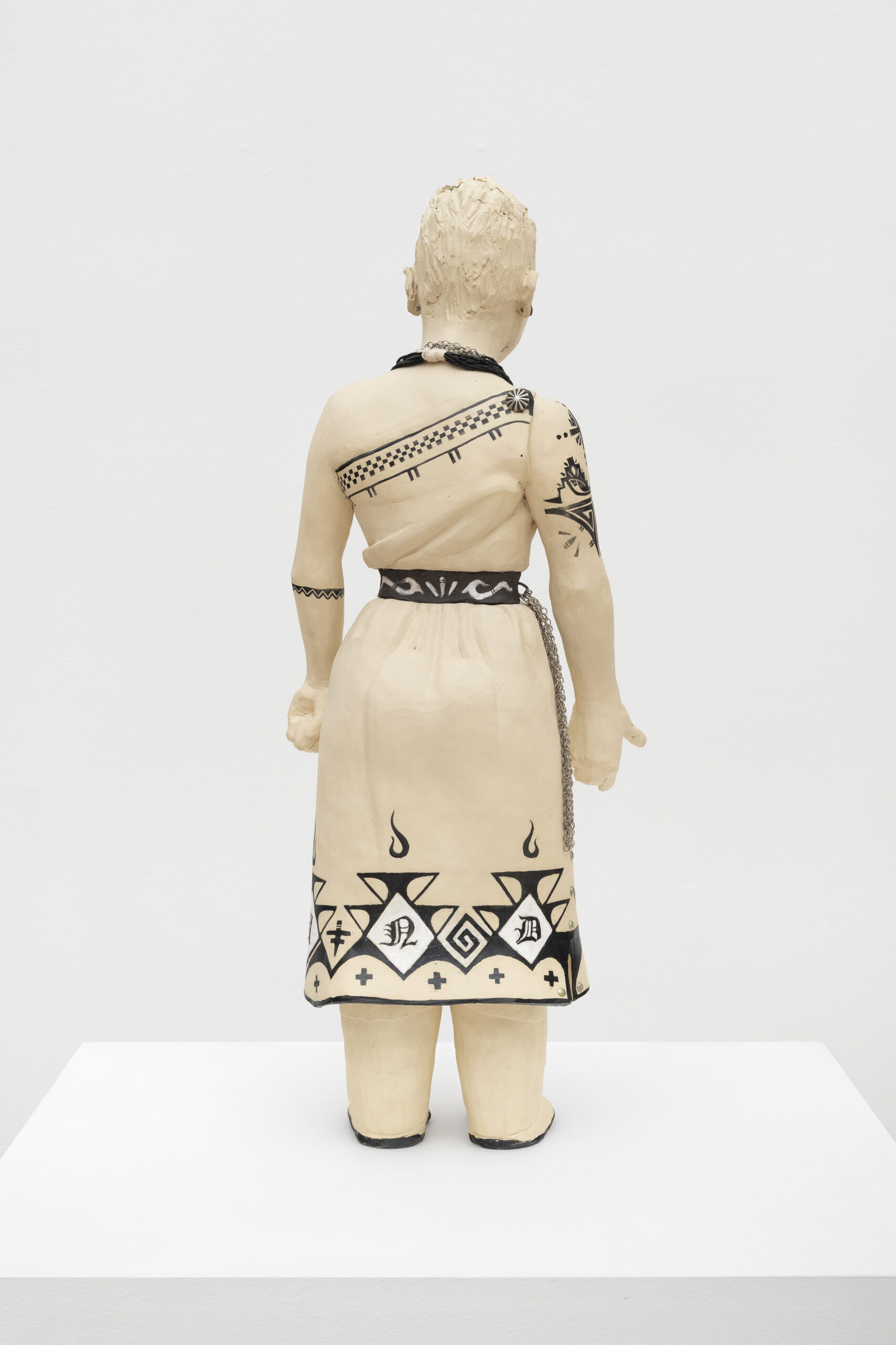
Prayer, 2014
Ceramic and found objects
25 1/2 x 9 1/2 x 6 inches / 64.8 x 24.1 x 15.2 cm
Prayer, 2014
Ceramic and found objects
25 1/2 x 9 1/2 x 6 inches / 64.8 x 24.1 x 15.2 cm
INQUIRE
Rose B. Simpson
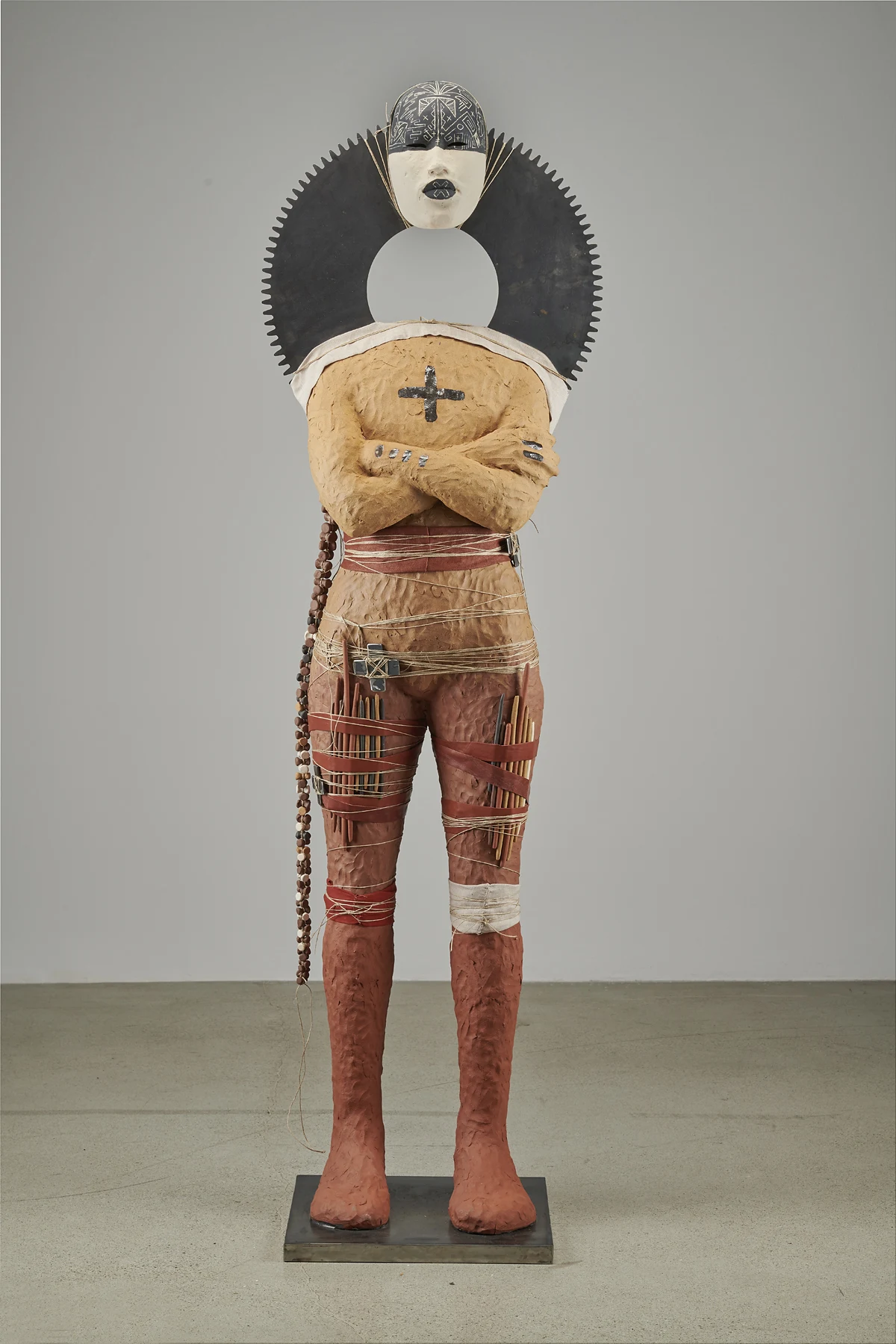
Root 1, 2019
Ceramic, glaze, linen, jute string, steel, and leather
70 x 20 1/2 x 16 inches / 177.8 x 52.1 x 40.6 cm
Root 1, 2019
Ceramic, glaze, linen, jute string, steel, and leather
70 x 20 1/2 x 16 inches / 177.8 x 52.1 x 40.6 cm
INQUIRE
Rose B. Simpson
Root A, 2019
Ceramic, glaze, linen, jute string, steel, and leather
71 1/2 x 20 1/2 x 16 inches / 181.6 x 52.1 x 40.6 cm
Root A, 2019
Ceramic, glaze, linen, jute string, steel, and leather
71 1/2 x 20 1/2 x 16 inches / 181.6 x 52.1 x 40.6 cm
INQUIRE
Rose B. Simpson
Prayer, 2014
Ceramic and found objects
25 1/2 x 9 1/2 x 6 inches / 64.8 x 24.1 x 15.2 cm
Prayer, 2014
Ceramic and found objects
25 1/2 x 9 1/2 x 6 inches / 64.8 x 24.1 x 15.2 cm
INQUIRE
Rose B. Simpson
Root 1, 2019
Ceramic, glaze, linen, jute string, steel, and leather
70 x 20 1/2 x 16 inches / 177.8 x 52.1 x 40.6 cm
Root 1, 2019
Ceramic, glaze, linen, jute string, steel, and leather
70 x 20 1/2 x 16 inches / 177.8 x 52.1 x 40.6 cm
INQUIRE
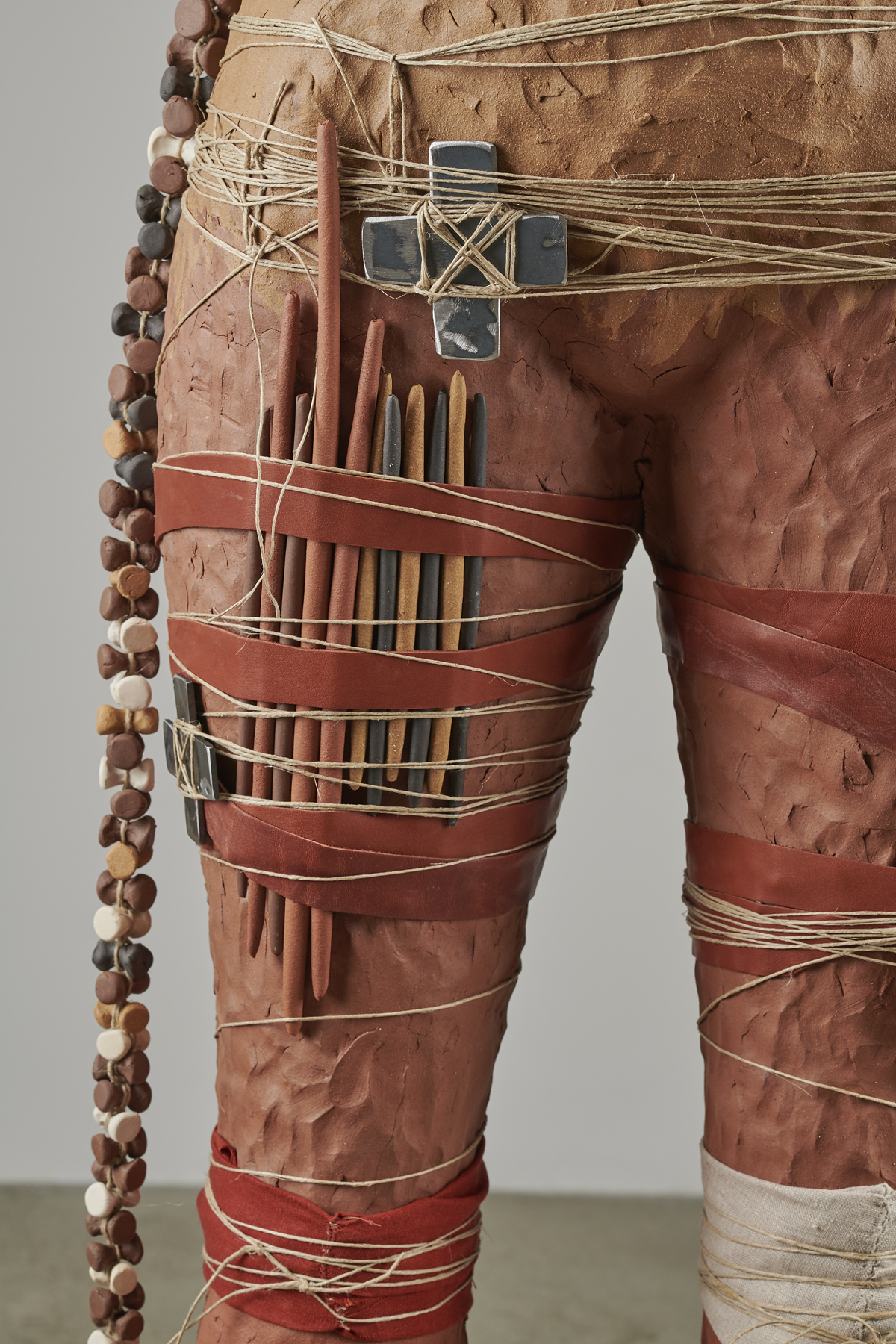
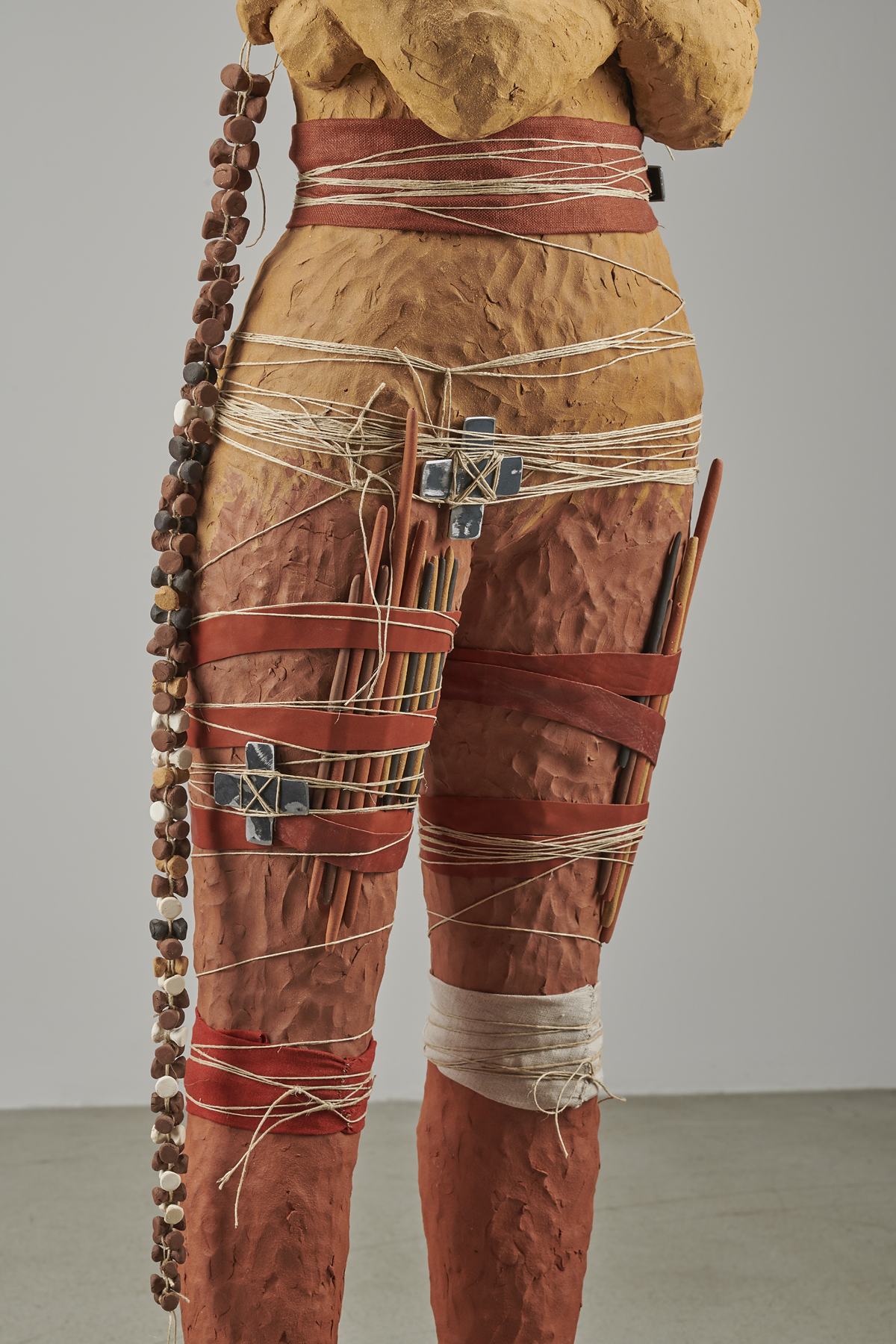
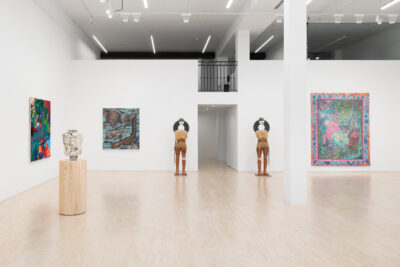
By contrast, Rose B. Simpson’s sculptures are conceived and created far from virtual computation, on the Santa Clara Pueblo—home to a matriarchal ceramic tradition spanning at least a millennium. Root 1 and Root A (both 2019) stand six feet tall, like post-apocalyptic sentinels, crowned with metal gears that suggest halos. Brought to life by the artist’s hands in white, red, and ochre clay, the figures are adorned with black-glaze emblems that offer protection and guidance. Tools for art and life are secured with linen, jute, and leather strips. Simpson’s unequivocal twins will remember each other and the place from which they came, wherever they roam. An earlier, tabletop, off-white clay sculpture titled Prayer (2014) presents a uniquely realistic self-portrait combining ceremonial dress with a non-traditional short haircut. The figure’s opposing hand gestures—one extended forward, the other turned back—propose openness to the future and respect for the past.

INQUIRE
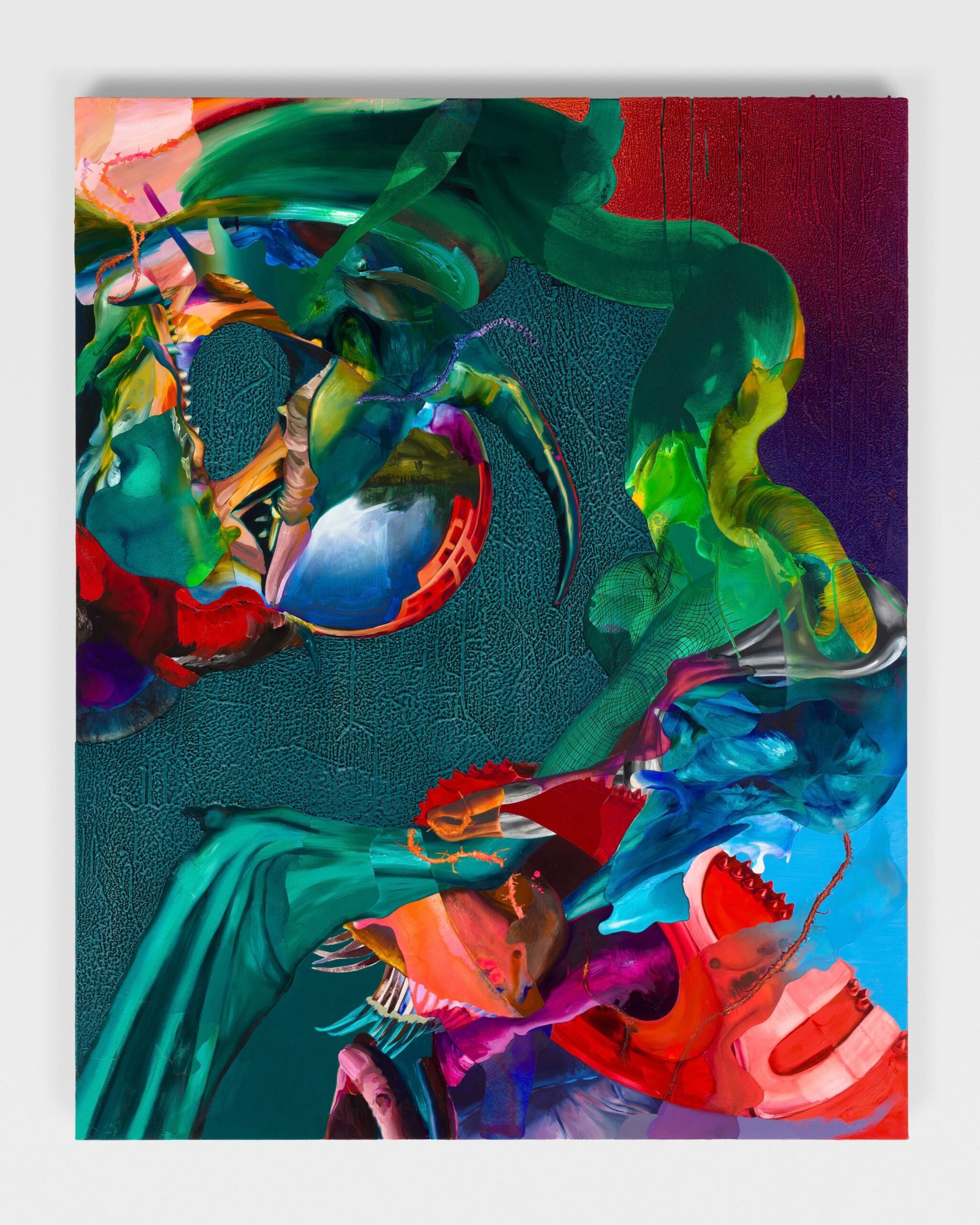
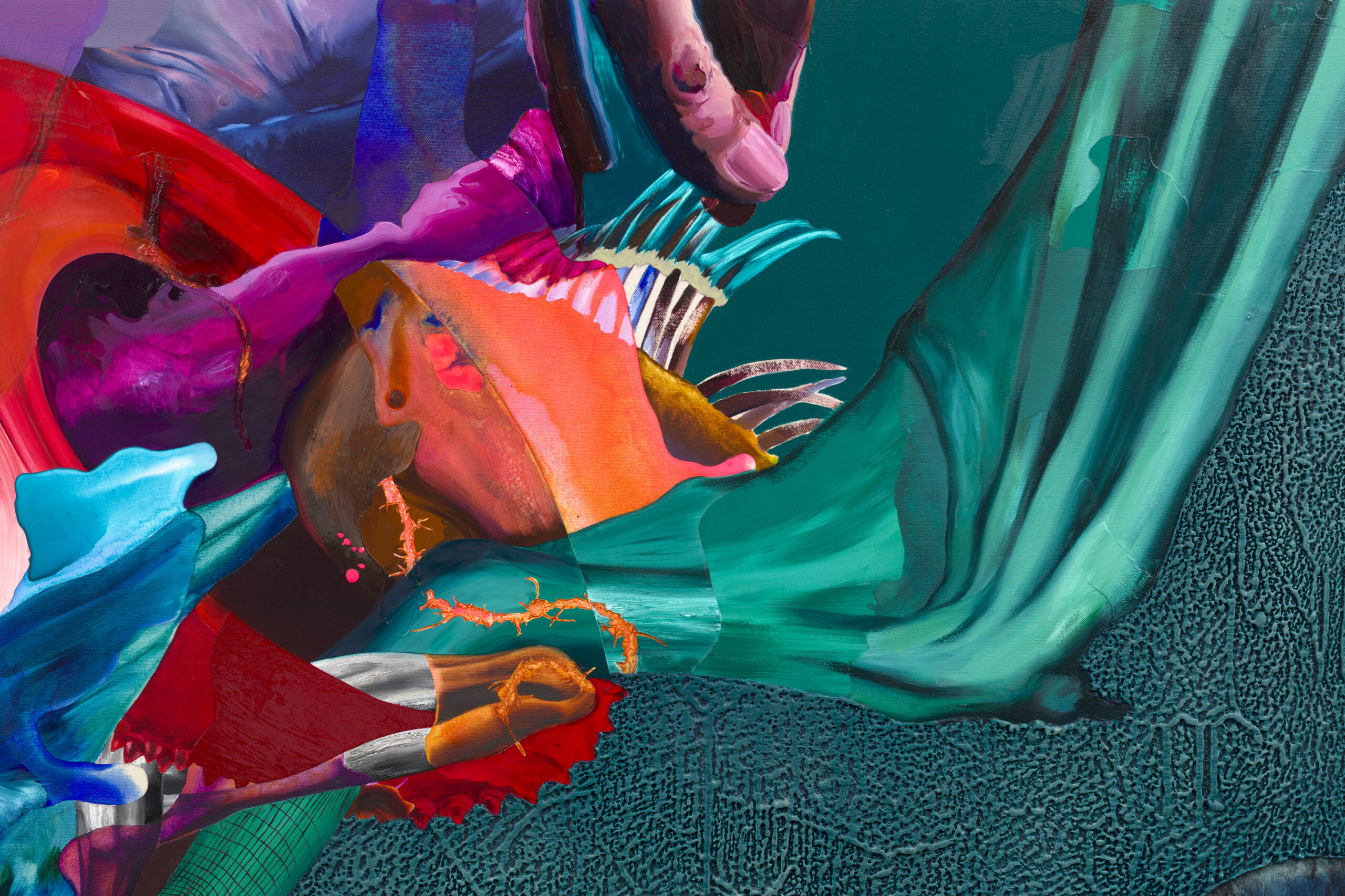
Colombian-American painter Ilana Savdie, based in Brooklyn, contributes a single painting to the exhibition. Gorgon Stare (2026) takes its name from two realms of power: Medusa, the only mortal Gorgon whose deadly gaze turned onlookers to stone; and the U.S. military’s wide-area surveillance technology of the same name. At the painting’s center is a mirrored orb—or panoptic eye—reflecting an urban scene. Surrounding it, Savdie conjures a carnivalesque universe of quasi-abstract forms in oil, acrylic, beeswax, and encaustic, punctuated by vivid representations of a single claw or Lego-like teeth. Savdie moves instinctively between styles and registers, treating high and low as equals within compositions that function like neural networks—everything connected, nothing ranked. She describes her paintings as “bodies” that embrace “excess over order, distortion over resemblance, and movement that resists capture or classification.” Here, seduction is integral to Savdie’s power play, which—along with camouflage and visual overload—speaks to sensualities that refuse to be pinned down.
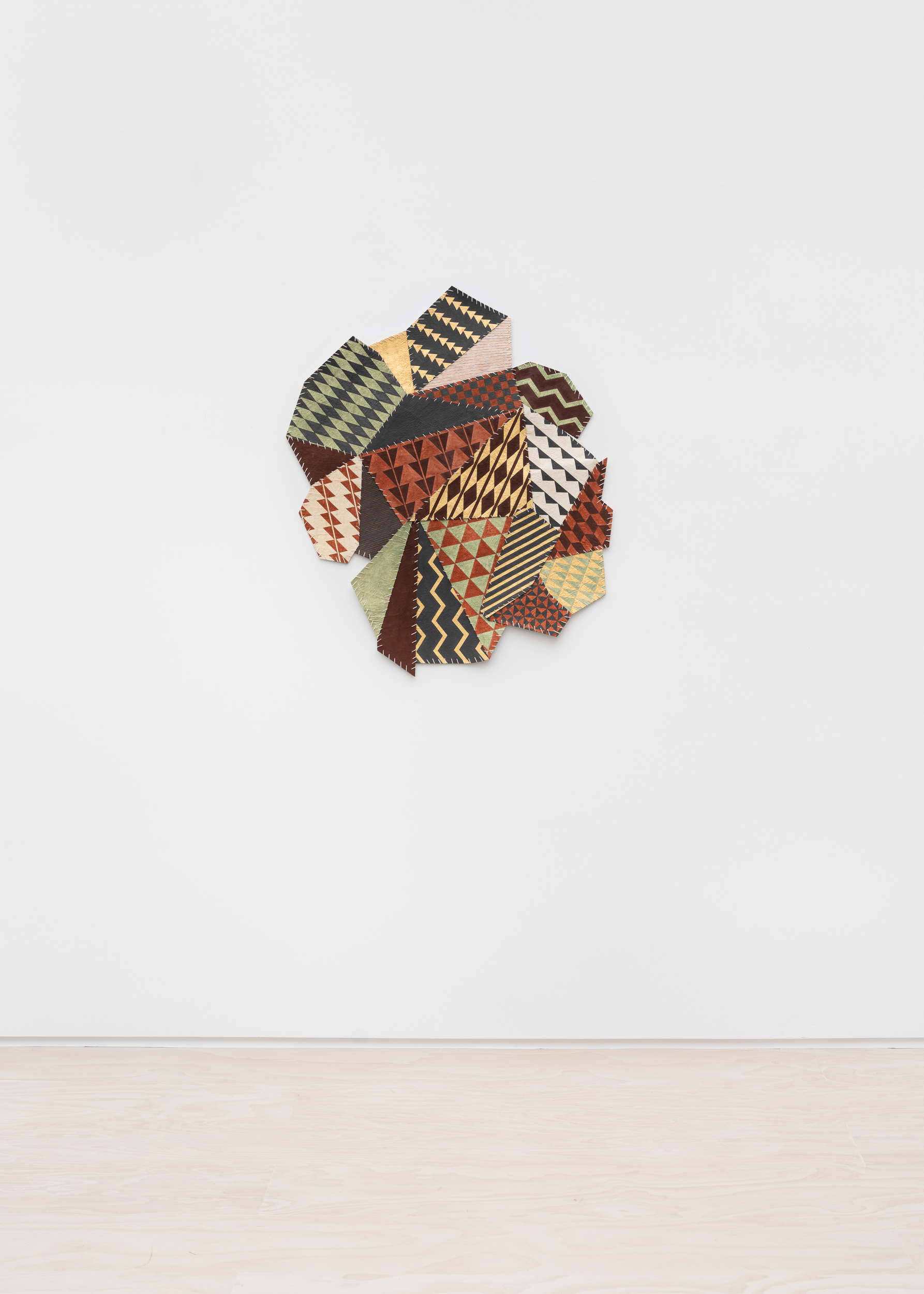
Lehuauakea
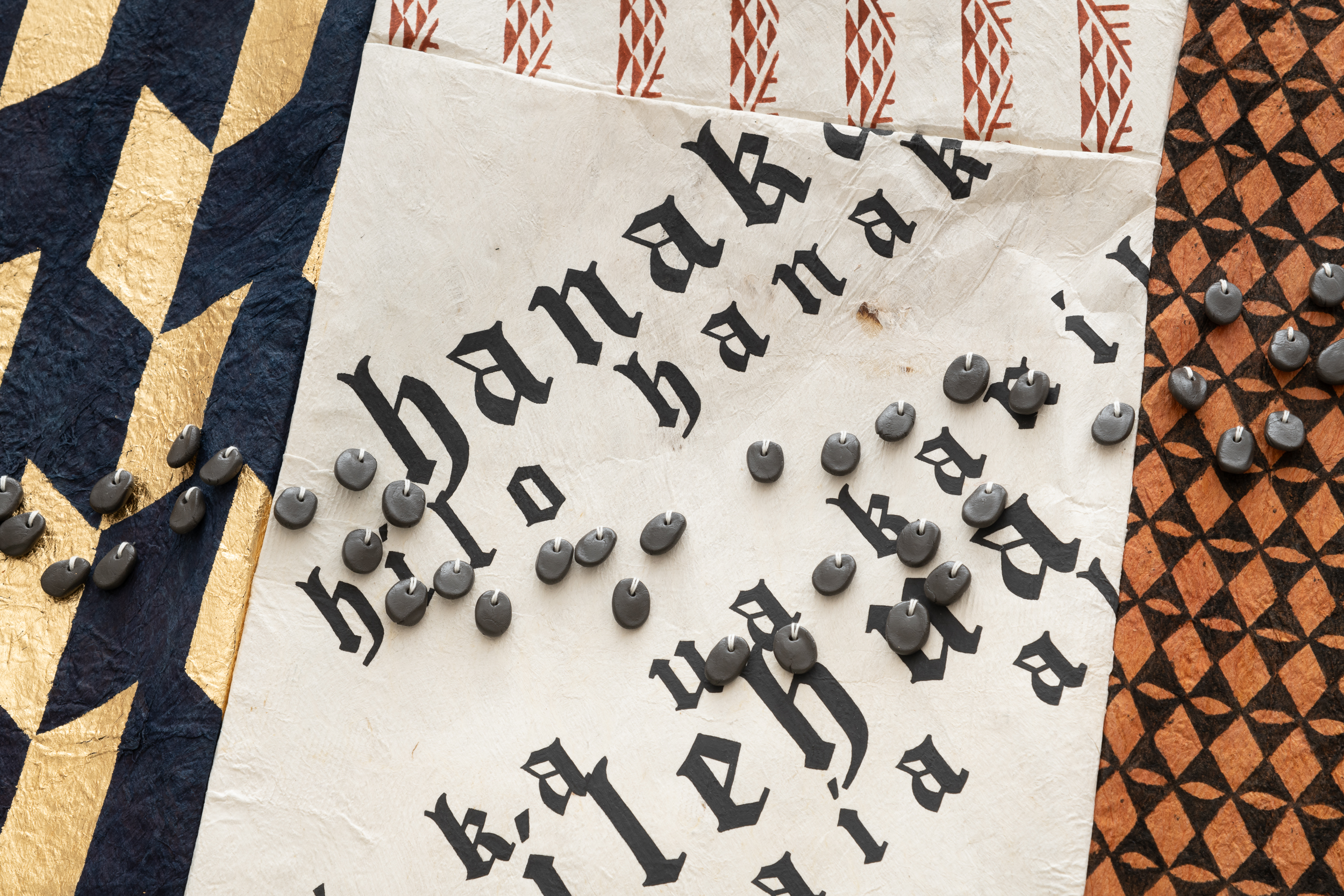
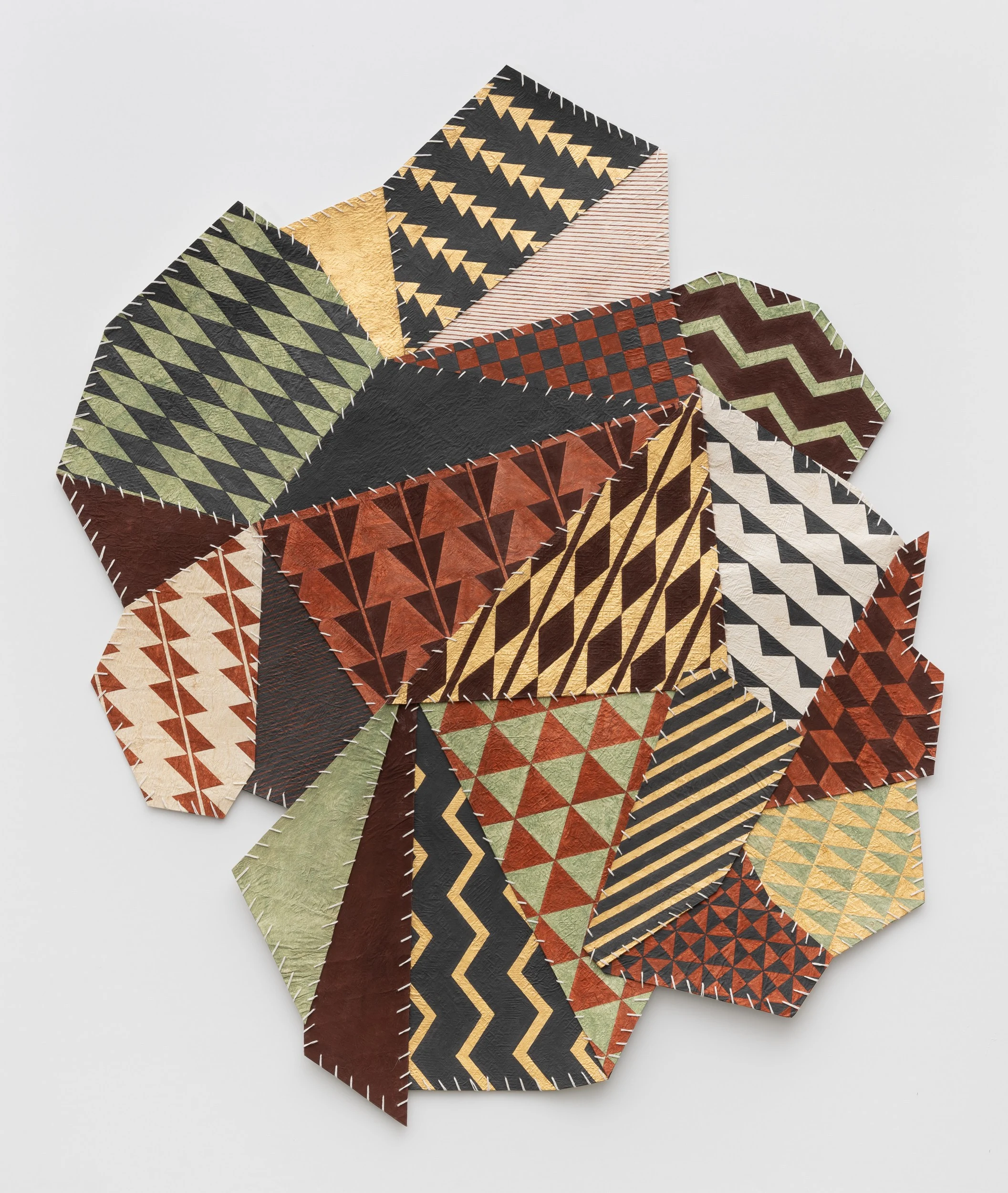
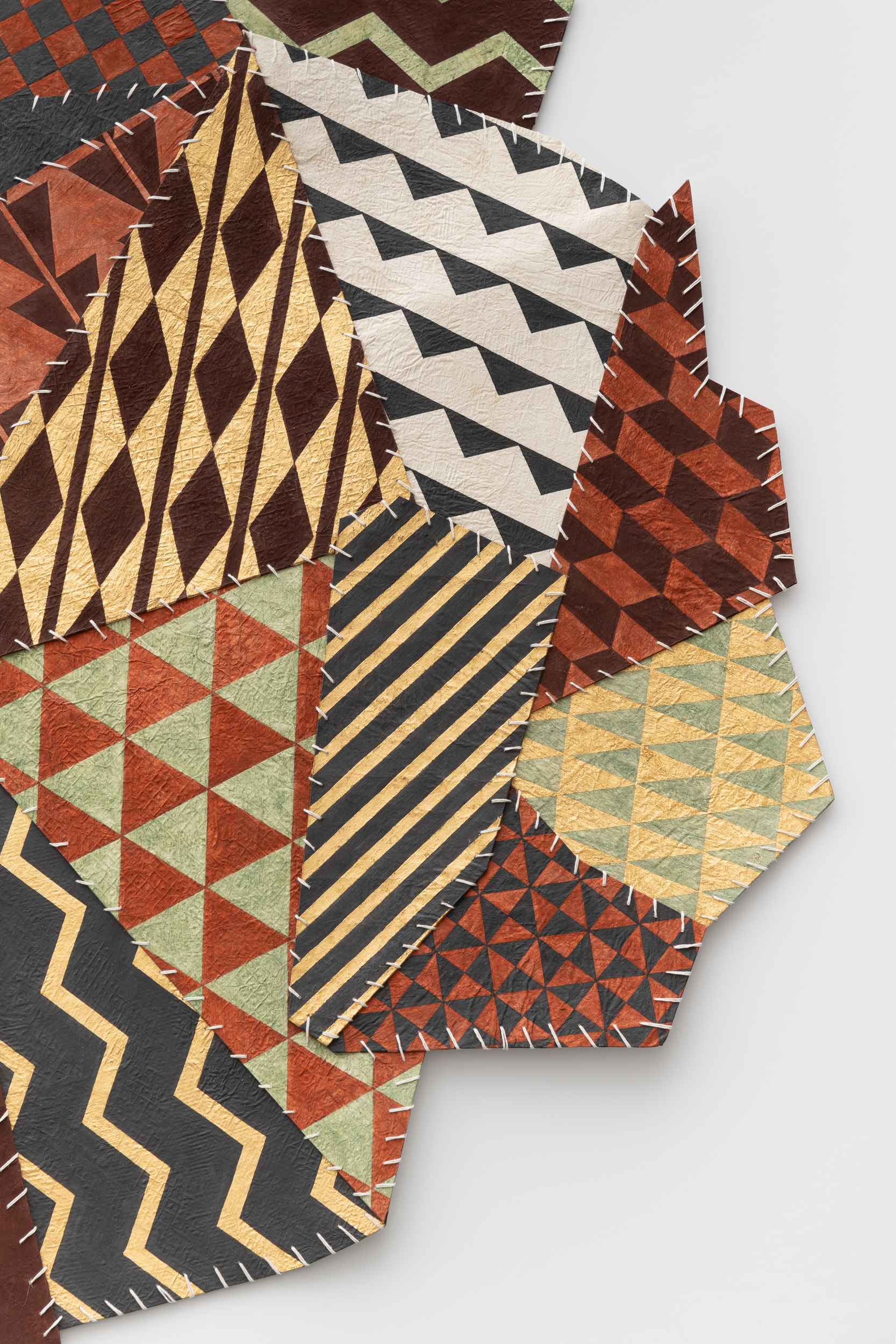
Repeat After Me (E Hoʻopili Mai) II, 2026
Earth pigments, 24k gold leaf, cotton thread, and kapa (barkcloth)
42 x 30 inches / 106.7 x 76.2 cm
Repeat After Me (E Hoʻopili Mai) II, 2026
Earth pigments, 24k gold leaf, cotton thread, and kapa (barkcloth)
42 x 30 inches / 106.7 x 76.2 cm
INQUIRE
Lehuauakea
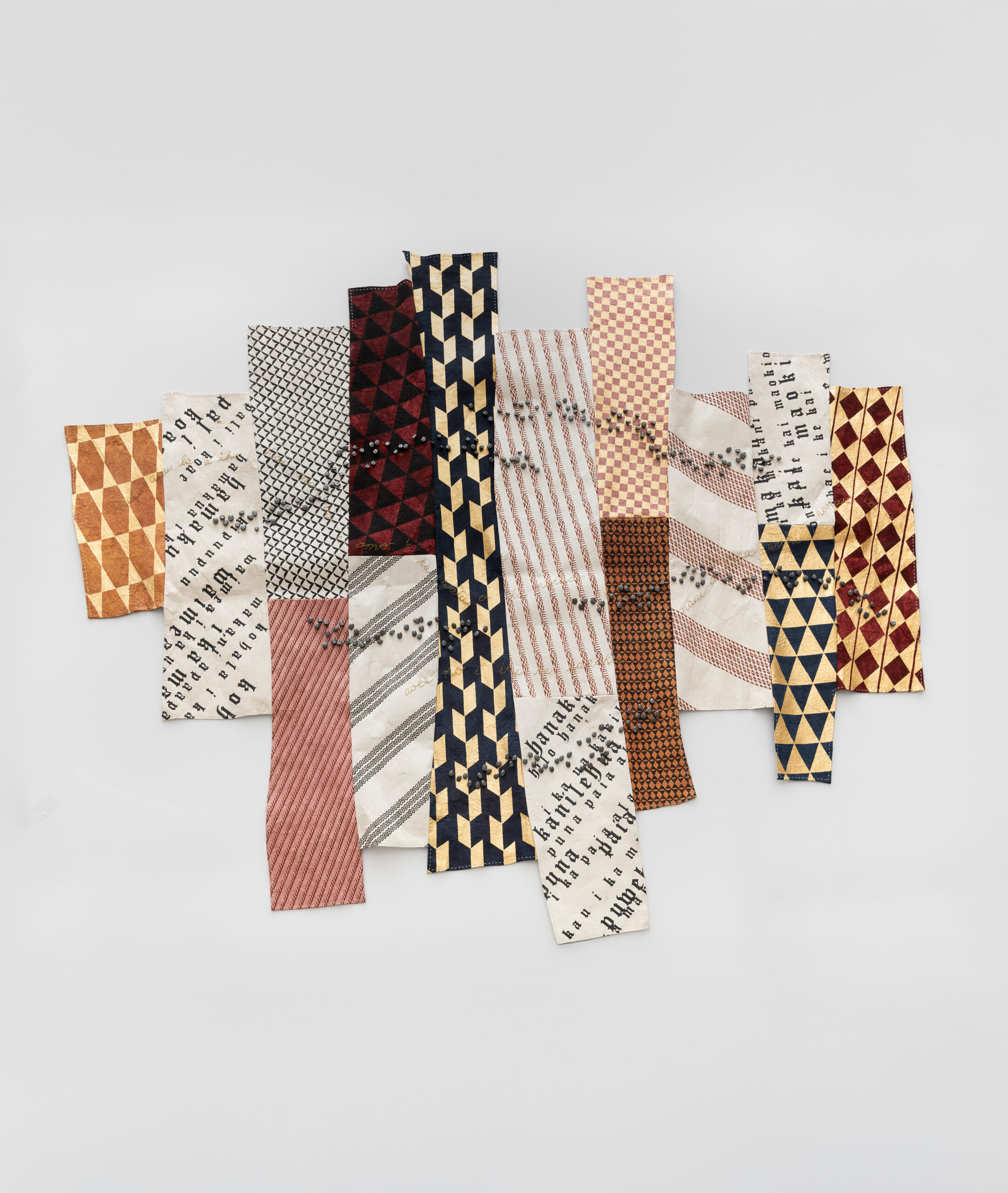
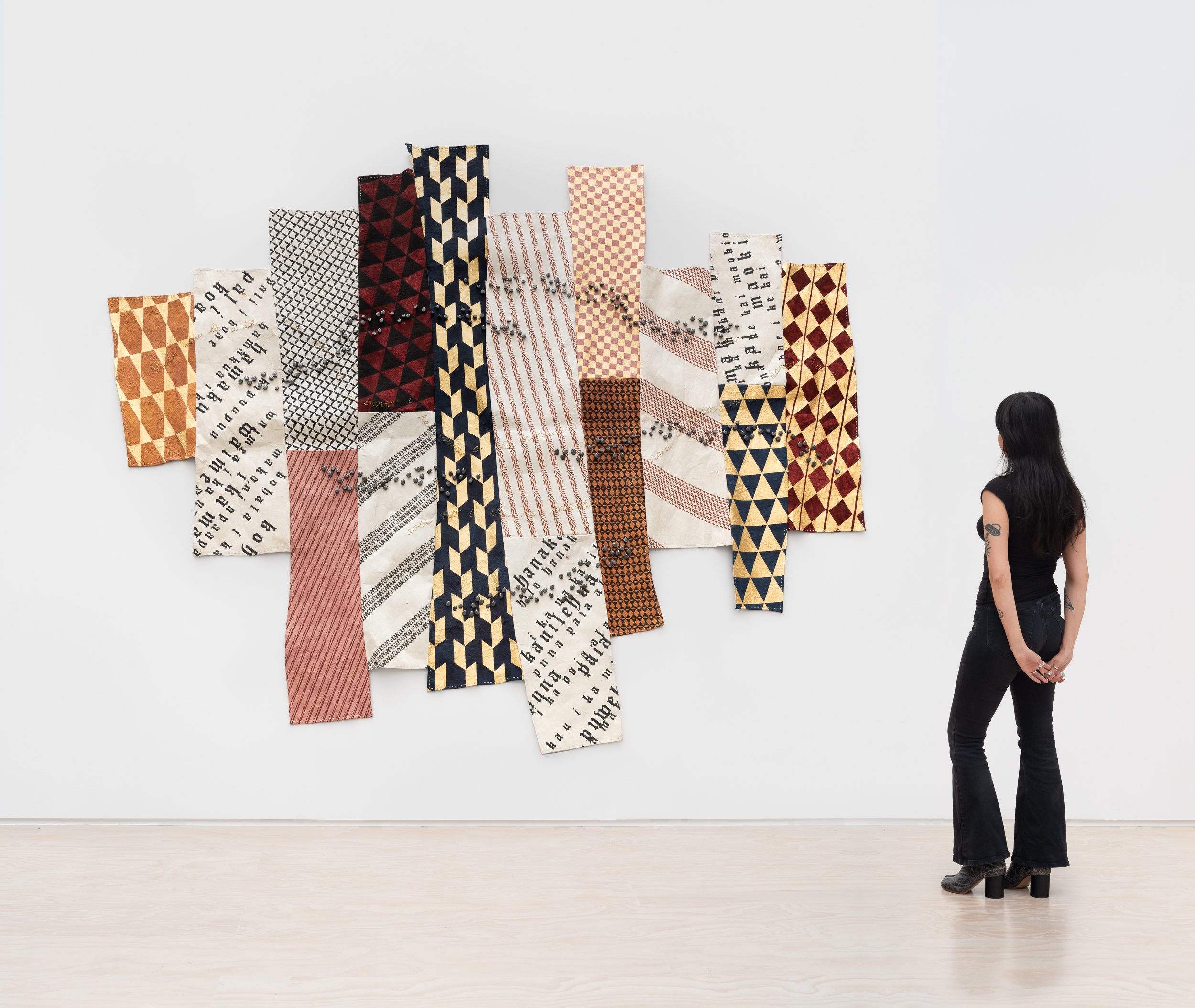
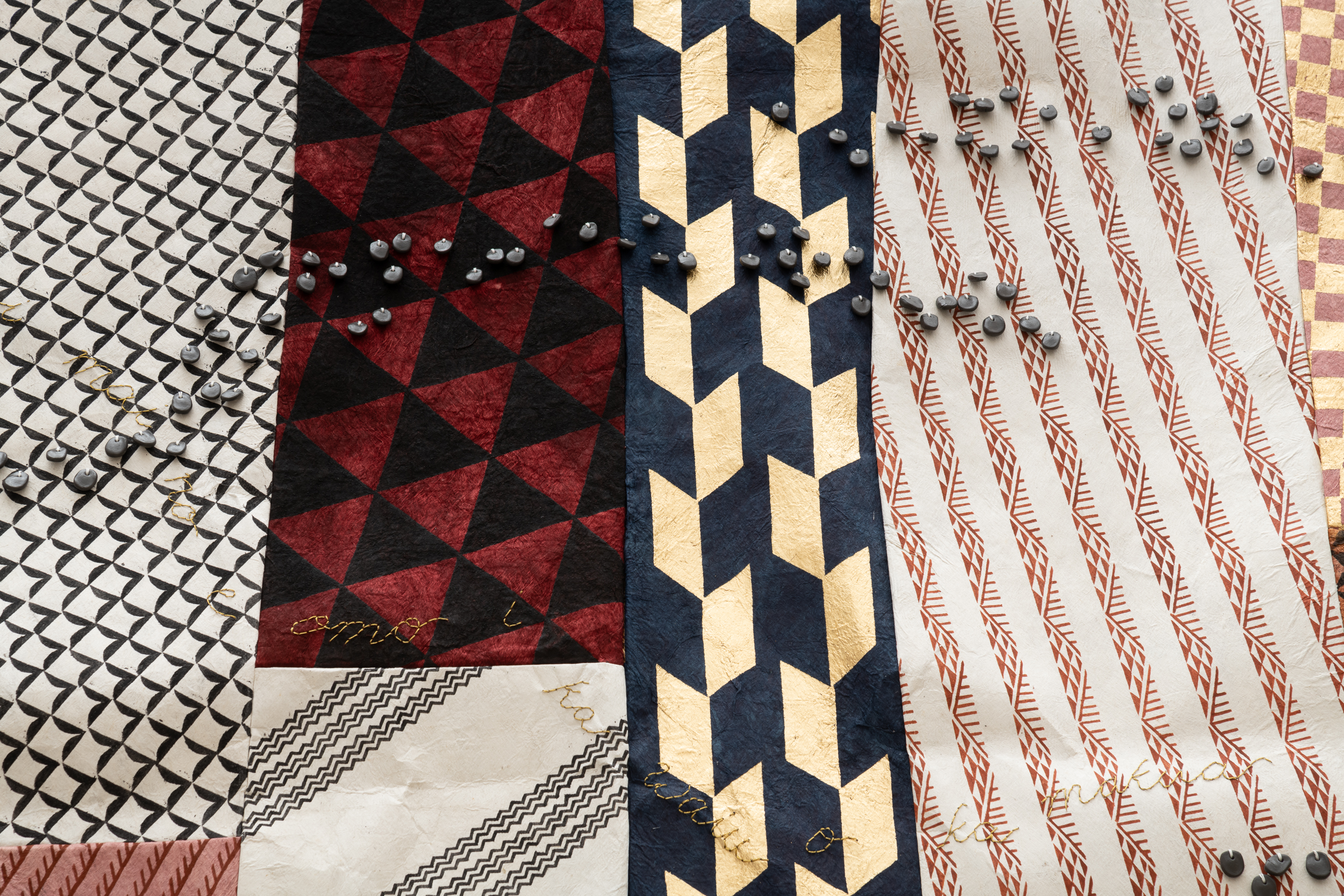
The Voice That Sings My Name, 2026
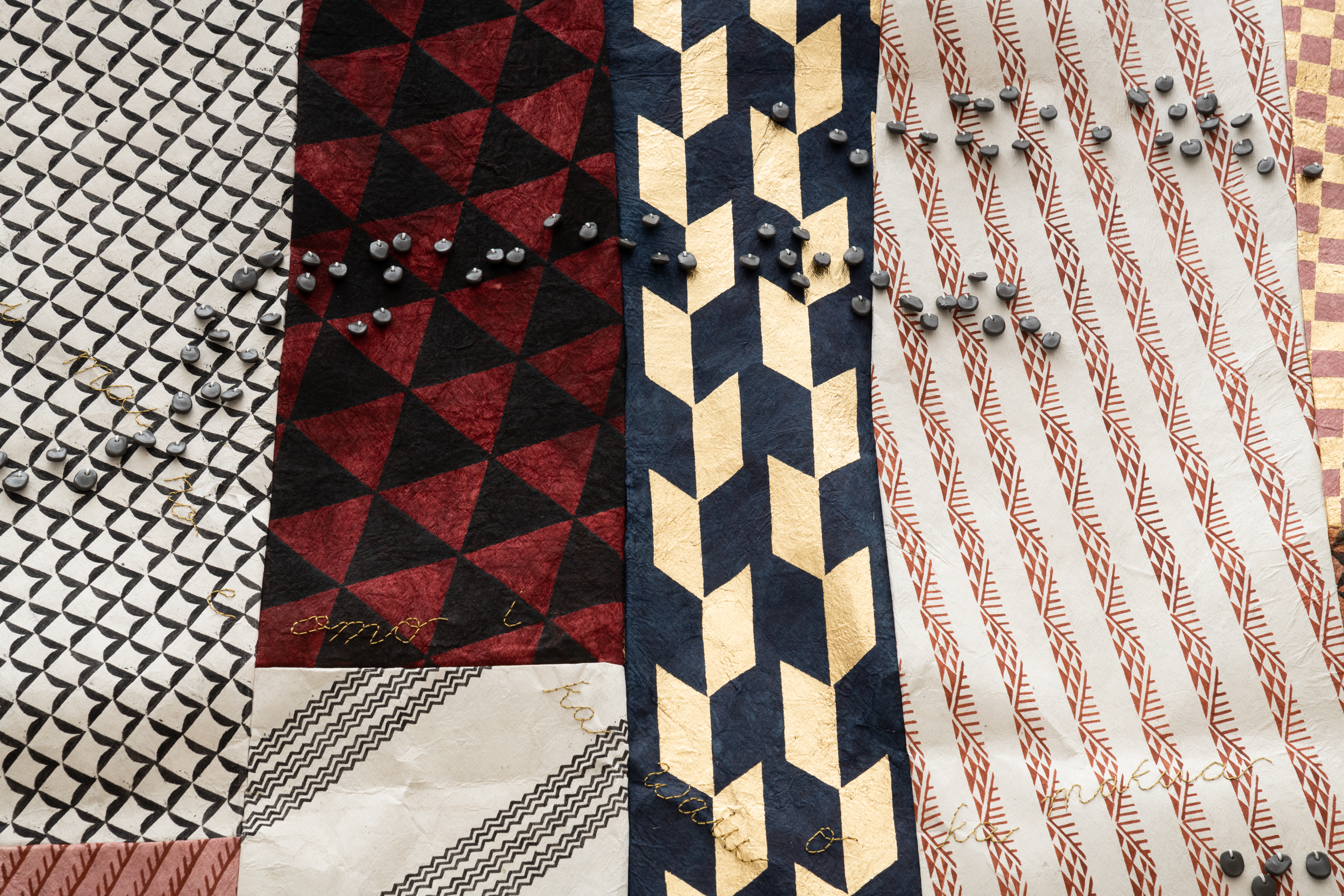
Earth pigments, wildfire charcoal, metal leaf, cotton thread, ceramic beads, and kapa (barkcloth)
88 x 108 inches / 223.5 x 274.3 cm
The Voice That Sings My Name, 2026
Earth pigments, wildfire charcoal, metal leaf, cotton thread, ceramic beads, and kapa (barkcloth)
88 x 108 inches / 223.5 x 274.3 cm
INQUIRE
Lehuauakea
Repeat After Me (E Hoʻopili Mai) I, 2025
Earth pigments, 24k gold leaf, cotton thread, and kapa (barkcloth)
38 x 30 3/4 inches / 96.5 x 78.1 cm
Repeat After Me (E Hoʻopili Mai) I, 2025
Earth pigments, 24k gold leaf, cotton thread, and kapa (barkcloth)
38 x 30 3/4 inches / 96.5 x 78.1 cm
INQUIRE
Lehuauakea
Repeat After Me (E Hoʻopili Mai) II, 2026
Earth pigments, 24k gold leaf, cotton thread, and kapa (barkcloth)
42 x 30 inches / 106.7 x 76.2 cm
Repeat After Me (E Hoʻopili Mai) II, 2026
Earth pigments, 24k gold leaf, cotton thread, and kapa (barkcloth)
42 x 30 inches / 106.7 x 76.2 cm
INQUIRE
Lehuauakea
The Voice That Sings My Name, 2026
Earth pigments, wildfire charcoal, metal leaf, cotton thread, ceramic beads, and kapa (barkcloth)
88 x 108 inches / 223.5 x 274.3 cm
The Voice That Sings My Name, 2026
Earth pigments, wildfire charcoal, metal leaf, cotton thread, ceramic beads, and kapa (barkcloth)
88 x 108 inches / 223.5 x 274.3 cm
INQUIRE
Lehuauakea
Repeat After Me (E Hoʻopili Mai) I, 2025
Earth pigments, 24k gold leaf, cotton thread, and kapa (barkcloth)
38 x 30 3/4 inches / 96.5 x 78.1 cm
Repeat After Me (E Hoʻopili Mai) I, 2025
Earth pigments, 24k gold leaf, cotton thread, and kapa (barkcloth)
38 x 30 3/4 inches / 96.5 x 78.1 cm
INQUIRE
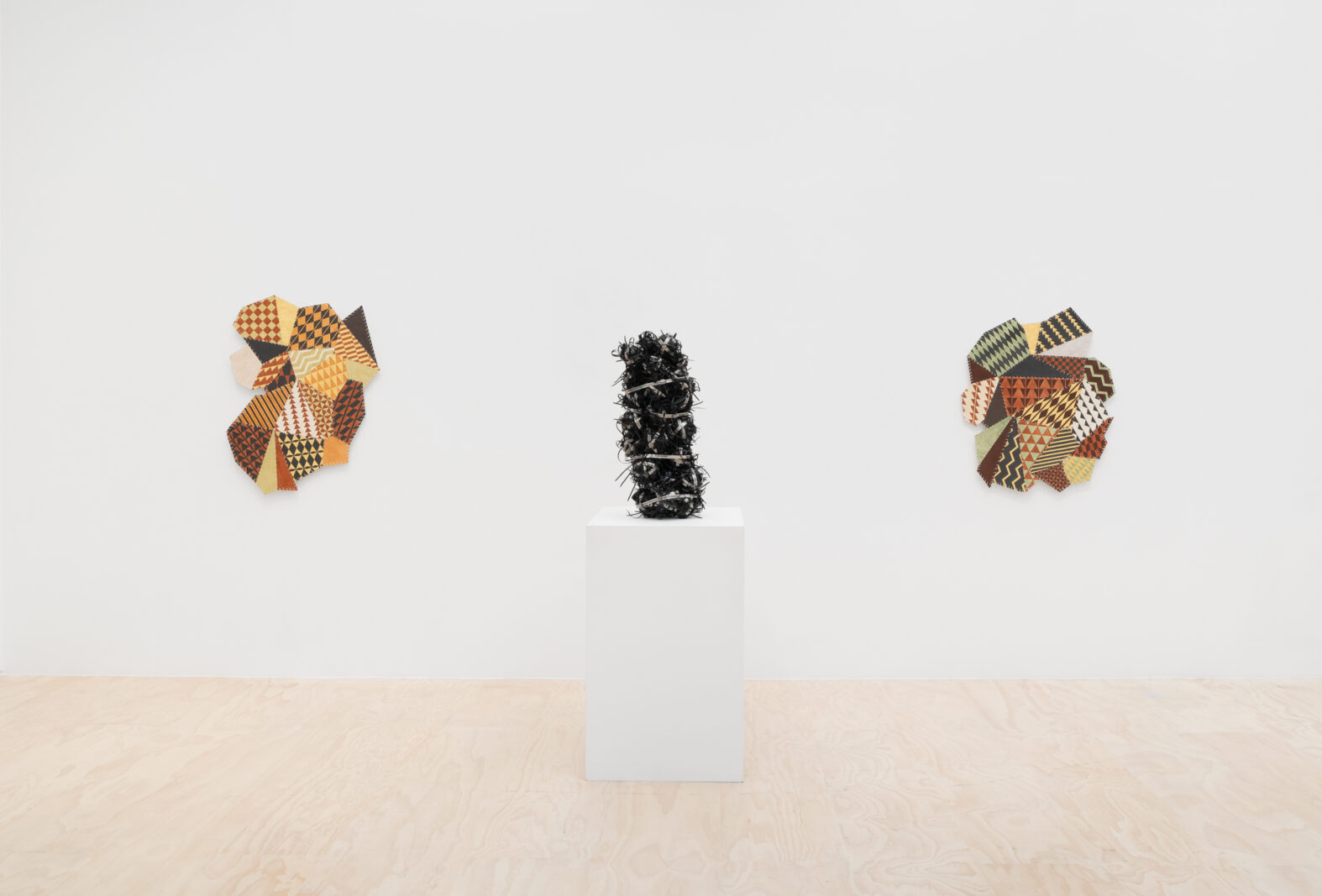
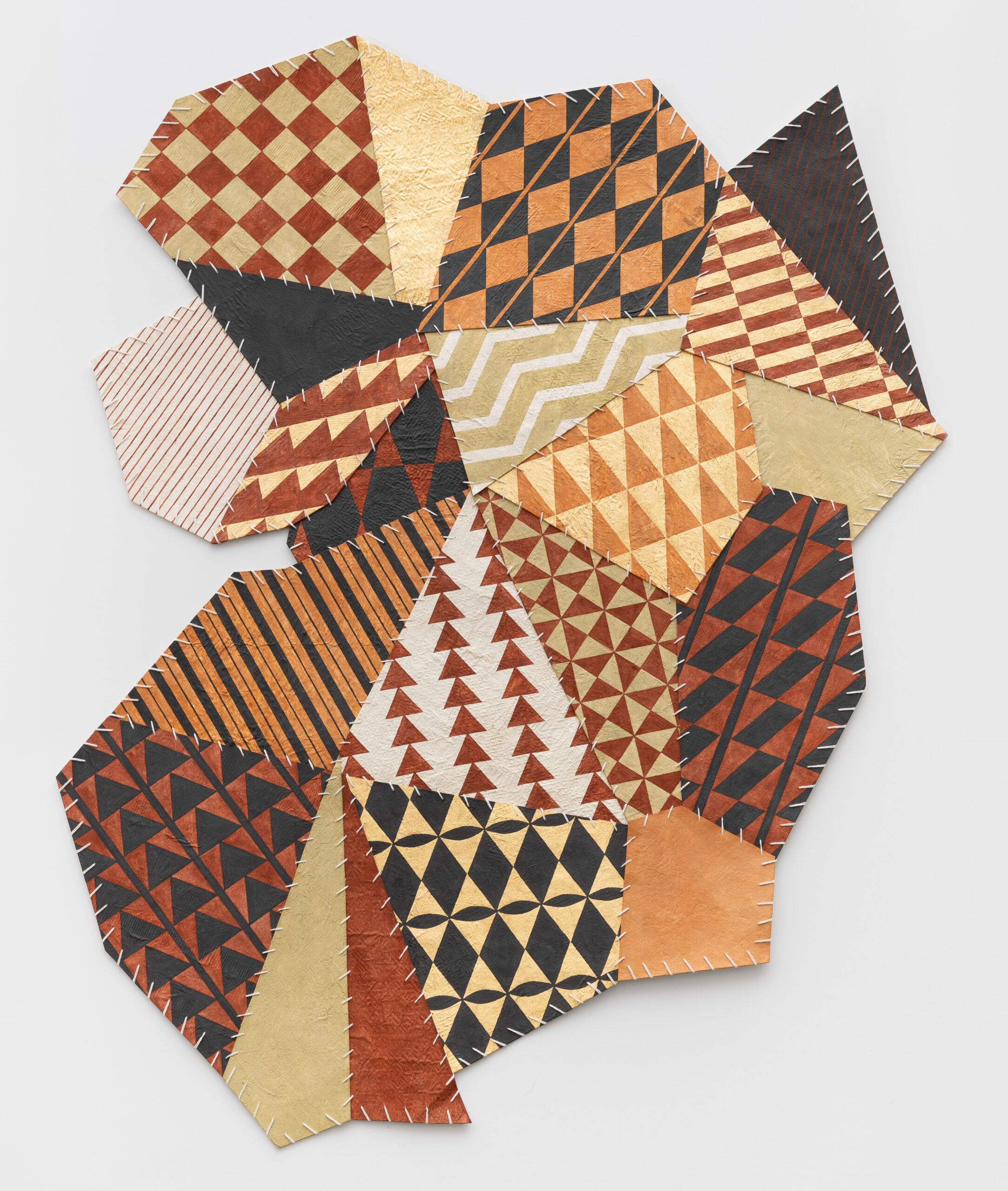
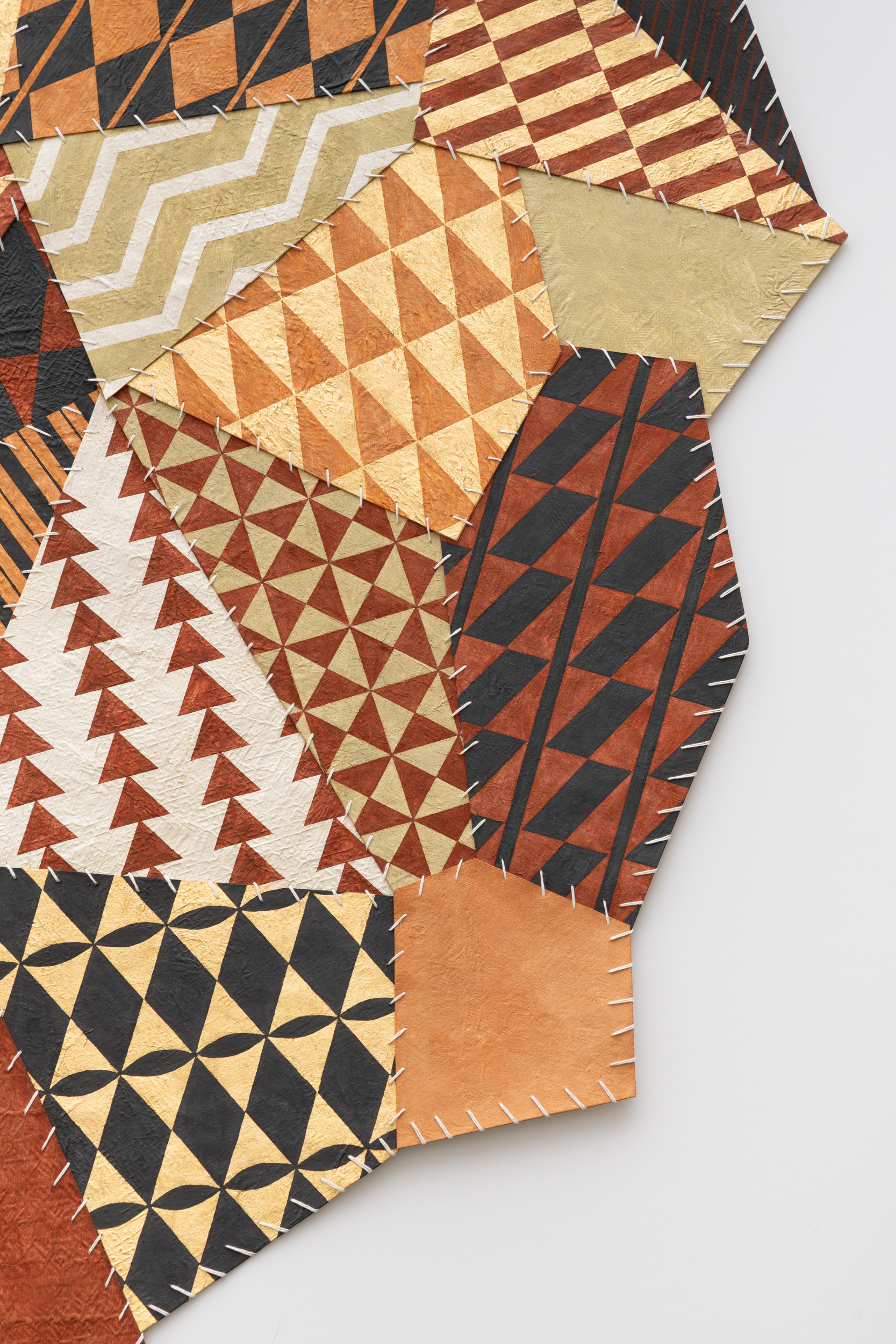
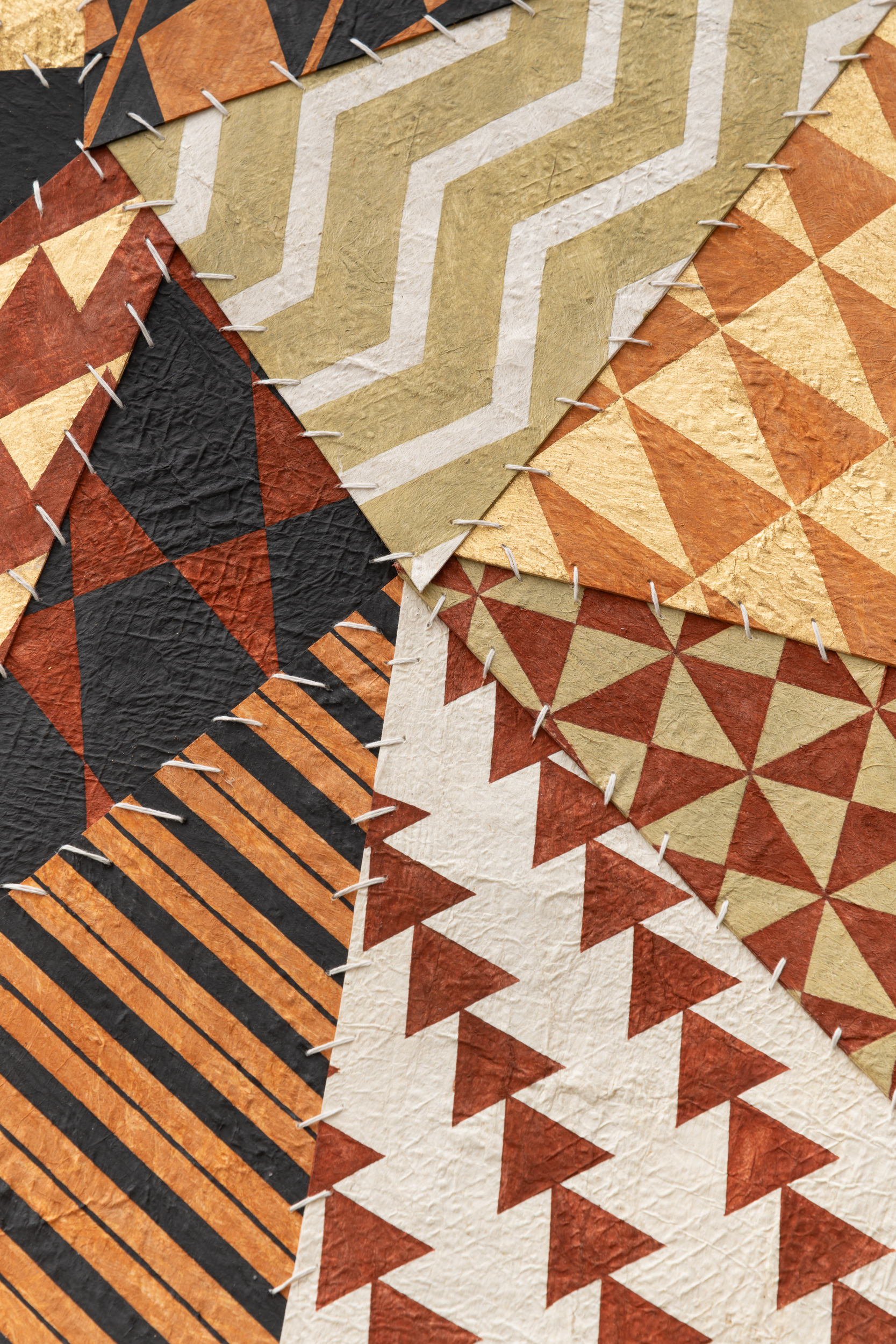
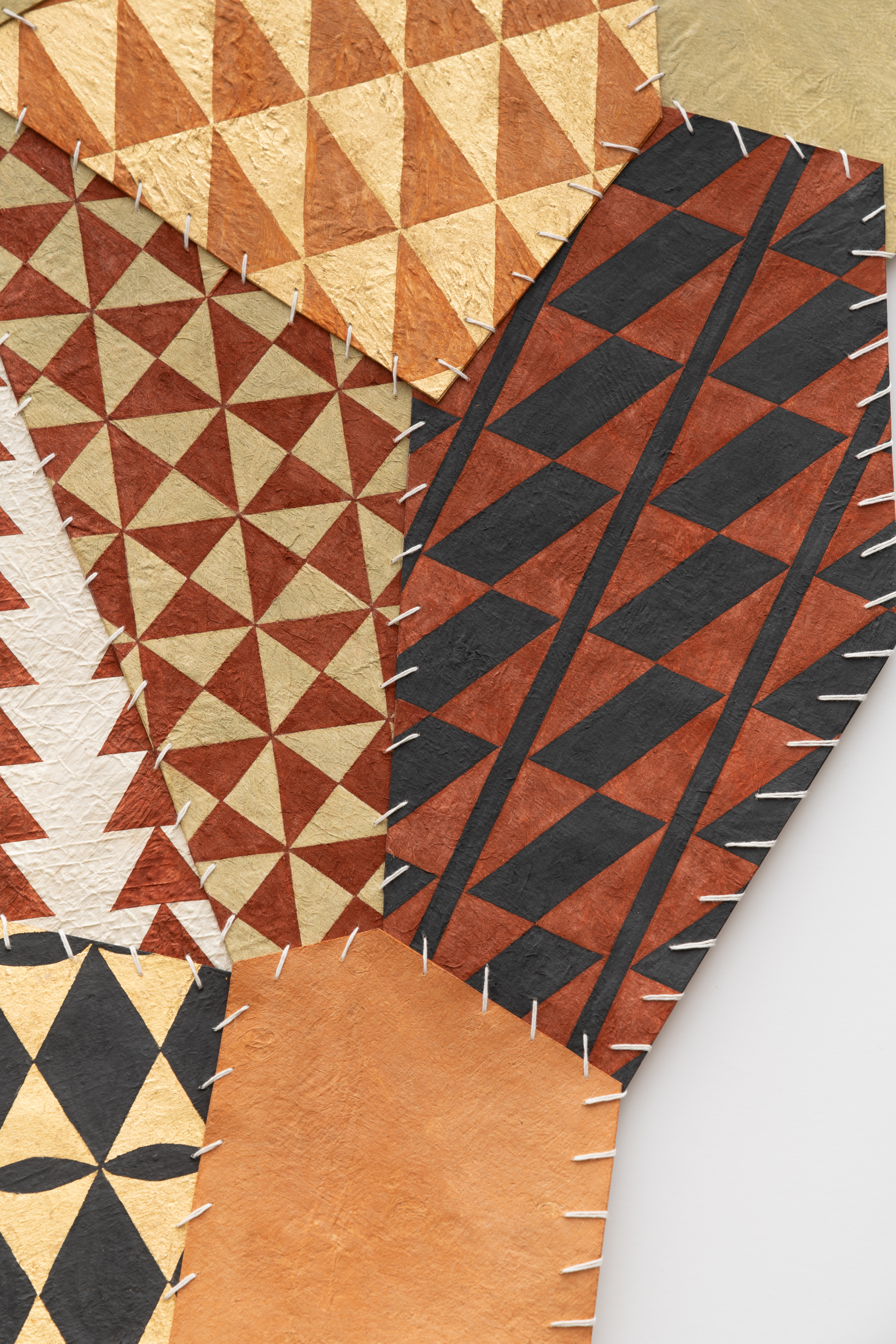
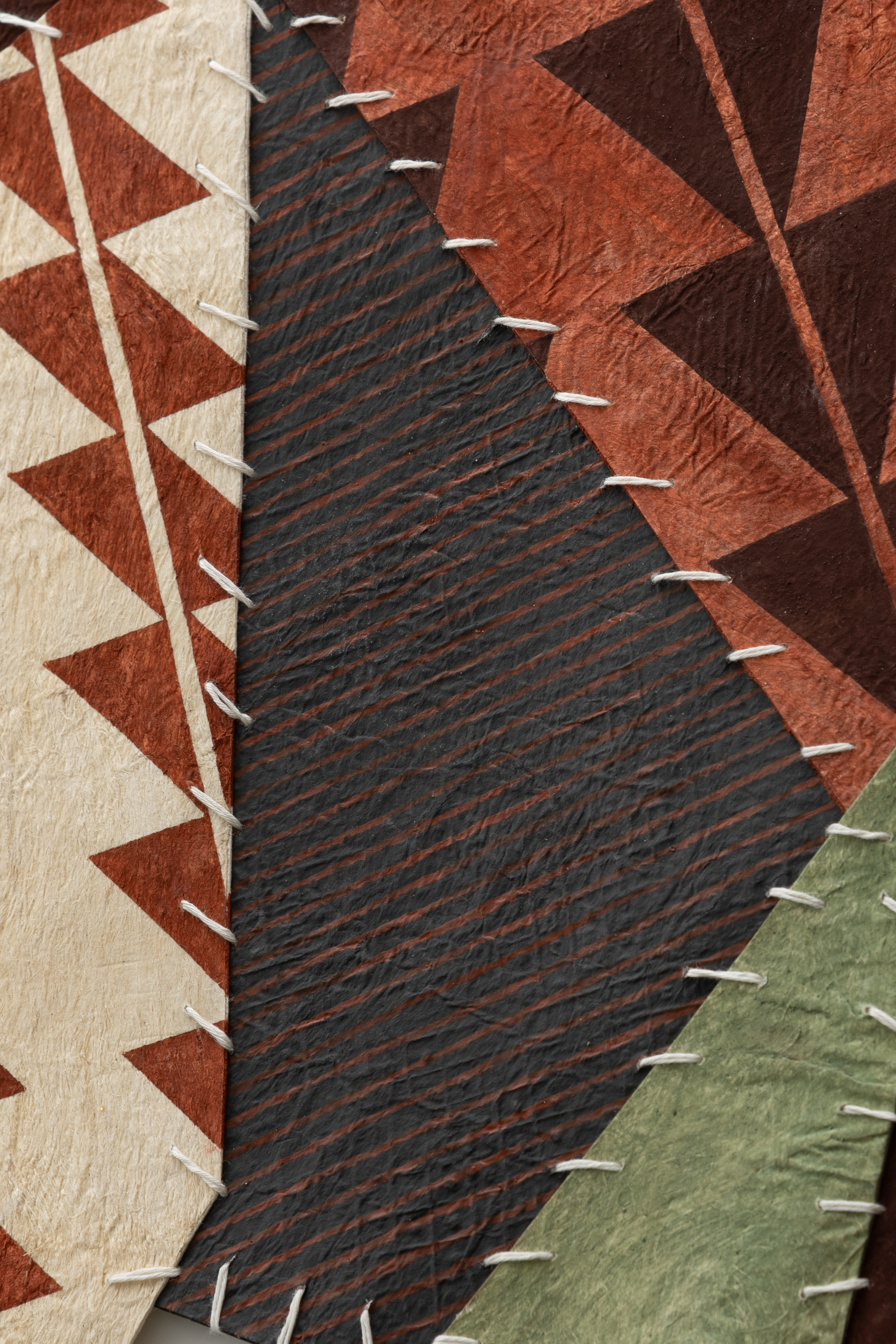
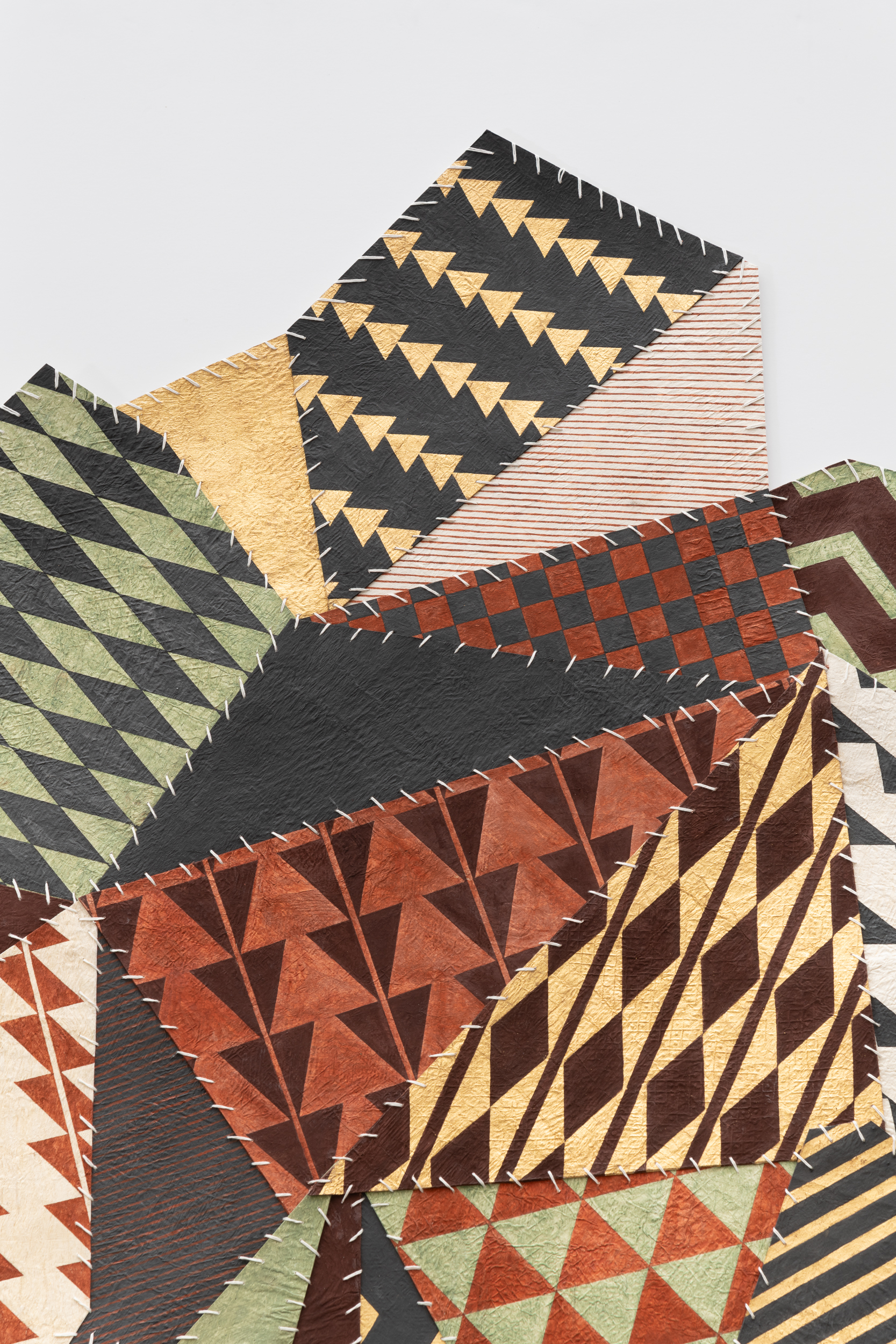
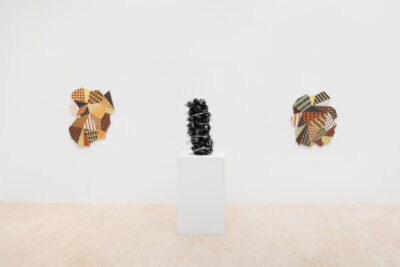
Lehuauakea is a Native Hawaiian artist who revives and expands the ancient practice of bark cloth, or kapa—a material between paper and fabric, unwoven yet retaining the strong lattice of natural fibers. Kapa is primarily traditionally made by women, with men carving the necessary tools. As a māhū—embodying a gender-fluid position within Native Hawaiian culture—Lehuauakea does both. They layer ancestral motifs—arrows, diamonds, triangles, lozenges—alongside patterns imported from Europe, Japan, and beyond: pinstripes, checkerboards, and Escher-like trompe l’oeil designs. Working through hand stitching, dense adornment, painting, and customary bamboo block printing, Lehuauakea uses materials as intentional as their marks: red ochre pigment gathered from a cliff on Maui, indigo sourced from a maker in Japan, and black charcoal from a burnt forest in Oregon. Two of the three works presented in the exhibition, Repeat After Me (E Hoʻopili Mai) I & II (both 2026), are shield-shaped patchwork bark cloth pieces scaled to the artist’s body and densely inscribed with patterns both painted and watermarked into the fibrous kapa itself—a form that speaks to the spiritual and social power of beauty as protection.
Ramekon O'Arwisters
Black & Blue #8, 2025
Leather, fabric, metal, and pottery
36 x 17 x 14 inches / 91.4 x 43.2 x 35.6 cm
Black & Blue #8, 2025
Leather, fabric, metal, and pottery
36 x 17 x 14 inches / 91.4 x 43.2 x 35.6 cm
INQUIRE
Ramekon O'Arwisters
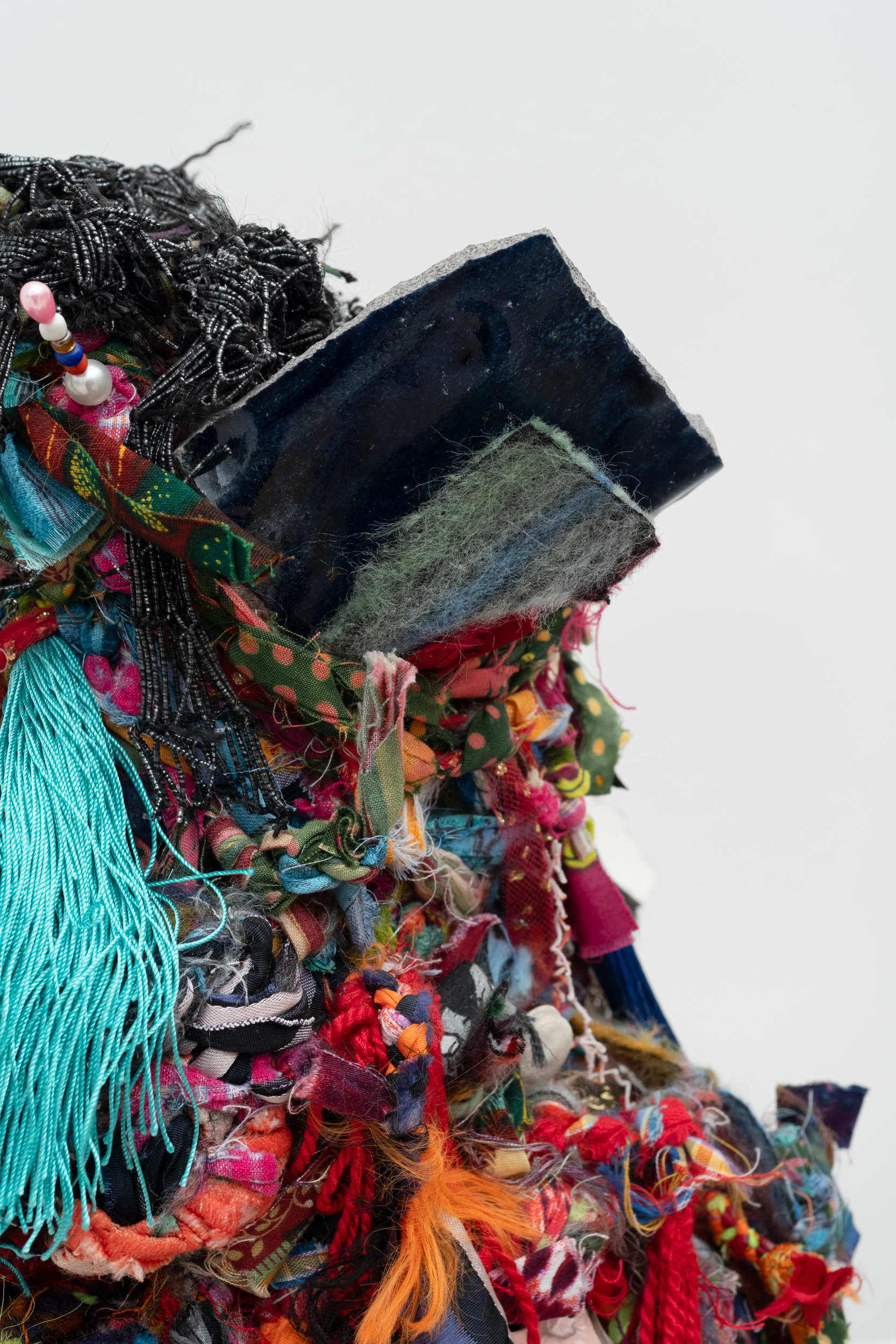
Cheesecake #9, 2019
Fabric, ceramics, beads, and pins
20 x 11 x 11 inches / 50.8 x 27.9 x 27.9 cm
Cheesecake #9, 2019
Fabric, ceramics, beads, and pins
20 x 11 x 11 inches / 50.8 x 27.9 x 27.9 cm
INQUIRE
Ramekon O'Arwisters
Patent on Patent #2, 2025
Leather, metal, fabric, and plastic
30 x 12 x 10 inches / 76.2 x 30.5 x 25.4 cm
Patent on Patent #2, 2025
Leather, metal, fabric, and plastic
30 x 12 x 10 inches / 76.2 x 30.5 x 25.4 cm
INQUIRE
Ramekon O'Arwisters
Black & Blue #8, 2025
Leather, fabric, metal, and pottery
36 x 17 x 14 inches / 91.4 x 43.2 x 35.6 cm
Black & Blue #8, 2025
Leather, fabric, metal, and pottery
36 x 17 x 14 inches / 91.4 x 43.2 x 35.6 cm
INQUIRE
Ramekon O'Arwisters
Cheesecake #9, 2019
Fabric, ceramics, beads, and pins
20 x 11 x 11 inches / 50.8 x 27.9 x 27.9 cm
Cheesecake #9, 2019
Fabric, ceramics, beads, and pins
20 x 11 x 11 inches / 50.8 x 27.9 x 27.9 cm
INQUIRE
Ramekon O'Arwisters
Patent on Patent #2, 2025
Leather, metal, fabric, and plastic
30 x 12 x 10 inches / 76.2 x 30.5 x 25.4 cm
Patent on Patent #2, 2025
Leather, metal, fabric, and plastic
30 x 12 x 10 inches / 76.2 x 30.5 x 25.4 cm
INQUIRE
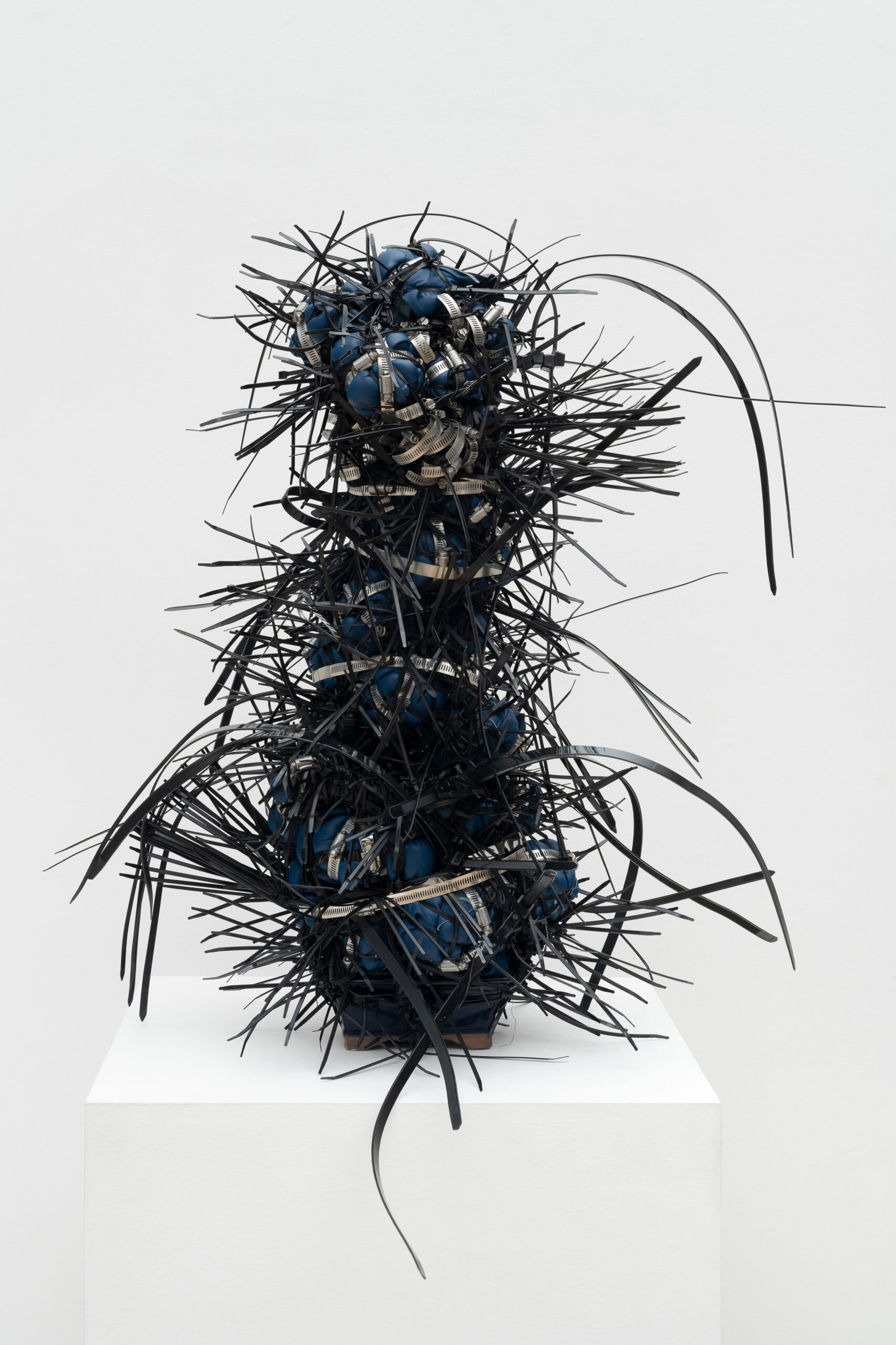
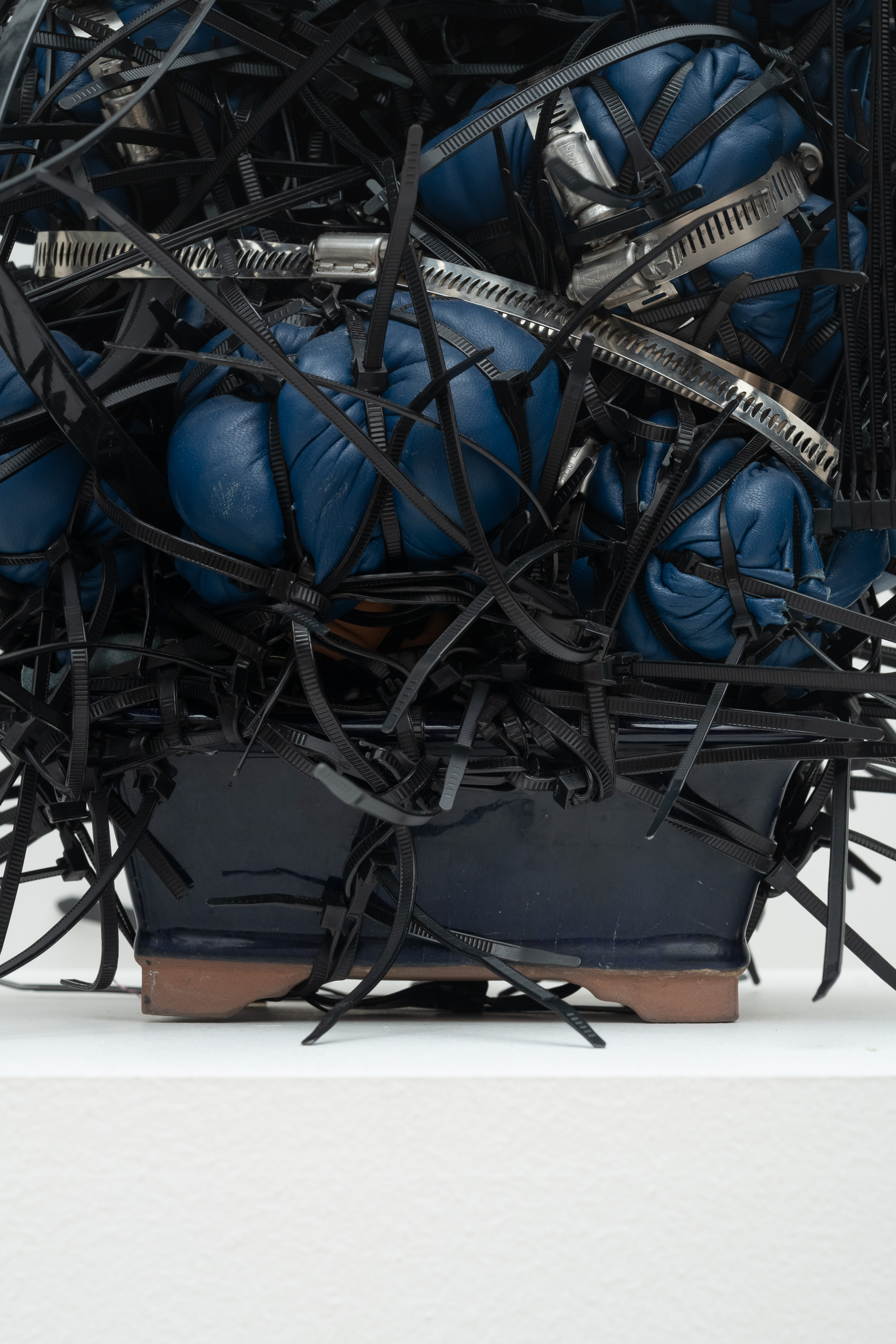
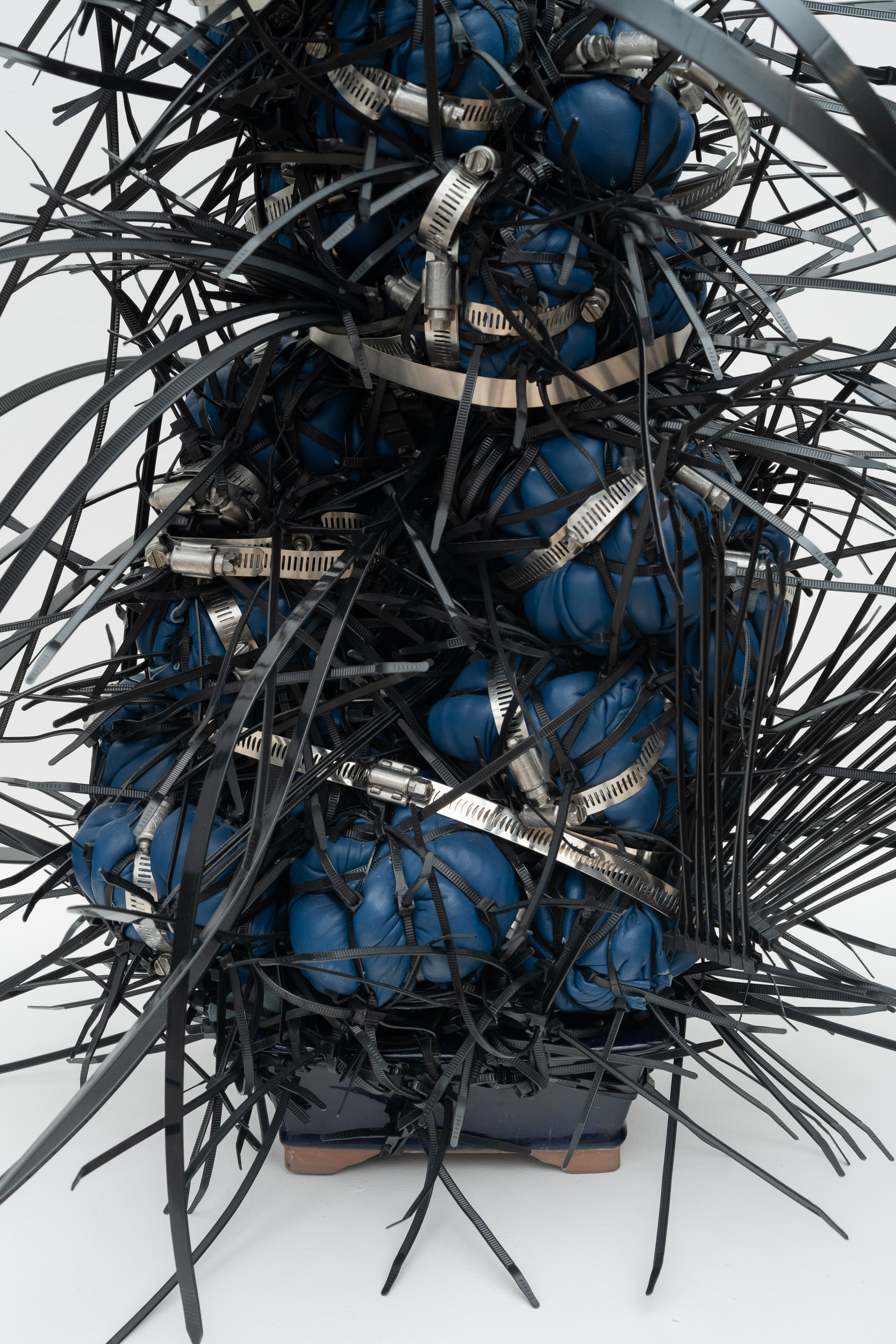
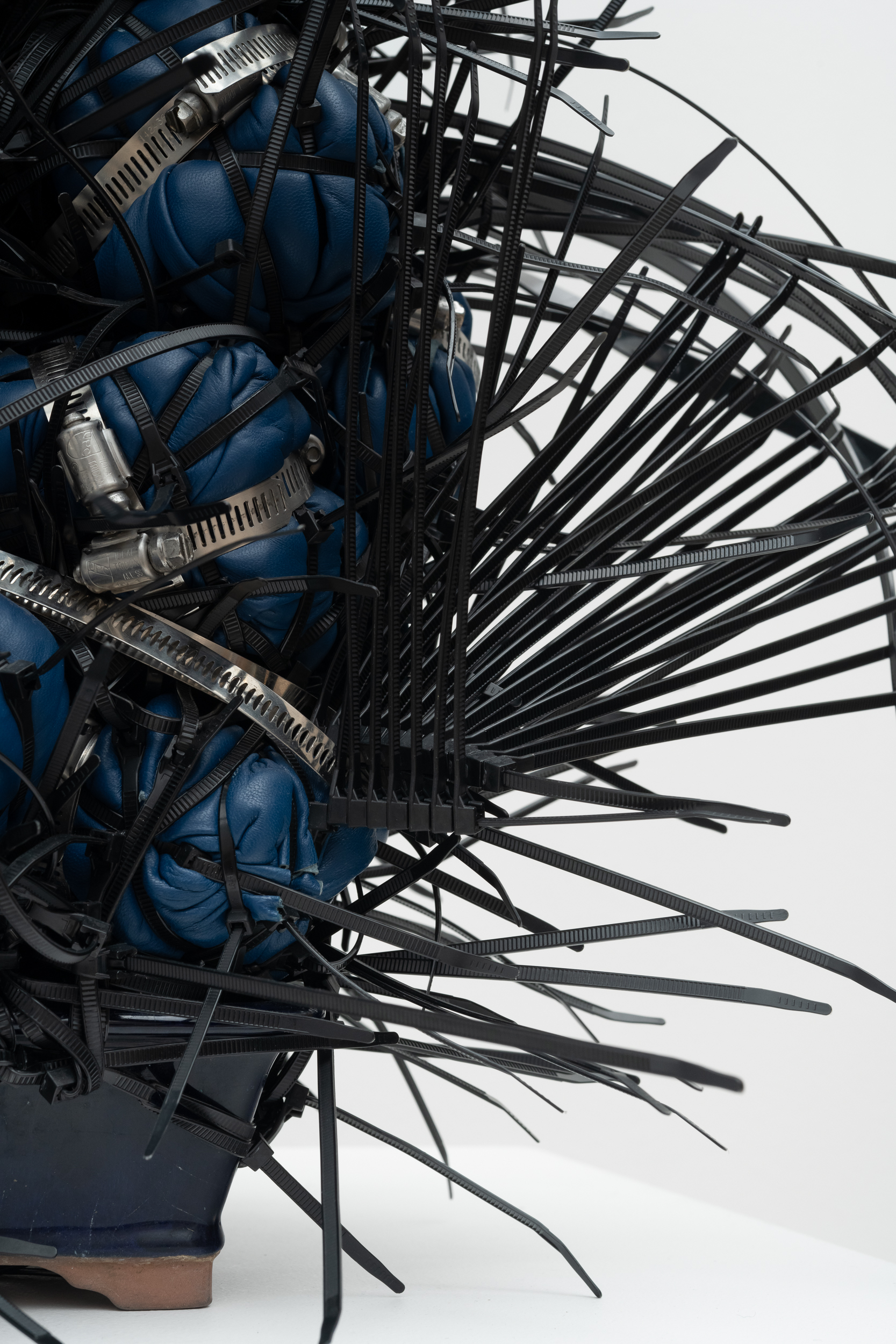
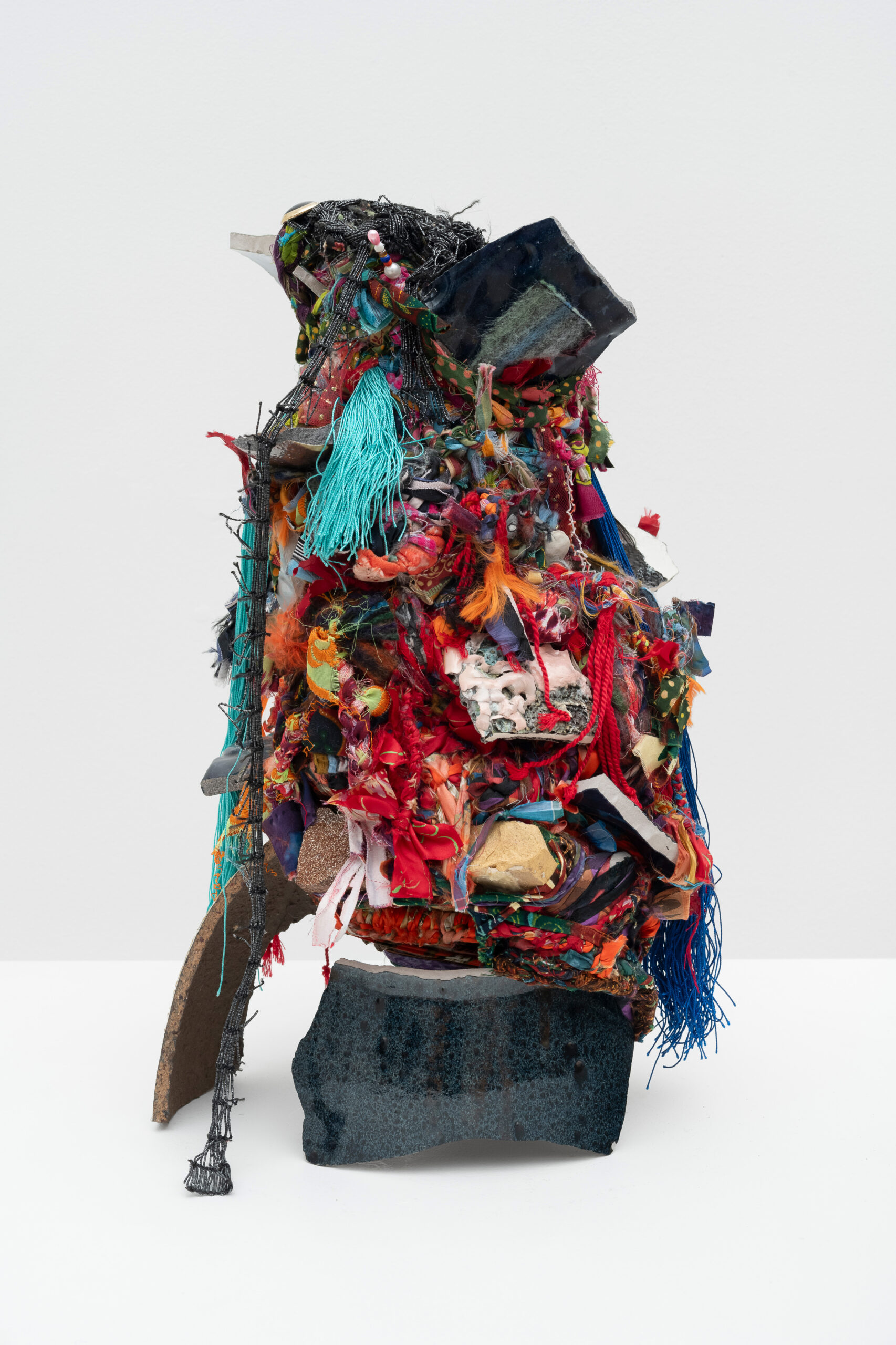
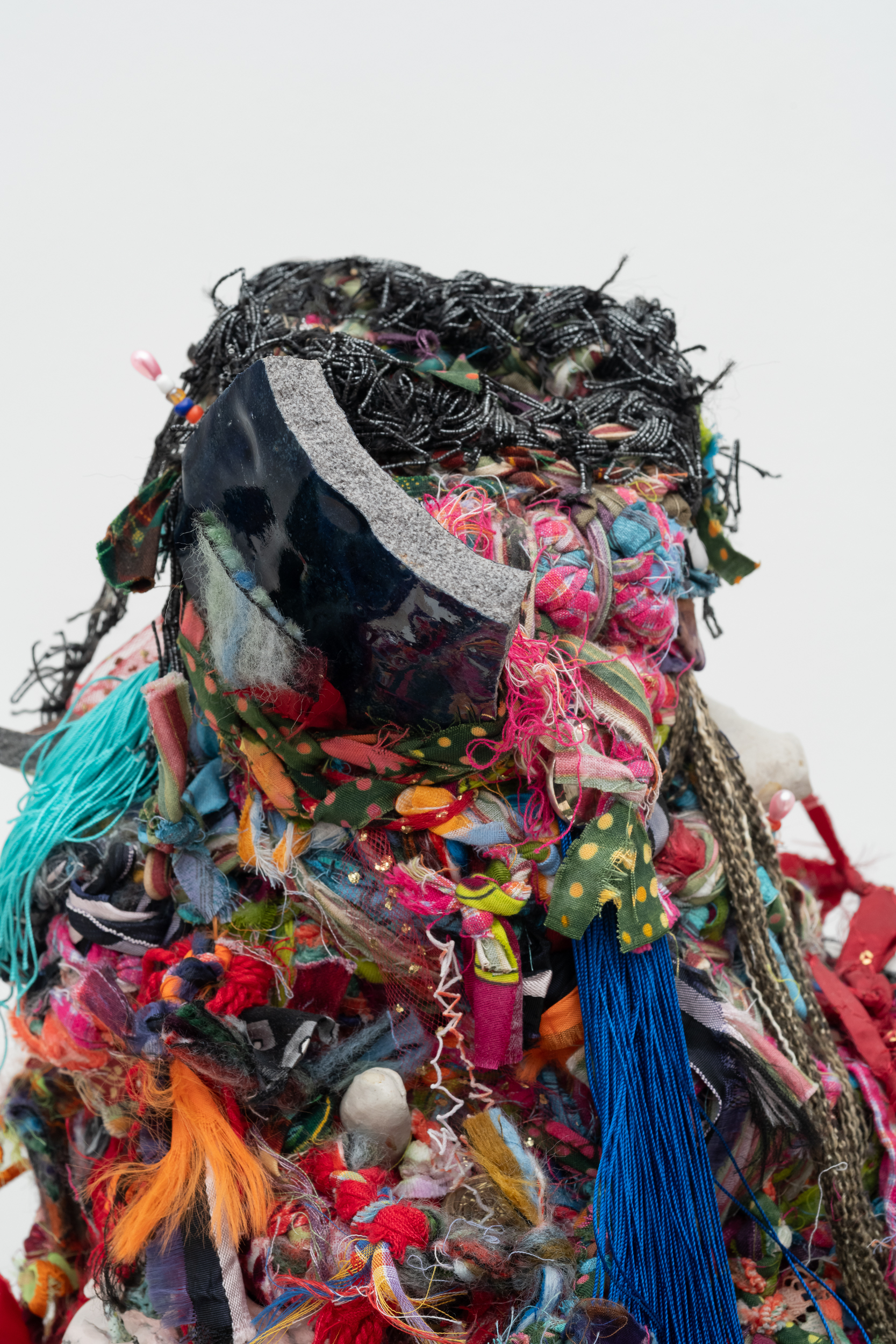
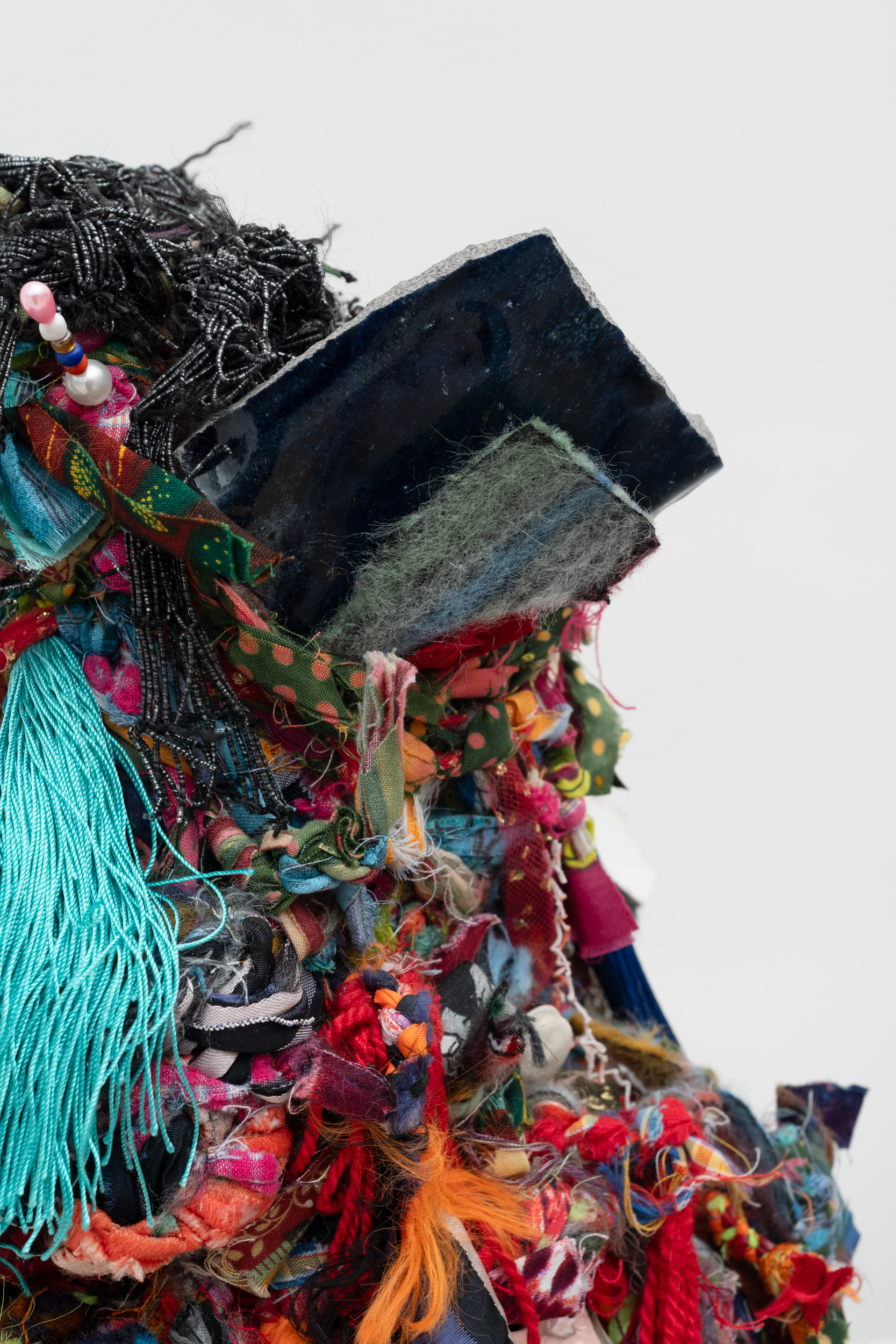
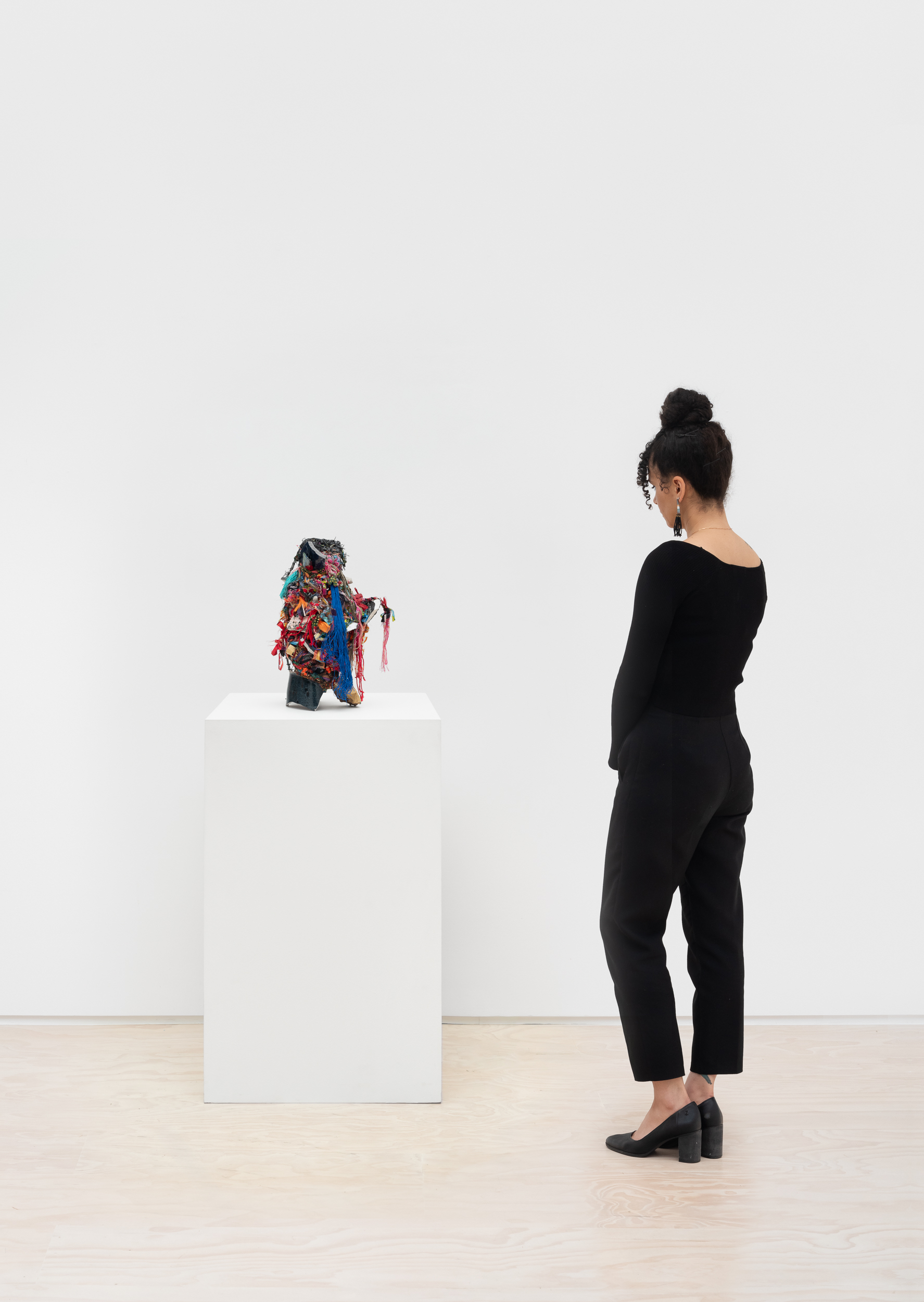
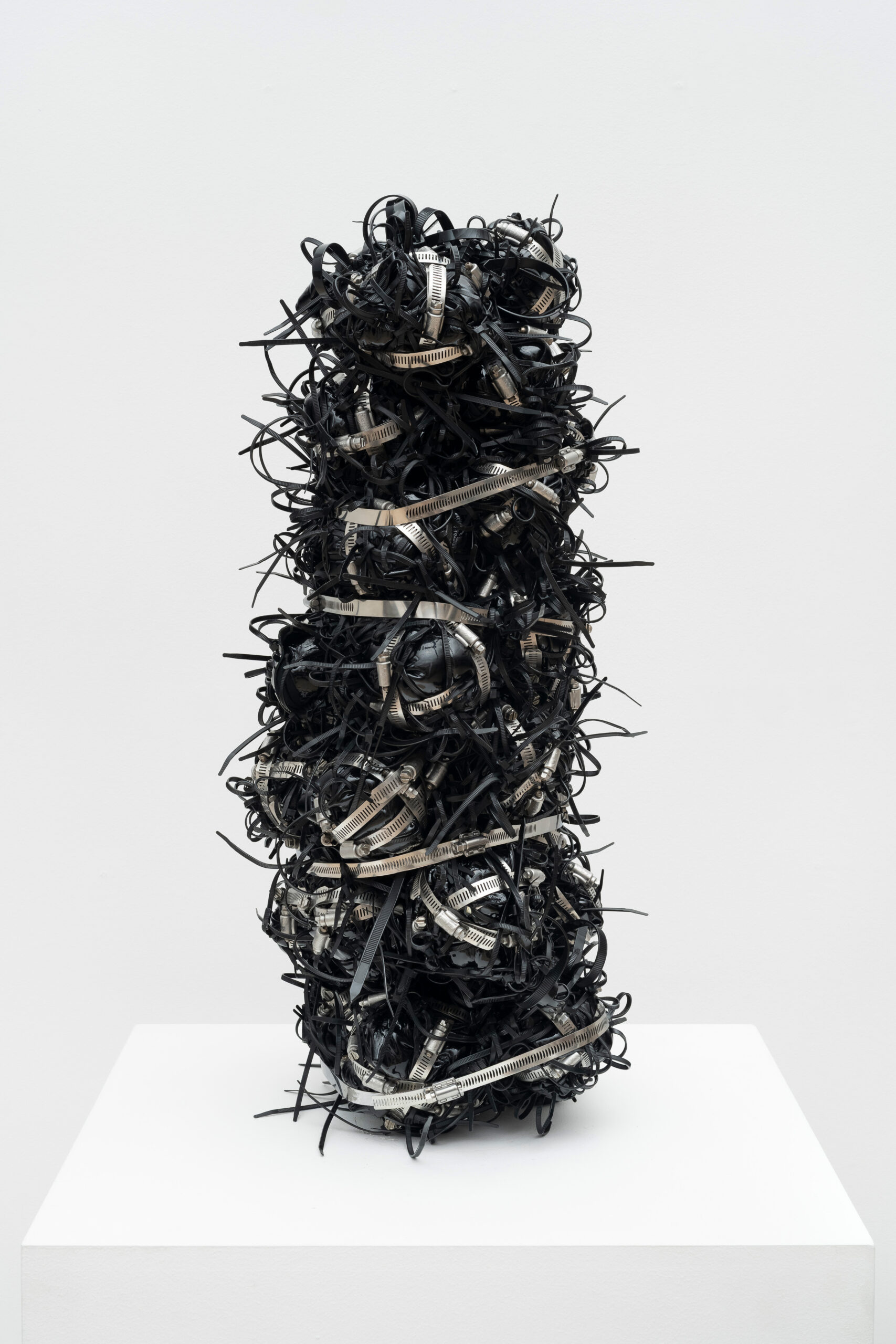
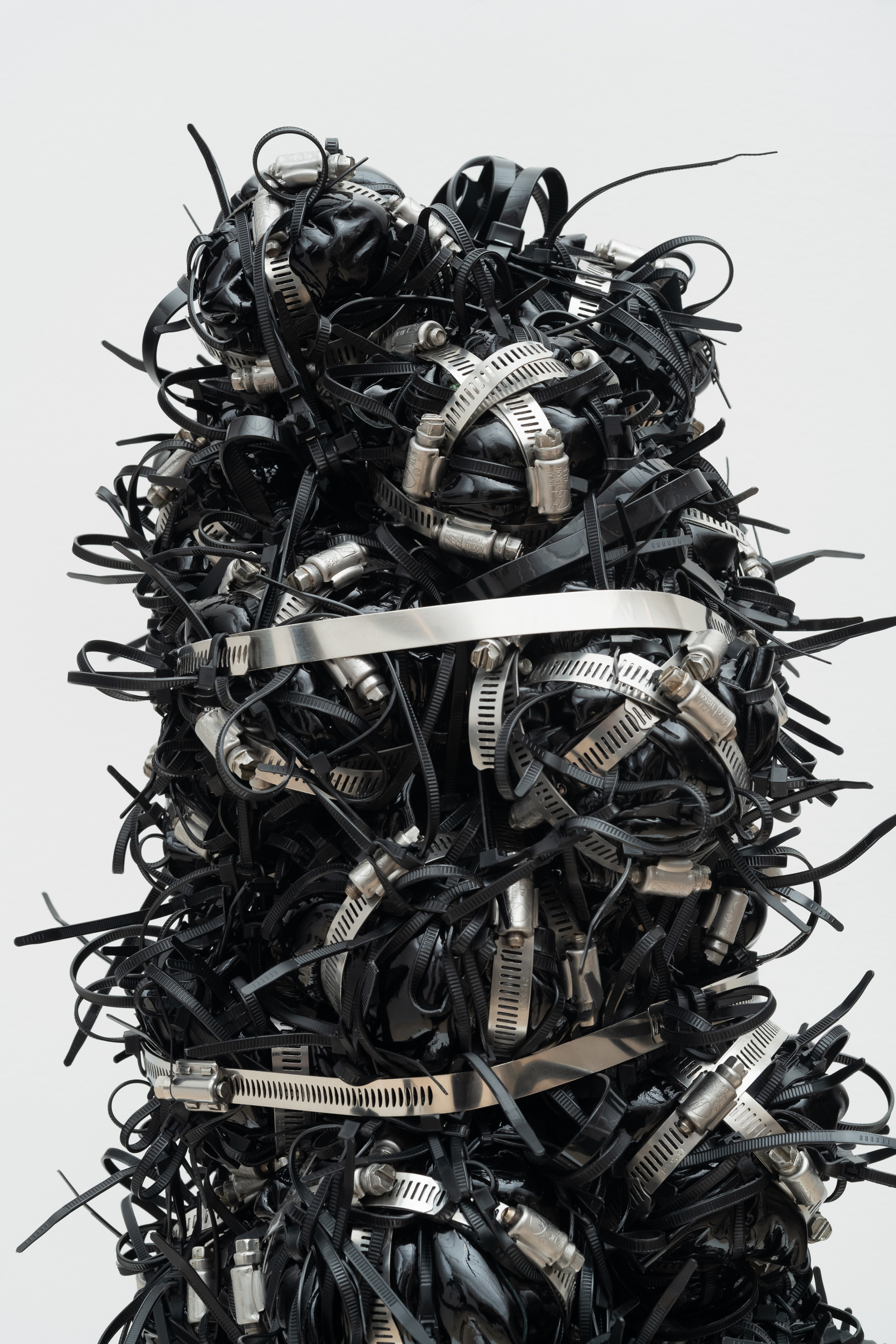
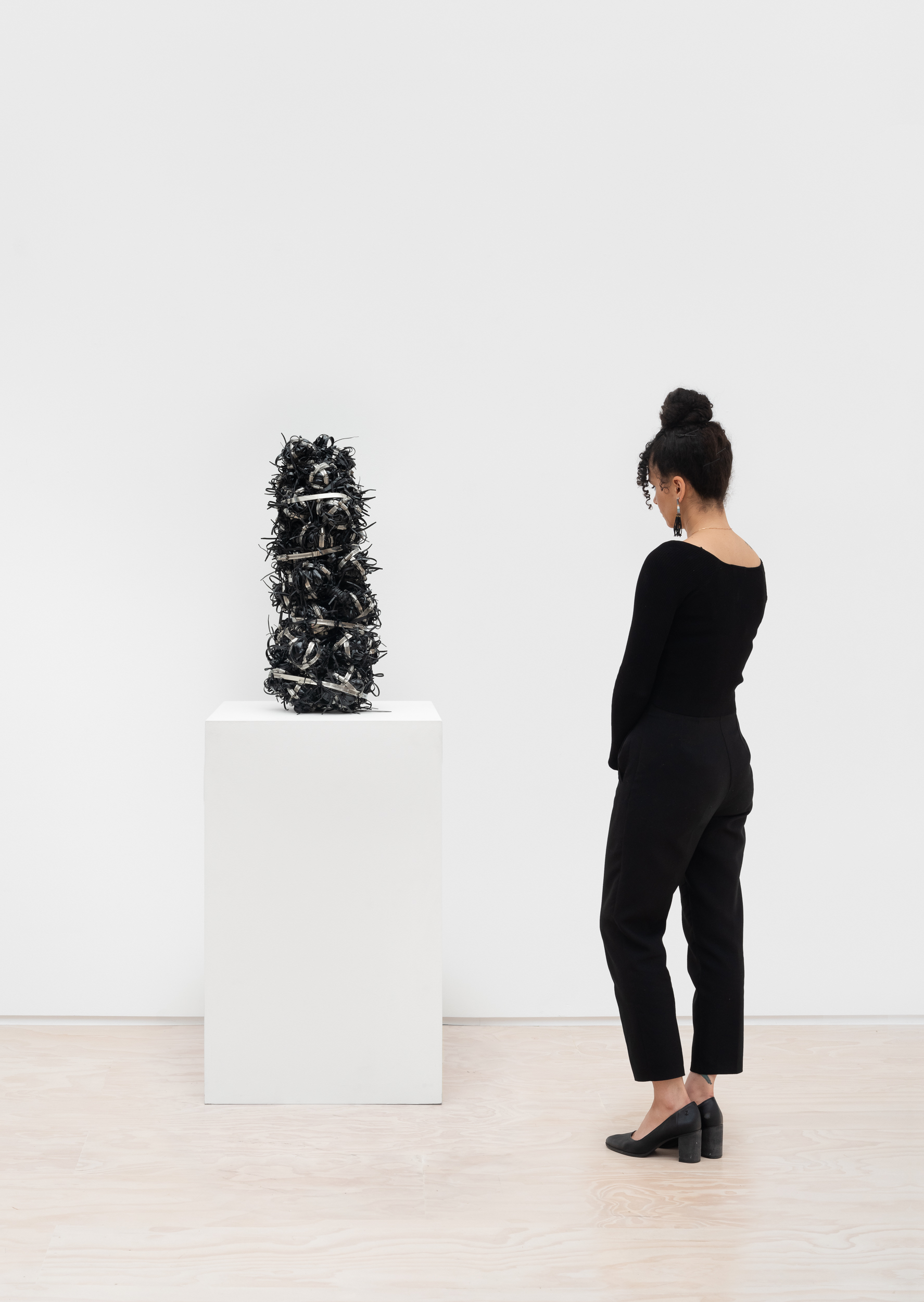
Growing up in the American South during the Civil Rights movement, San Francisco–based sculptor Ramekon O’Arwisters found acceptance in learning to quilt from his grandmother. Today, O’Arwisters carries forward those teachings through public art-making events he calls “Crochet Jams.” In his studio practice, he uses a large crochet hook to transform marginal materials—ceramic shards, textiles, zip ties, leather, and found objects—into densely layered sculptures, crocheting, braiding, and knotting these elements into hybrid forms. With Cheesecake #9 (2025), O’Arwisters invokes the slang typically used to objectify an alluring body. Here, he embraces the term’s complexity, subverts its demeaning undertones, and reconfigures it—along with his materials—into a work that is at once sensuous, entertaining, and defiantly whole on its own terms.
Karim Boumjimar
Peroxide Bird, 2025
Glazed earthenware
20 1/8 x 14 1/8 x 13 3/4 inches / 51 x 36 x 35 cm
Peroxide Bird, 2025
Glazed earthenware
20 1/8 x 14 1/8 x 13 3/4 inches / 51 x 36 x 35 cm
INQUIRE
Karim Boumjimar
Tender Corrosion, 2025
Glazed earthenware
21 1/4 x 13 x 13 inches / 54 x 33 x 33 cm
Tender Corrosion, 2025
Glazed earthenware
21 1/4 x 13 x 13 inches / 54 x 33 x 33 cm
INQUIRE
Karim Boumjimar
What the River Leaves Behind, 2025
Glazed earthenware
21 1/4 x 13 x 12 1/4 inches / 54 x 33 x 31 cm
What the River Leaves Behind, 2025
Glazed earthenware
21 1/4 x 13 x 12 1/4 inches / 54 x 33 x 31 cm
INQUIRE
Karim Boumjimar
Peroxide Bird, 2025
Glazed earthenware
20 1/8 x 14 1/8 x 13 3/4 inches / 51 x 36 x 35 cm
Peroxide Bird, 2025
Glazed earthenware
20 1/8 x 14 1/8 x 13 3/4 inches / 51 x 36 x 35 cm
INQUIRE
Karim Boumjimar
Tender Corrosion, 2025
Glazed earthenware
21 1/4 x 13 x 13 inches / 54 x 33 x 33 cm
Tender Corrosion, 2025
Glazed earthenware
21 1/4 x 13 x 13 inches / 54 x 33 x 33 cm
INQUIRE
Karim Boumjimar
What the River Leaves Behind, 2025
Glazed earthenware
21 1/4 x 13 x 12 1/4 inches / 54 x 33 x 31 cm
What the River Leaves Behind, 2025
Glazed earthenware
21 1/4 x 13 x 12 1/4 inches / 54 x 33 x 31 cm
INQUIRE
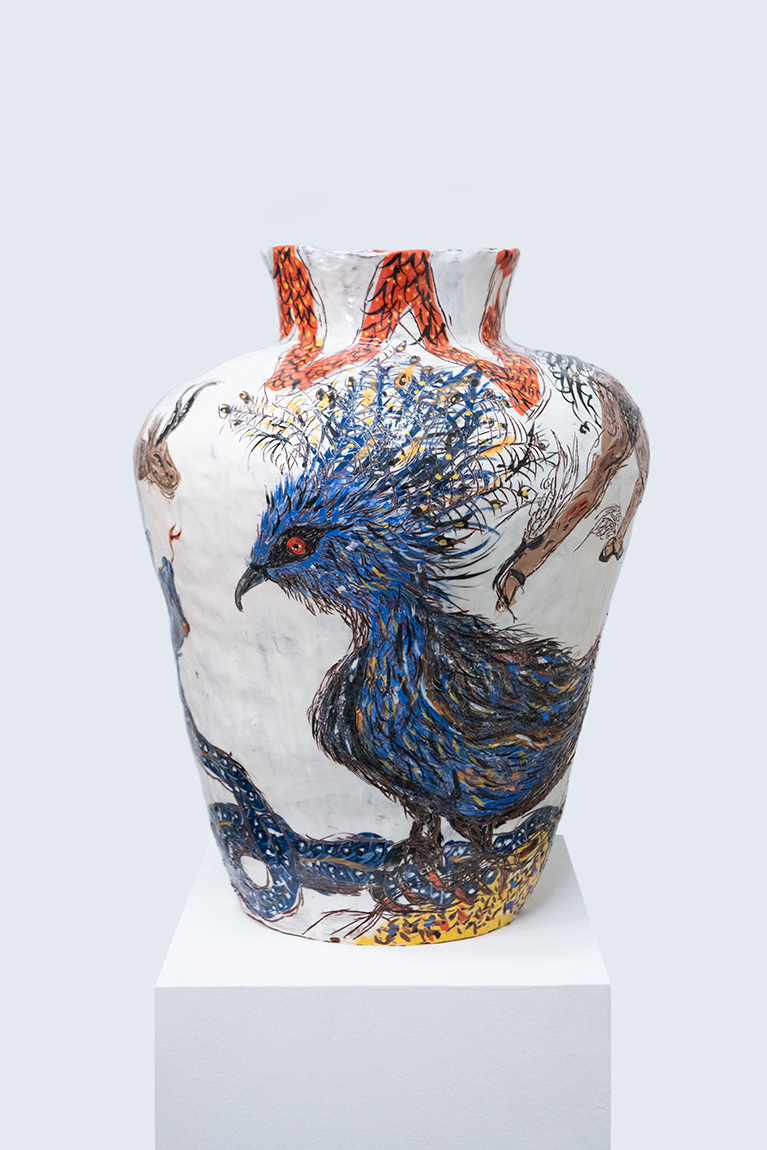
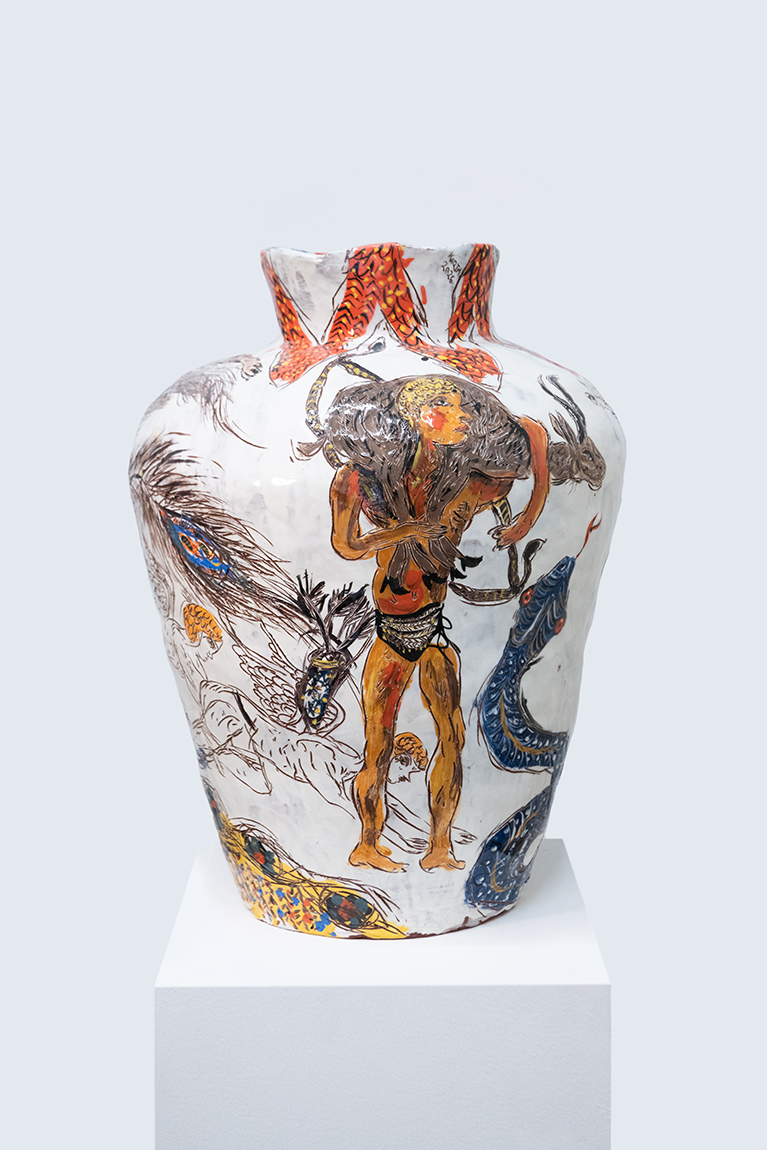
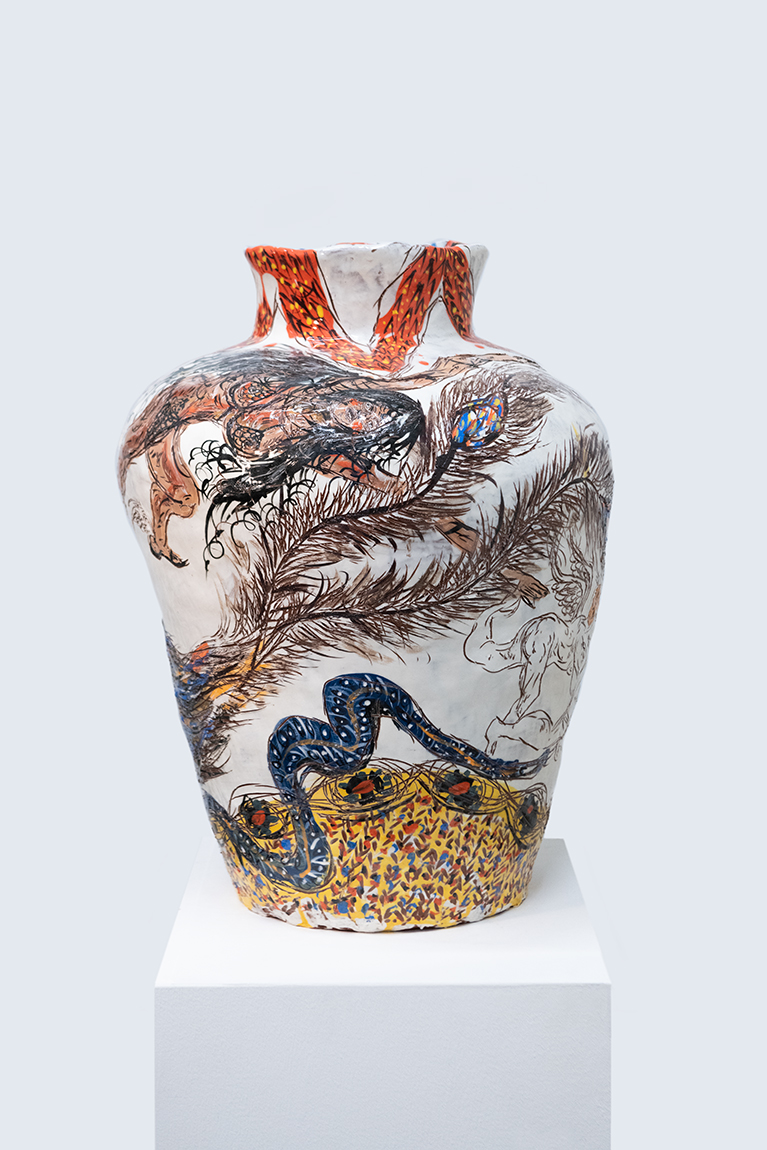
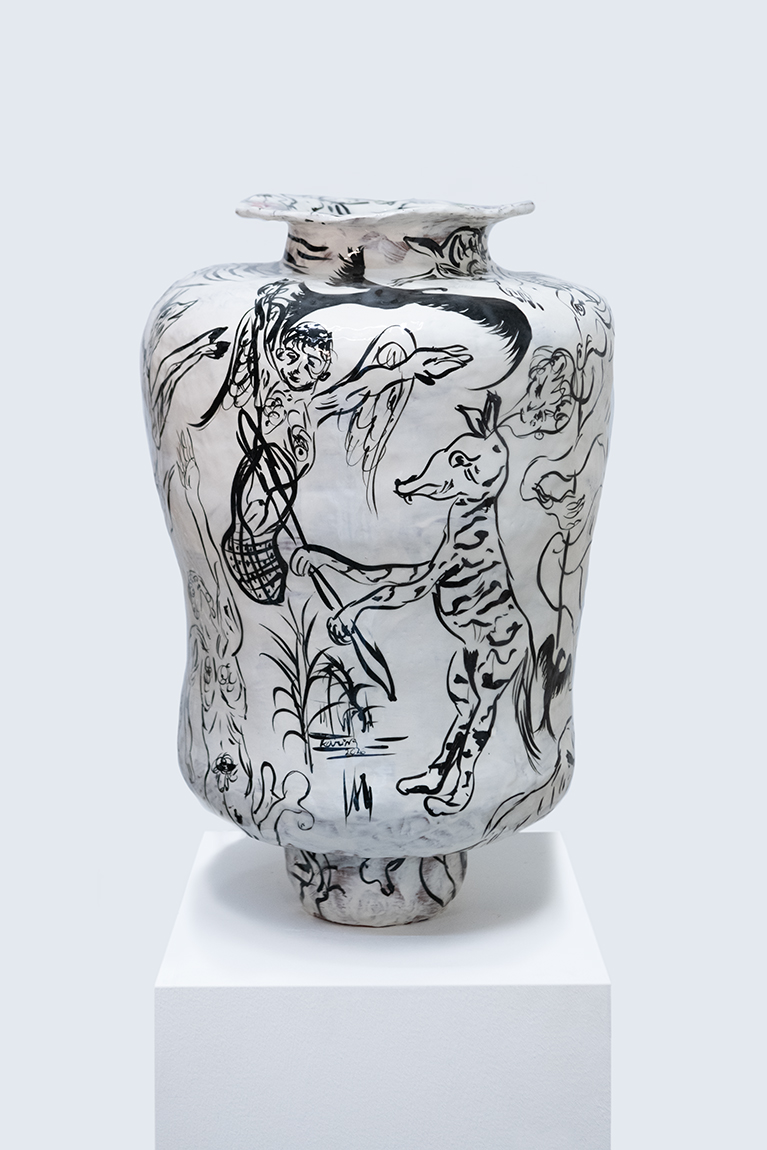
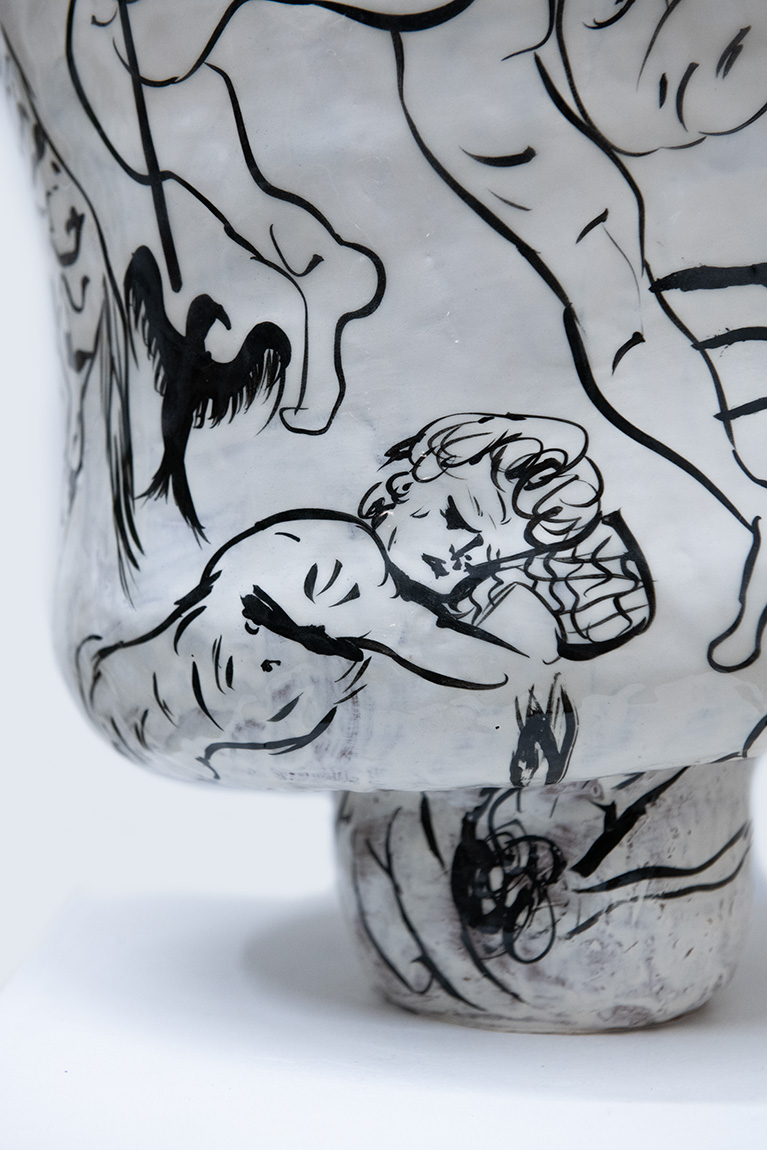
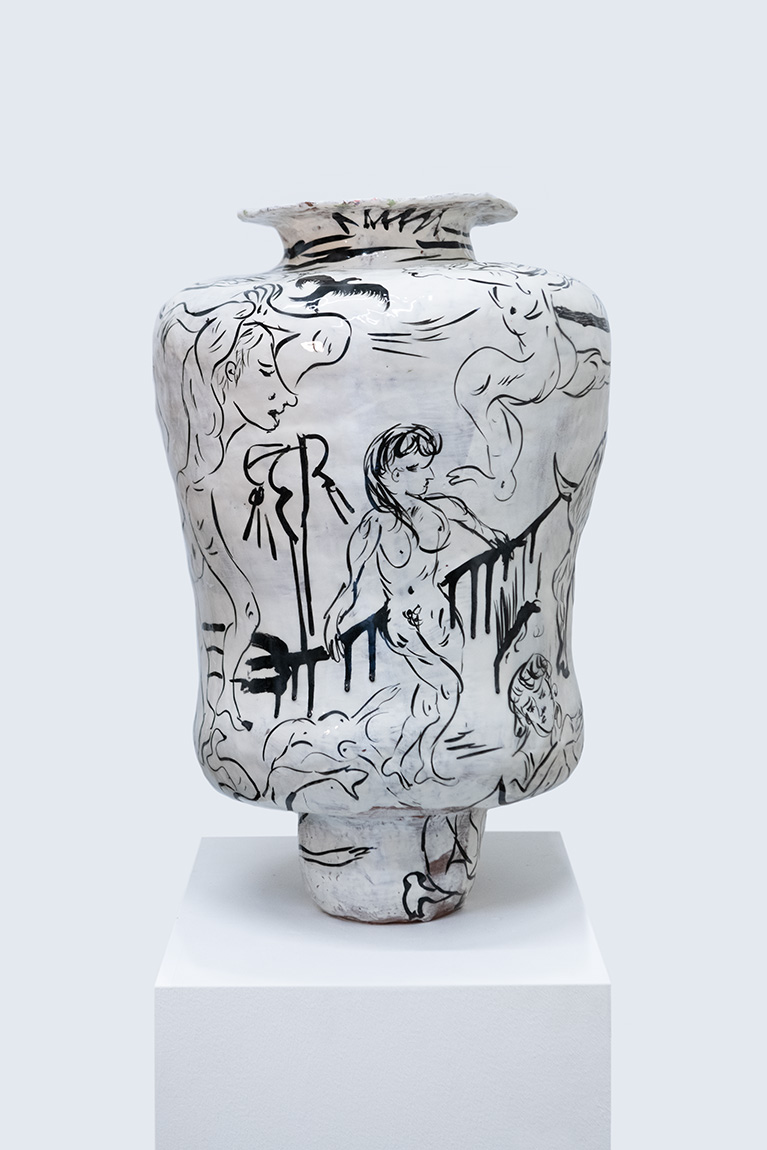
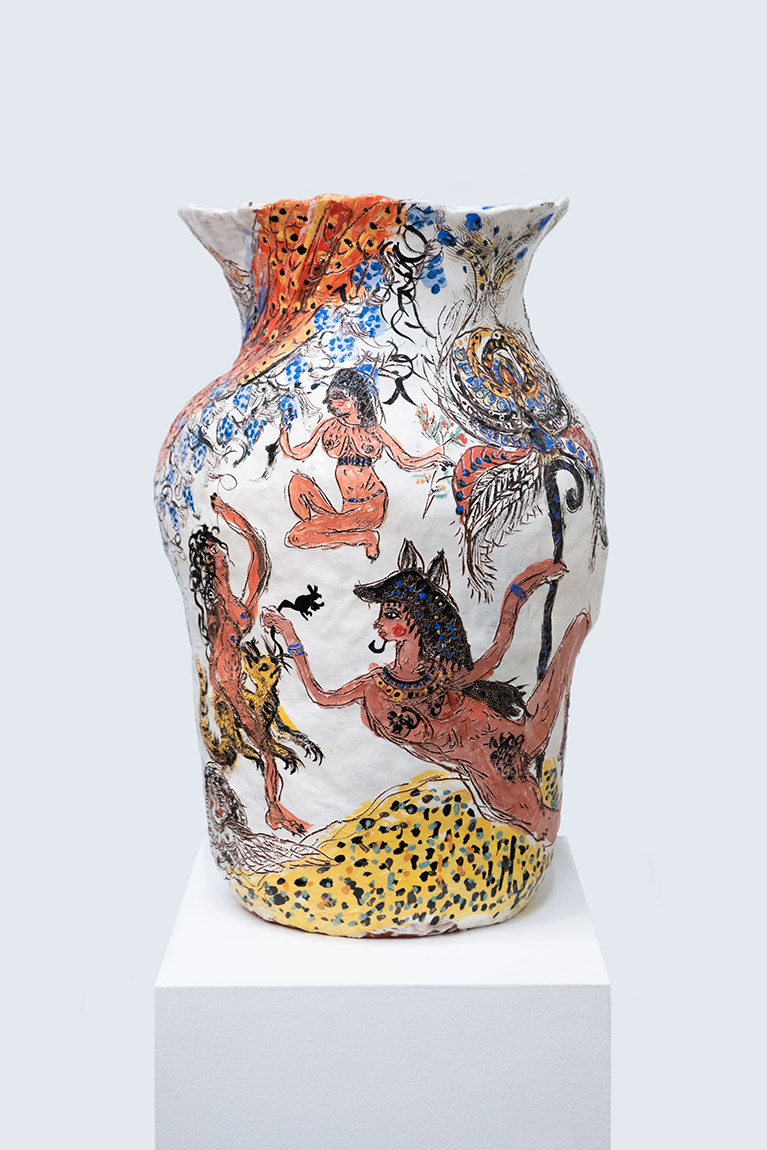
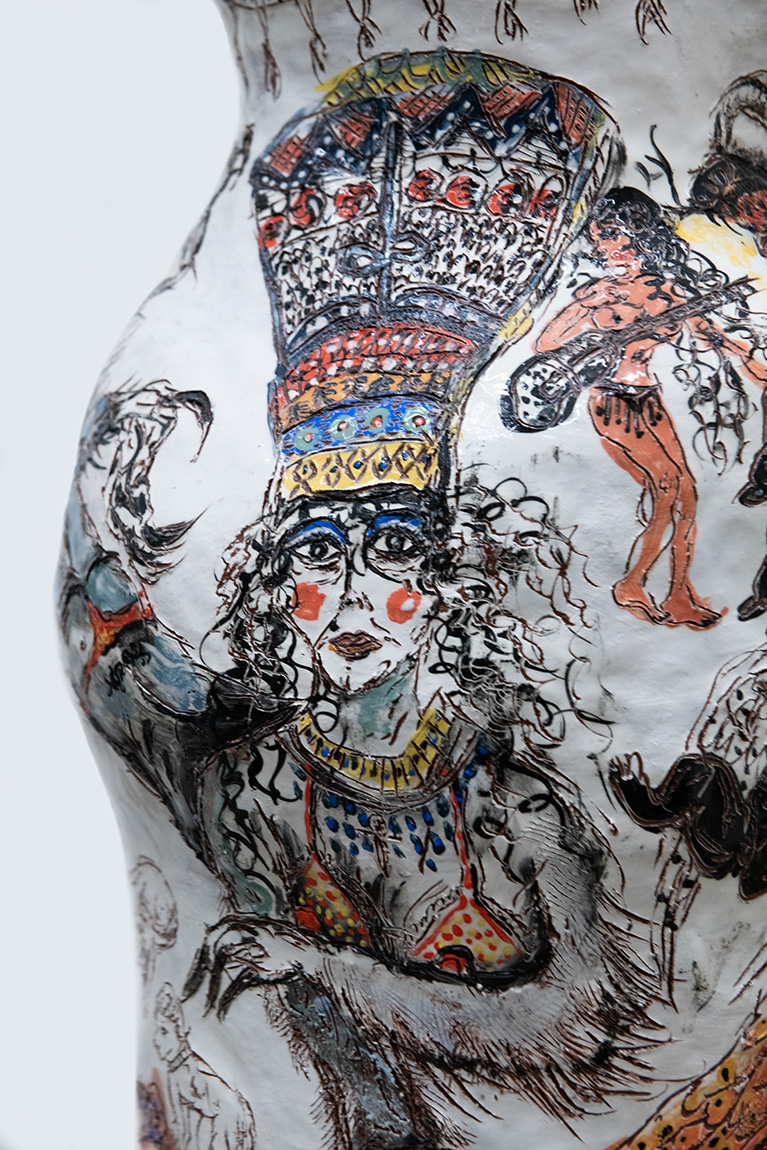
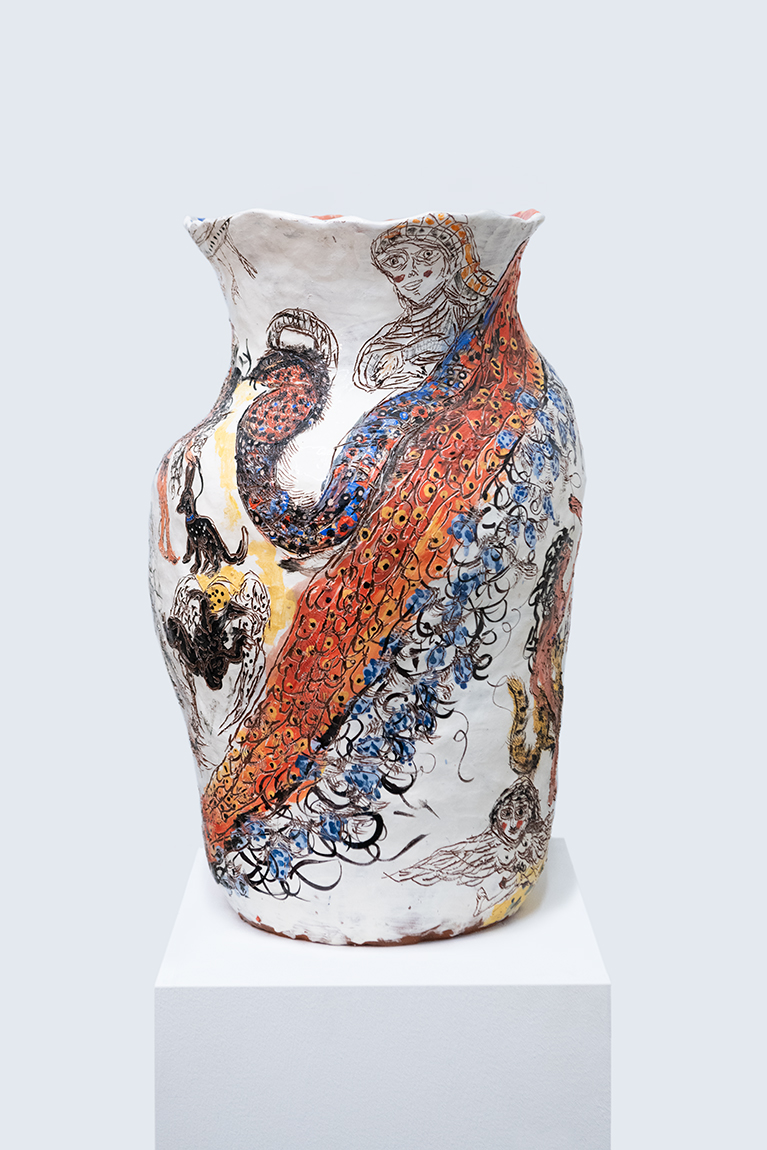
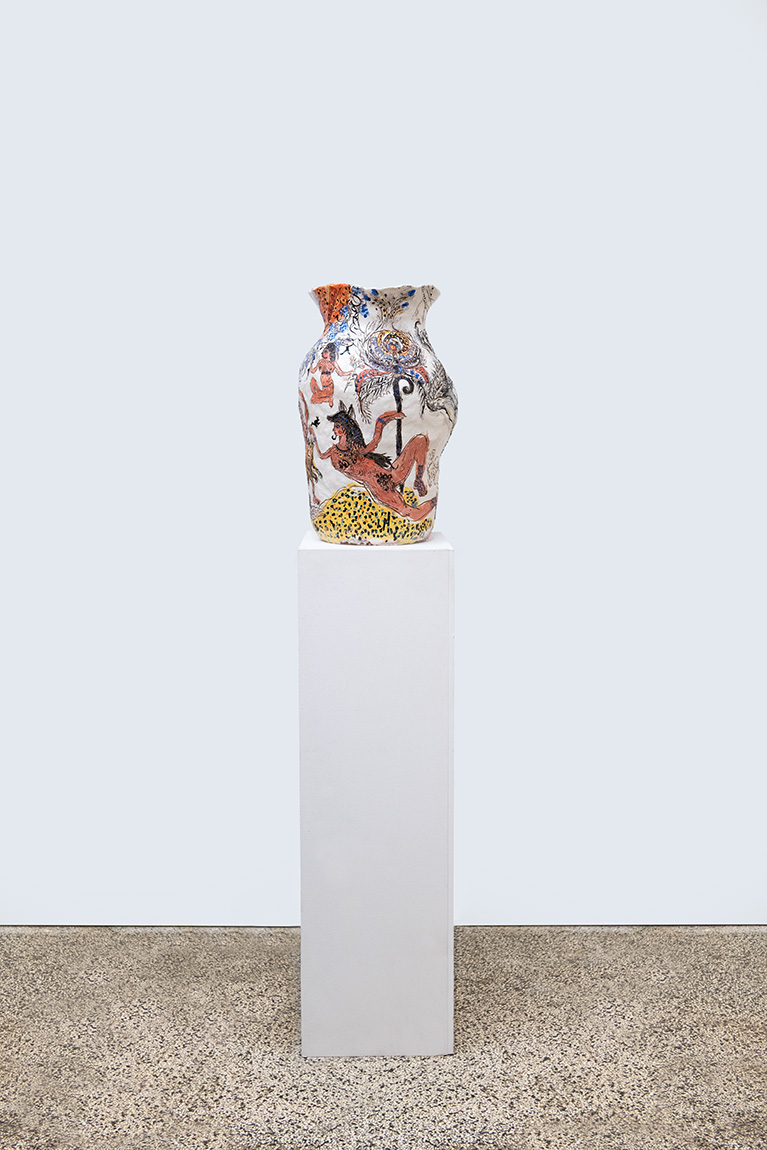
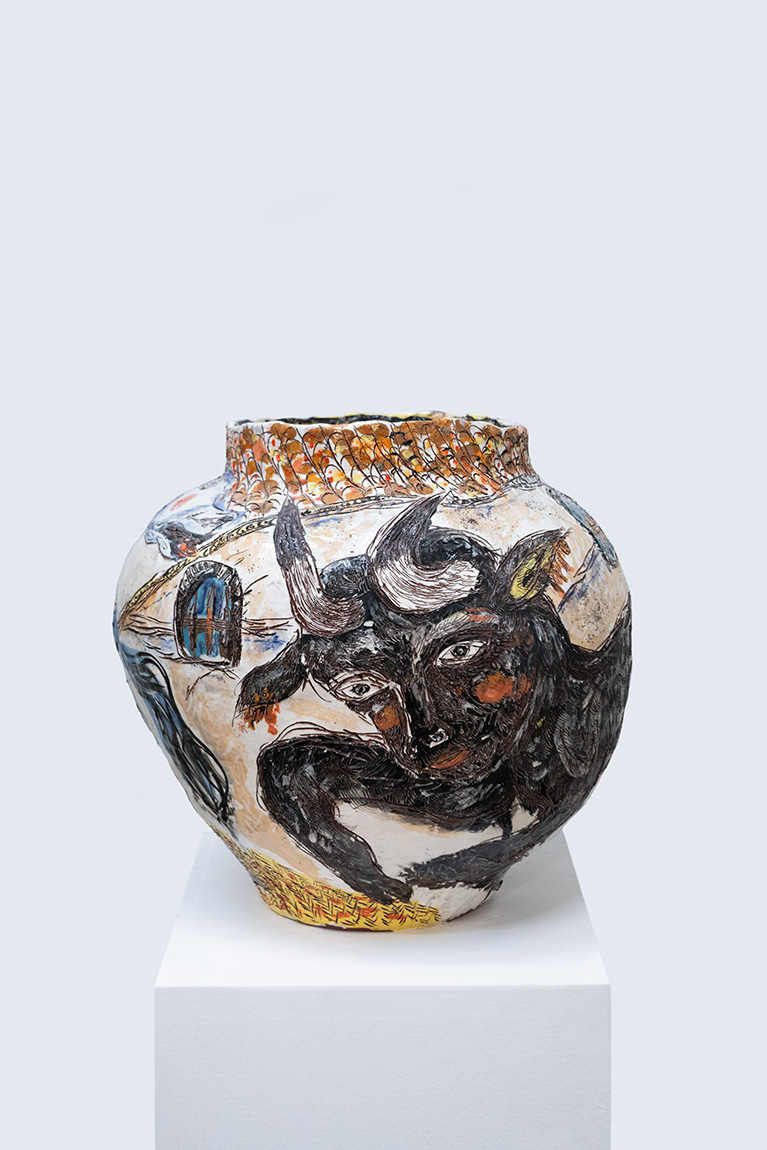
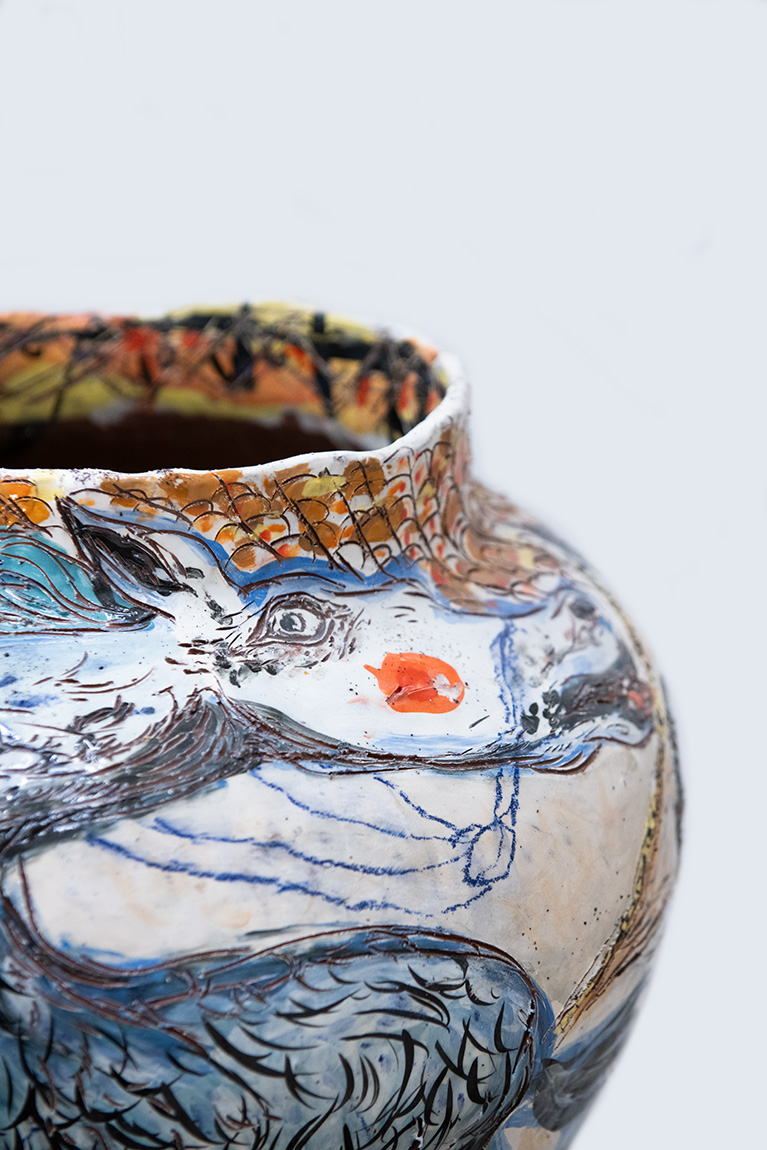
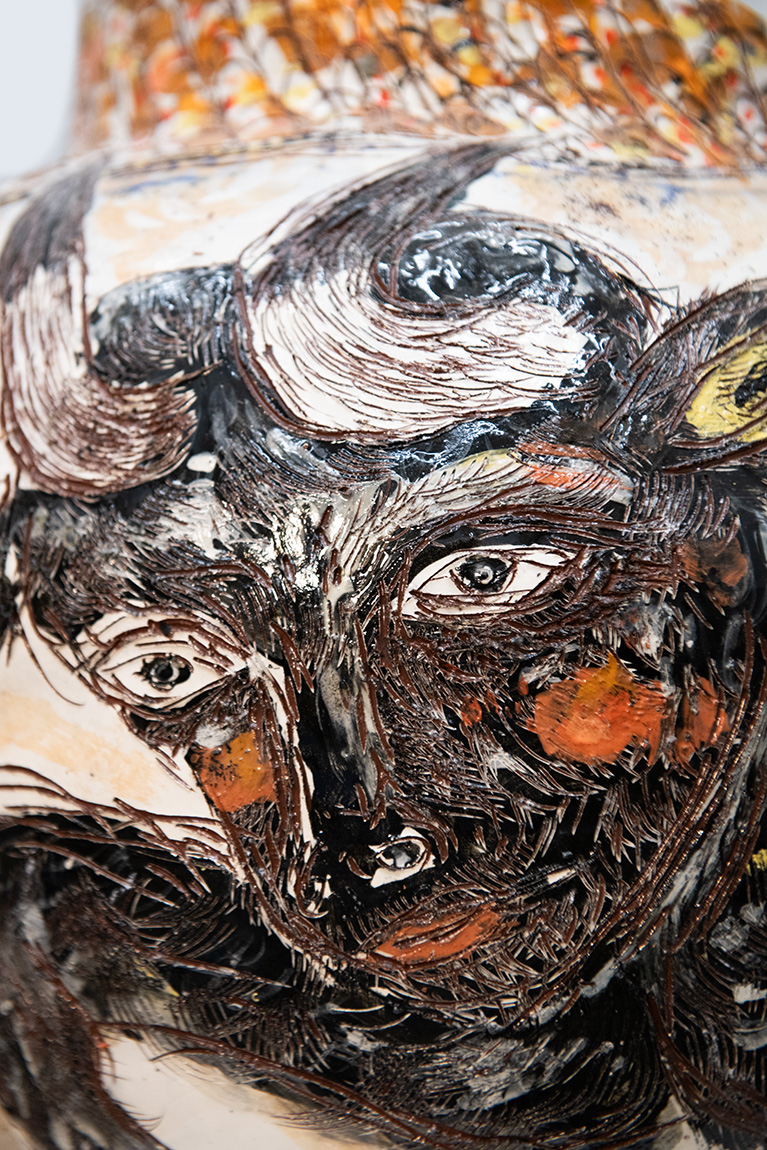
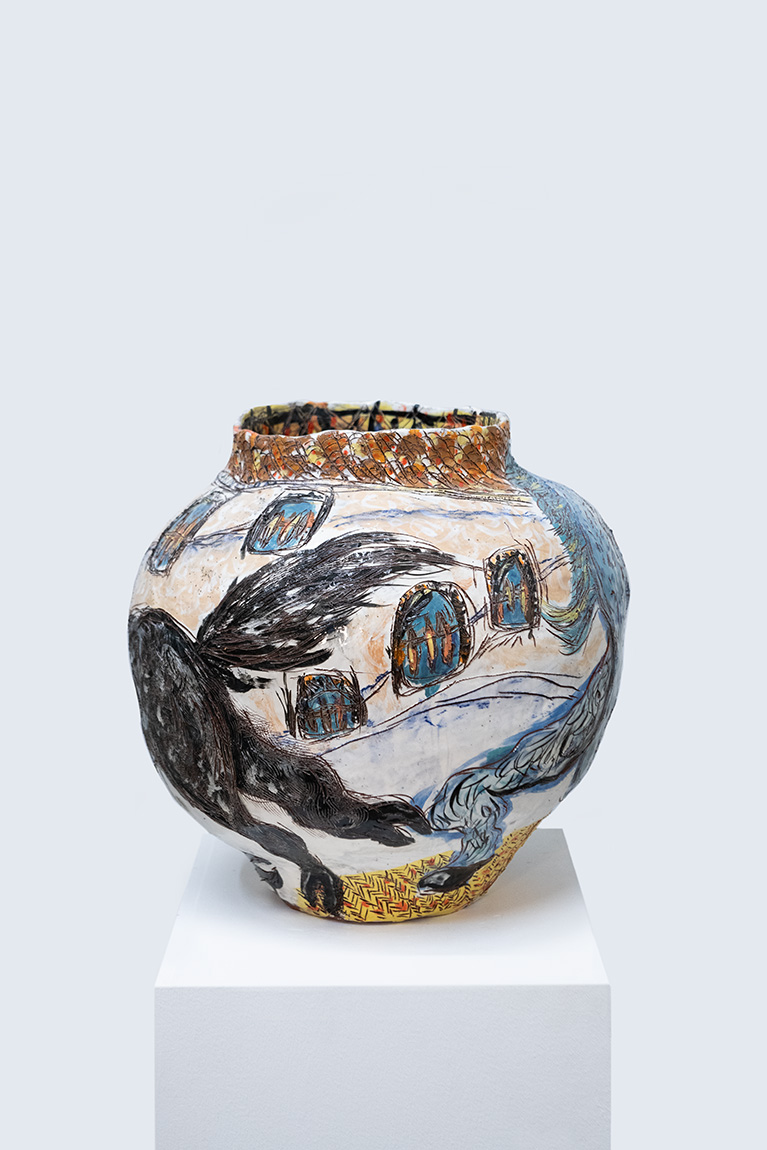
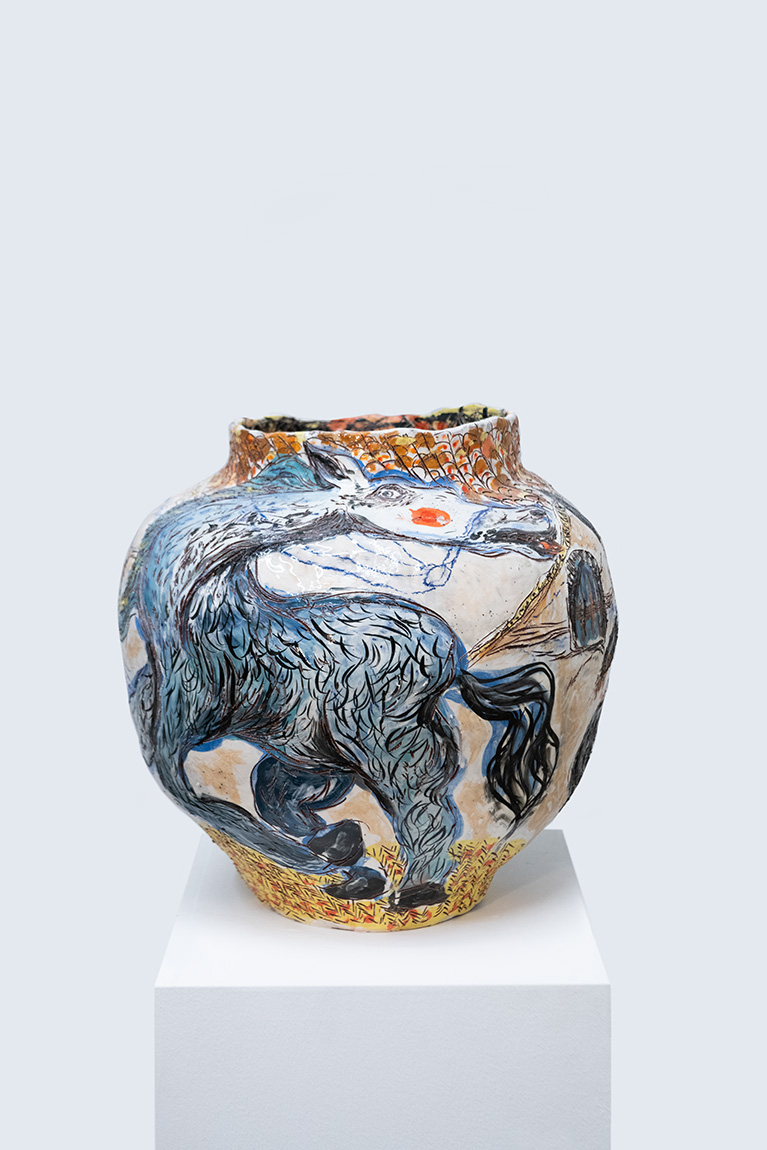
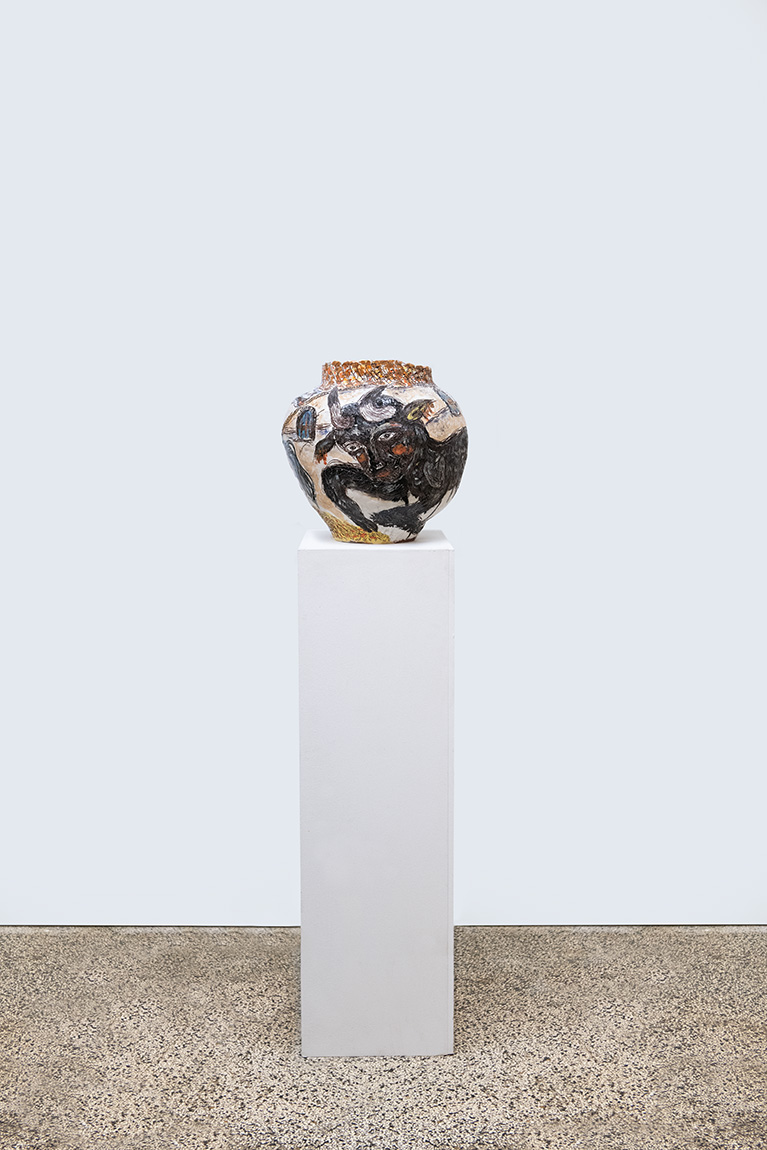
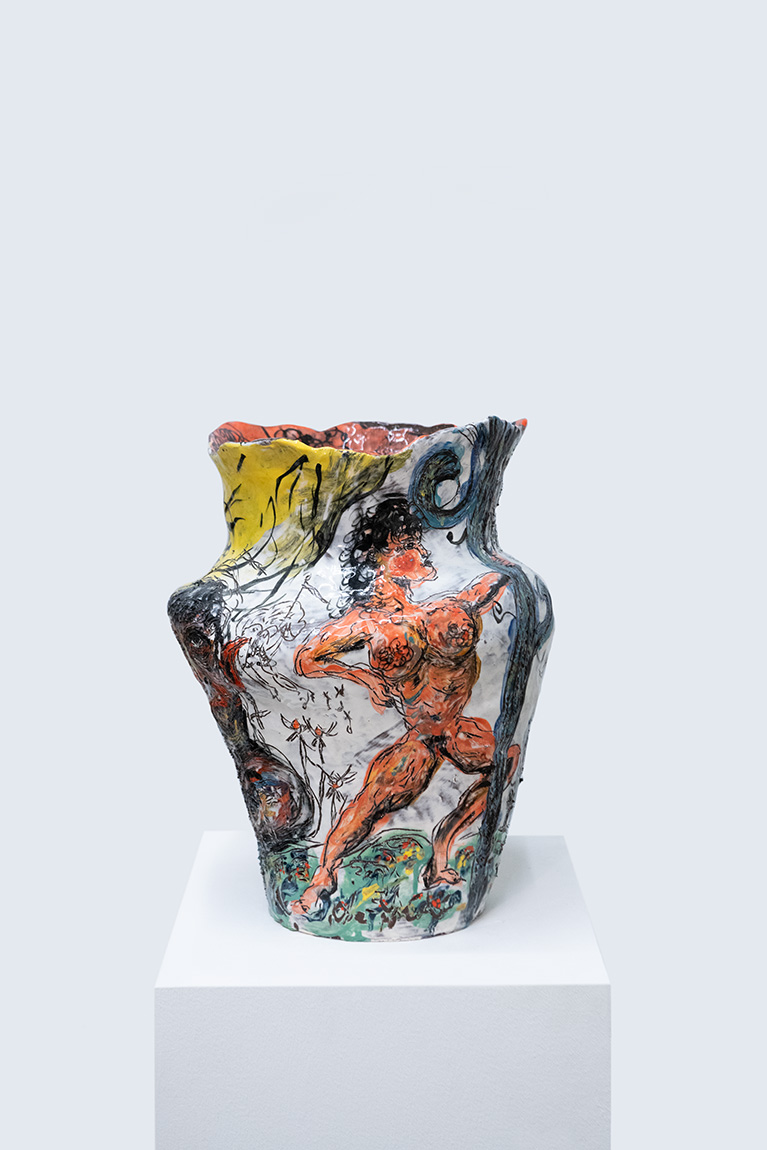
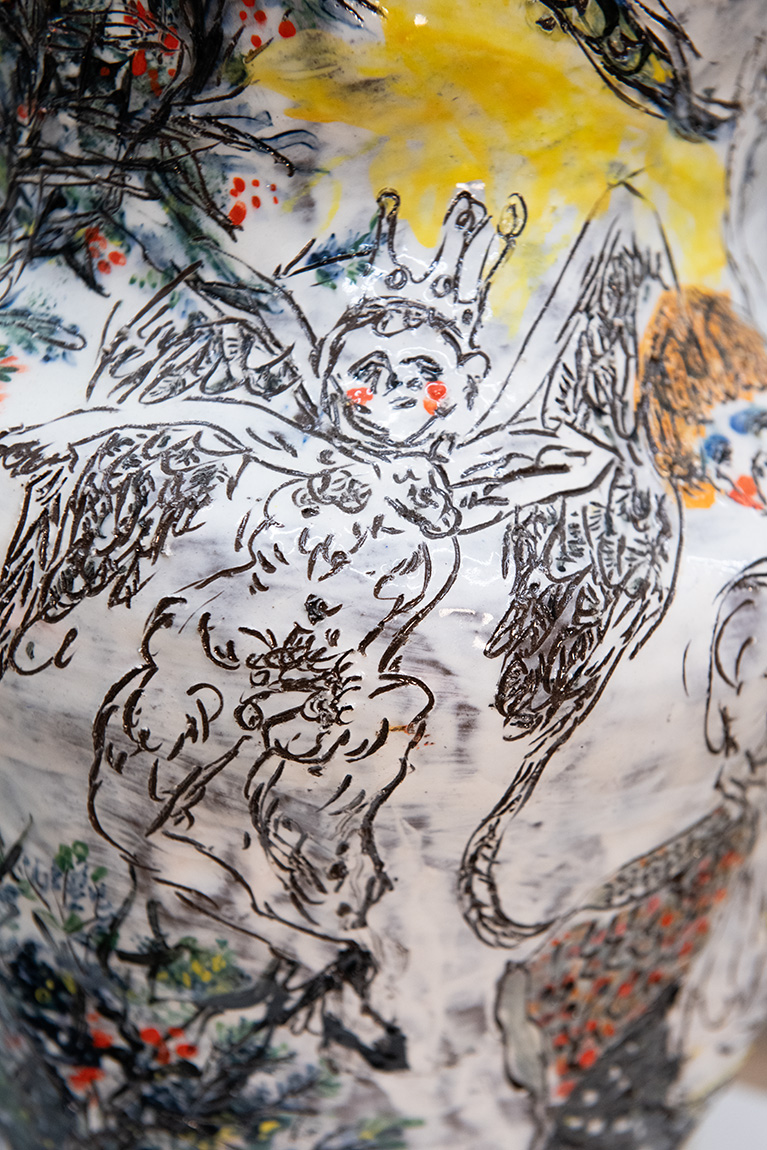
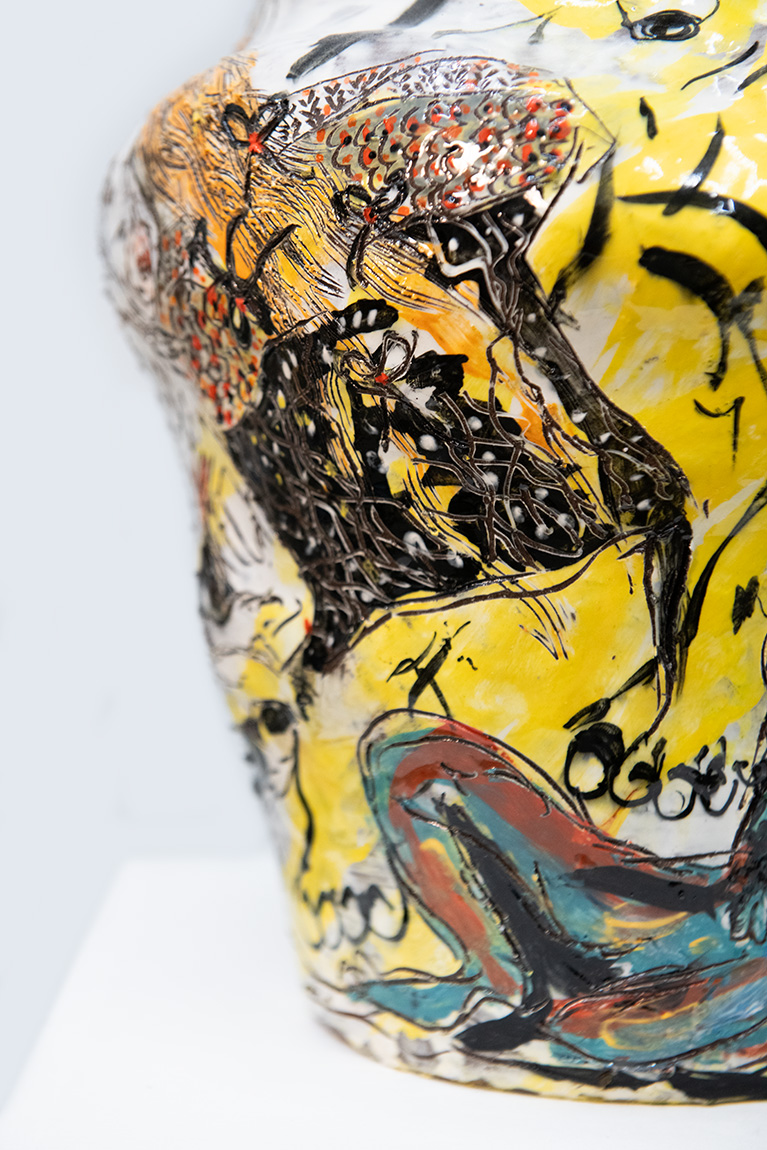
Karim Boumjimar is a Moroccan-Spanish artist known for his explorations of queer kinship. Based in Copenhagen, where he recently completed his MFA at the Royal Danish Academy of Fine Arts, Boumjimar is a self-taught ceramicist whose glazed earthenware vases depict raw, hallucinatory scenes of horned and breasted beasts, devils, and gods. In Peroxide Bird (2026), a plumed blue bird snares a snake in its talons and captures a flying—or flailing—buxom figure within its train of peacock feathers. Mythological chaos reigns in What the River Leaves Behind (2025), which draws inspiration from Cleopatra and Homer’s sirens. Dissolving the boundaries between the feminine and masculine, and between the human and the animal, Boumjimar cross-pollinates desire and the grotesque.
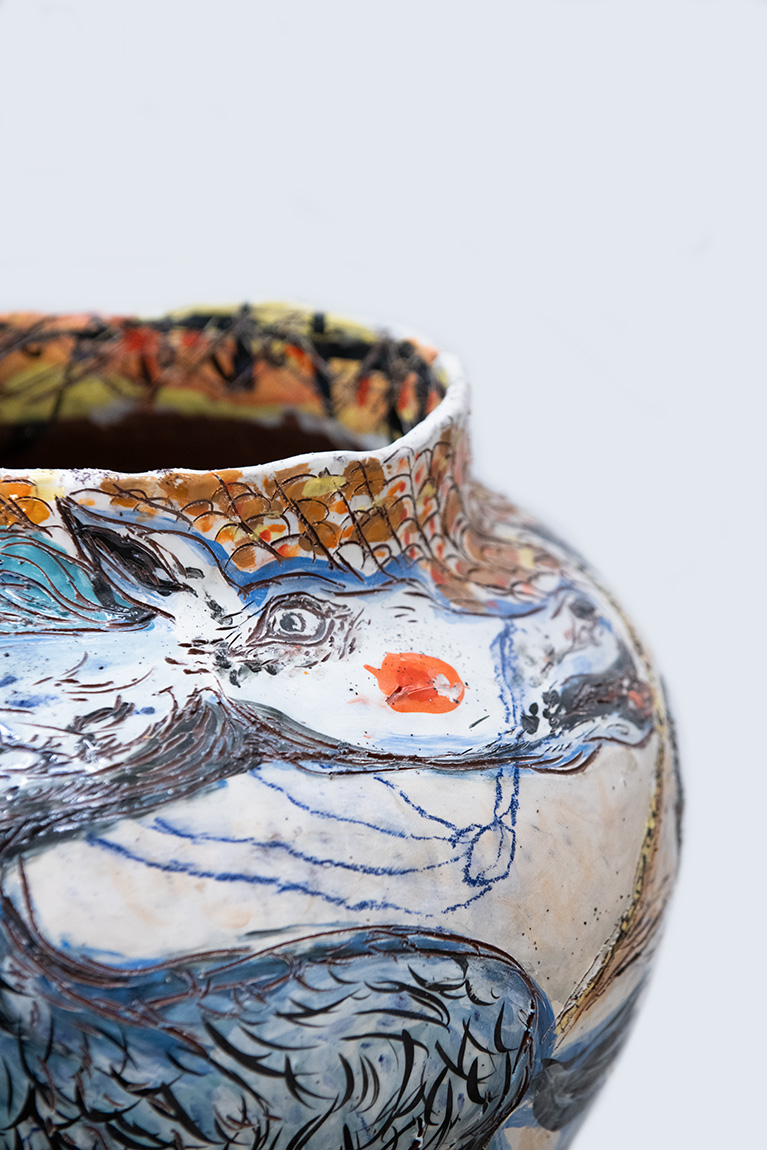
Karim Boumjimar
Oxidised Blue, 2025
Glazed earthenware
15 x 15 x 14 5/8 inches / 38 x 38 x 37 cm
Oxidised Blue, 2025
Glazed earthenware
15 x 15 x 14 5/8 inches / 38 x 38 x 37 cm
INQUIRE
Karim Boumjimar
Silver Lining, 2025
Glazed earthenware
15 3/8 x 10 5/8 x 11 inches / 39 x 27 x 28 cm
Silver Lining, 2025
Glazed earthenware
15 3/8 x 10 5/8 x 11 inches / 39 x 27 x 28 cm
INQUIRE
Karim Boumjimar
Oxidised Blue, 2025
Glazed earthenware
15 x 15 x 14 5/8 inches / 38 x 38 x 37 cm
Oxidised Blue, 2025
Glazed earthenware
15 x 15 x 14 5/8 inches / 38 x 38 x 37 cm
INQUIRE
Karim Boumjimar
Silver Lining, 2025
Glazed earthenware
15 3/8 x 10 5/8 x 11 inches / 39 x 27 x 28 cm
Silver Lining, 2025
Glazed earthenware
15 3/8 x 10 5/8 x 11 inches / 39 x 27 x 28 cm
INQUIRE
×
×